



Decorative Pottery Wall Plaques
These decorative pottery wall plaques bring painted landscapes, figurative scenes and tin-glazed colour directly to interior walls.
Decorative Pottery Wall Plaques
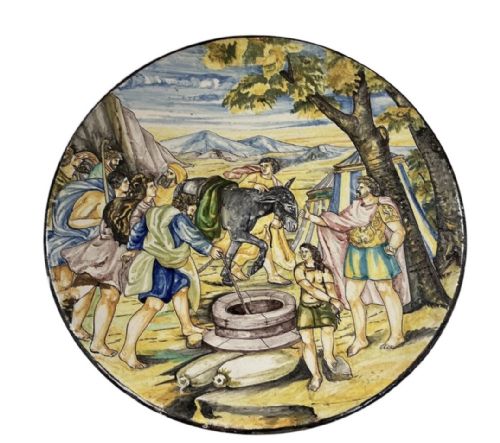
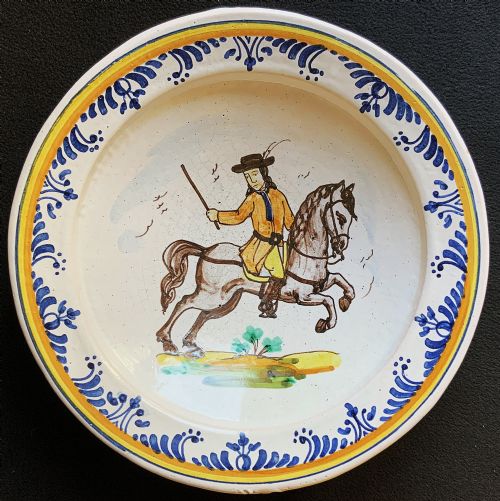
Decorative pottery wall plaques encompass tin-glazed earthenware chargers, ceramic tiles and painted plates designed specifically for display on interior surfaces. Buyers searching this phrase encounter examples ranging from eighteenth-century Spanish and Dutch Delft pieces to nineteenth-century Victorian pictorial scenes and later continental majolica.
The forms vary from large chargers and deep bowls to framed tiles and decorative plates. Many items utilise traditional hanging loops or fitted wooden mounts to secure the ceramic body safely against a wall.
Origins span English factories, French faience workshops, Italian majolica centres and Dutch potteries. The visual vocabulary shifts from classical Renaissance revival motifs and Chinoiserie patterns to Arts and Crafts figuration.
How they were made
Potters shaped earthenware bodies on the wheel or pressed clay into moulds to create flat plates, deep chargers and rectangular tile plaques. Artisans then applied tin-glazes or specialised ceramic pigments directly to the surface before firing.
Hand-painted decoration defined the finer pieces, utilising mineral pigments that fused with the glaze during kiln firings. Workshops employed specialised painters to execute landscapes, portraits and intricate border patterns by hand.
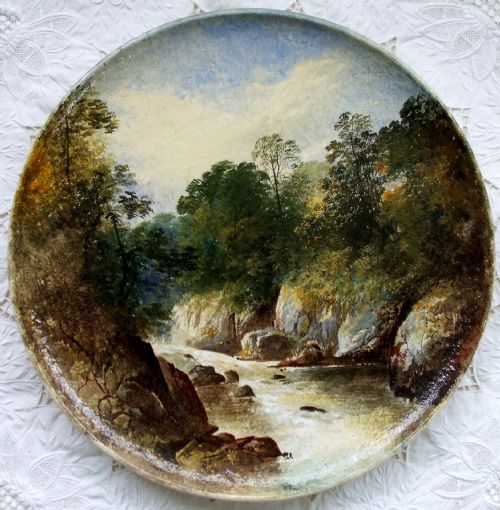
One nineteenth-century plaque records a Welsh view titled 'Fairy Glen', capturing picturesque tourism in ceramics.
What varies in quality
The refinement of the painted brushwork distinguishes ordinary production from exceptional work. Pieces featuring finely detailed figurative elements, nuanced landscape shading and precise polychrome pigments sit at the upper end of the range.
The ambition of the glaze application and the complexity of the regional style also drive distinction. Standard tin-glazed earthenwares contrast with elaborate Italian majolica chargers or layered French faience compositions.
Copeland Pottery·William Yale·Longwy·Bassano pottery works·Minton
The Decorative Pottery Wall Plaques Glossary
- Majolica
- Tin-glazed earthenware decorated with opaque coloured glazes over a white ground. This technique flourished across Italy and later influenced nineteenth-century European revival wares.
- Charger
- A large ornamental plate intended for display on a sideboard or wall rather than for dining. These wide surfaces provided artists with ample space for narrative scenes.
- Faience
- Tin-glazed pottery produced in France, Spain and other European regions outside Italy. The technique creates a smooth white surface suitable for painted polychrome decoration.
- Chinoiserie
- European decorative motifs inspired by Chinese art and design. Painters adapted these whimsical landscapes and figures onto eighteenth-century Delft and earthenware plaques.
- Earthenware
- Porous pottery fired at lower temperatures than stoneware or porcelain. It formed the standard ceramic body for historical wall plaques and tin-glazed vessels.
Decorative Pottery Wall Plaques: Frequently Asked Questions
How do I hang a heavy ceramic charger?
Heavy ceramic chargers require specialised wall brackets or spring-loaded wire hangers designed to distribute the weight evenly around the rim. Ensure the fixing secures directly into wall studs or uses appropriate masonry anchors.
Avoid using simple adhesive discs or light wire loops attached only to historical backing material. Secure mounting protects the ceramic body from accidental knocks and structural strain.
How do I tell nineteenth-century majolica from eighteenth-century delft?
Nineteenth-century majolica typically exhibits brighter, more saturated polychrome glazes and heavier moulded relief details inspired by Renaissance revivals. The paste and weight often reflect industrial Victorian manufacturing methods.
Eighteenth-century Delft and faience feature softer tin-glaze surfaces, muted pigment palettes, and thinner earthenware bodies. Examining the foot ring and glaze characteristics reveals the manufacturing period.
Were these plaques always meant for walls?
Many large chargers and decorative plates were originally produced for display on seventeenth and eighteenth-century sideboards rather than dining tables. Perforated foot rings or later metal mounts allowed these decorative items to transition onto interior walls.
Tile plaques and framed ceramic works, however, were specifically engineered from creation for architectural or wall display.