







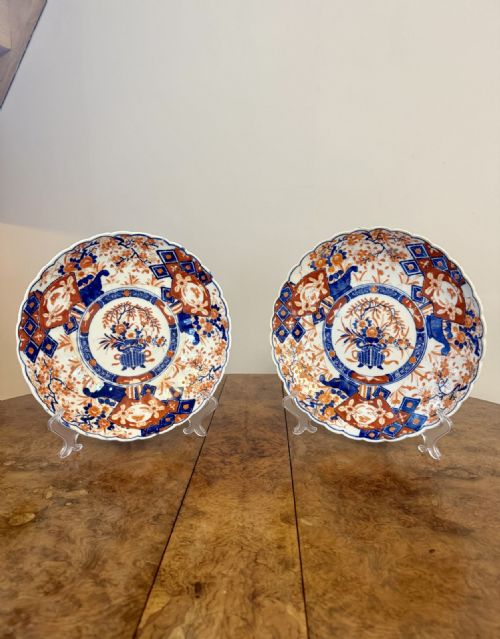
Decorative Oriental Ceramic Charger
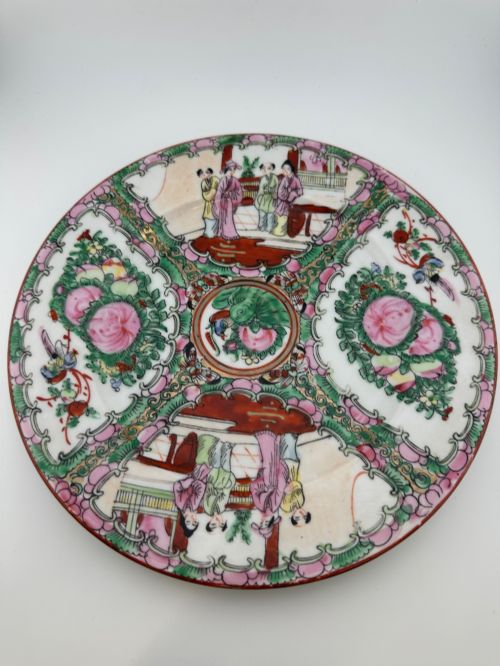
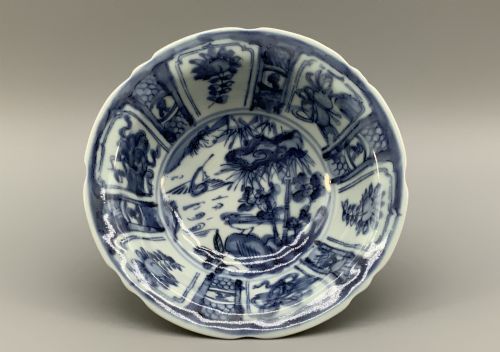
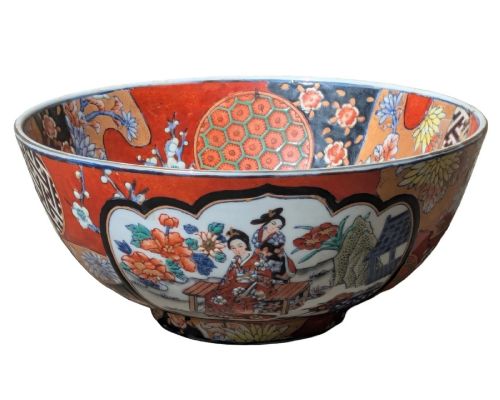
These decorative oriental ceramic chargers bring rich hand-painted colour and intricate design to a wall or table.
Decorative Oriental Ceramic Charger
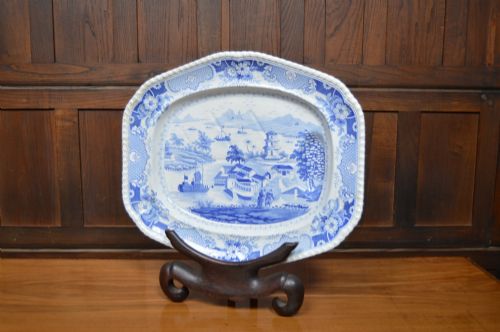
A decorative oriental ceramic charger provides a large display surface, typically taking the form of a broad plate or shallow bowl intended for presentation rather than dining. The examples gathered under this heading lean heavily towards Japanese production from the Meiji period alongside Chinese export wares.
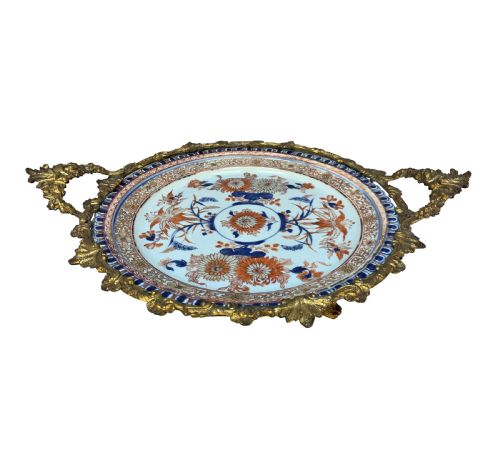
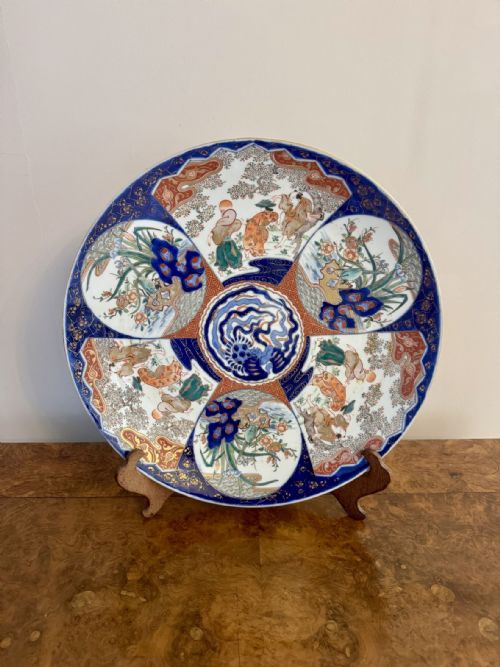
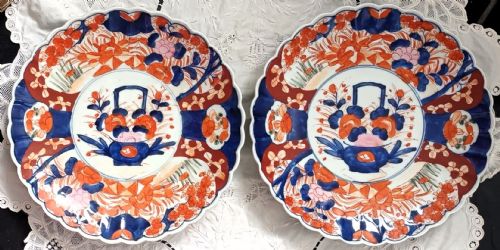
The assortment relies largely on Japanese Imari porcelain, featuring characteristic blue and white schemes heightened with iron red and gold. Alongside these sit Satsuma earthenware dishes and Kutani porcelain platters, spanning centuries from the Qing dynasty to the early twentieth century.
Materials and technique
Makers shaped fine porcelain or earthenware bodies before applying cobalt underglaze pigments and bright overglaze enamels. Many surfaces incorporate delicate gold leaf, gilding and intricate moriage relief work to catch the light.
Skilled hands painted complex floral, bird and figural scenes directly onto the ceramic body prior to high-temperature firing. Certain pieces received later European or domestic additions, such as ormolu mounts fitted to frames or rims.
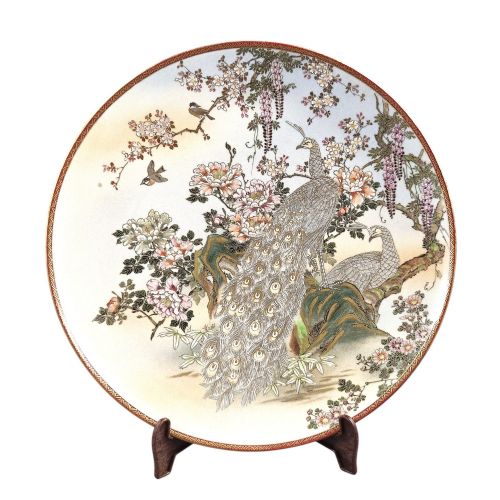
Several chargers depict the Seven Lucky Gods sharing space with pecking peacocks, wisteria branches and tumbling peonies.
Distinctions in quality
The finer specimens display exceptional brushwork control, where the painted lines remain sharp, the cobalt saturation is deep and even, and the applied gold leaf shows minimal rubbing. Inferior examples present hurried execution, muddy glaze pooling or simpler, repetitive border patterns.
Structural heft and balance also mark out the superior charger, sitting flat and true despite the warping risks inherent in large-diameter ceramic kilns. The complexity of the subject matter, from detailed Seven Lucky Gods to dense peony compositions, separates standard production from masterwork pieces.
Koshida·Shoza
The Decorative Oriental Ceramic Charger Glossary
- Charger
- A large ornamental plate or platter designed specifically for display on a sideboard, wall or table centrepiece rather than everyday service.
- Imari
- A traditional style of Japanese porcelain featuring a distinct palette of underglaze blue, iron red, and added gilt overglaze decoration.
- Satsuma
- A type of Japanese earthenware characterised by a pale, ivory-coloured cracked glaze decorated with finely detailed polychrome enamels and gold.
- Kutani
- A style of Japanese porcelain known for bold pictorial designs, often incorporating heavy greens, blues, purples and extensive gold leaf application.
- Moriage
- A decorative ceramic technique involving raised dots or lines of slip applied to create a tactile, three-dimensional surface texture before painting.
Decorative Oriental Ceramic Charger: Frequently Asked Questions
How were oriental ceramic chargers displayed?
These large plates were traditionally stood upright on sideboard surfaces or hung securely on walls to showcase their pictorial designs.
Today, they serve a similar decorative function, often placed upon sturdy stands or incorporated into larger room schemes as focal points.
What is the difference between Imari and Satsuma?
Imari pieces use a hard porcelain body painted with vibrant blue, iron red and gold colours in intricate geometric and floral arrangements.
Satsuma items utilise a softer, cream-coloured earthenware body featuring a fine crackle glaze beneath detailed figures and landscapes.
How do I date an antique porcelain charger?
Dating relies upon examining the potting style, the characteristics of the footrim, the pigment colours and the specific motifs used in the hand-painted design.
Periods like the Meiji era or Qing dynasty exhibit distinct painting densities and glaze formulations that help narrow down the decade of manufacture.
Can these antique chargers be used for food?
Most antique chargers are intended purely for display and ornamental appreciation rather than practical dining use.
Surface gilding, overglaze enamels and the age of the ceramic material mean they require gentle dusting rather than immersion in water or food contact.