






Vintage Imari Floral Dish
A vintage imari floral dish brings together rich iron-red and cobalt blue underglazes that brighten a table or wall.
Vintage Imari Floral Dish
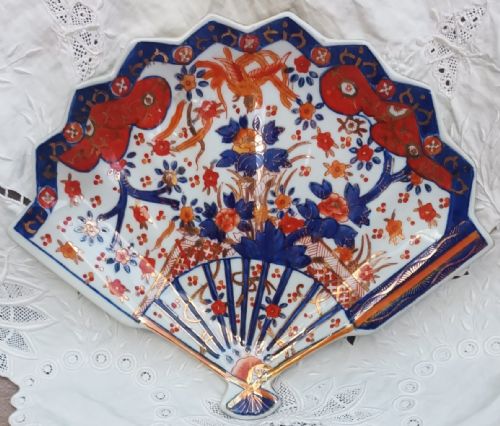
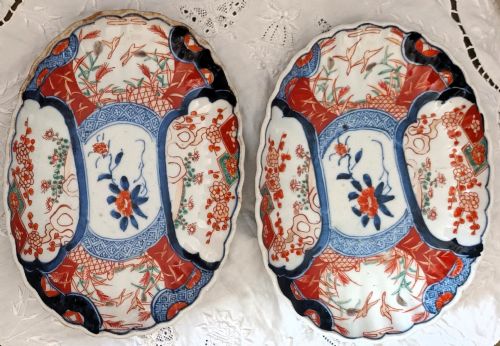
When you search for a vintage imari floral dish, you encounter decorative plates, chargers, bowls, and serving dishes that draw heavily on Japanese Meiji and Edo traditions alongside occasional English interpretations. The selection spans the nineteenth and twentieth centuries, bringing together porcelain and ironstone ceramics designed for both display and service.
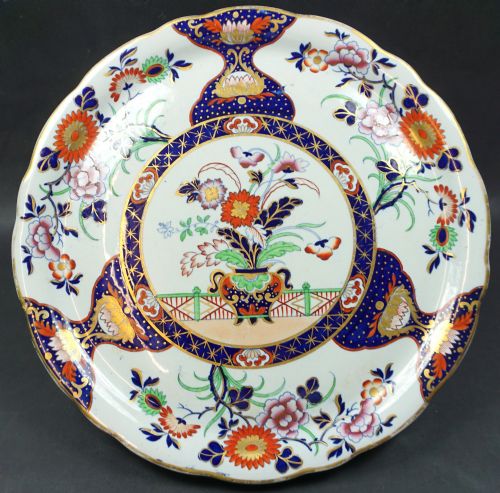
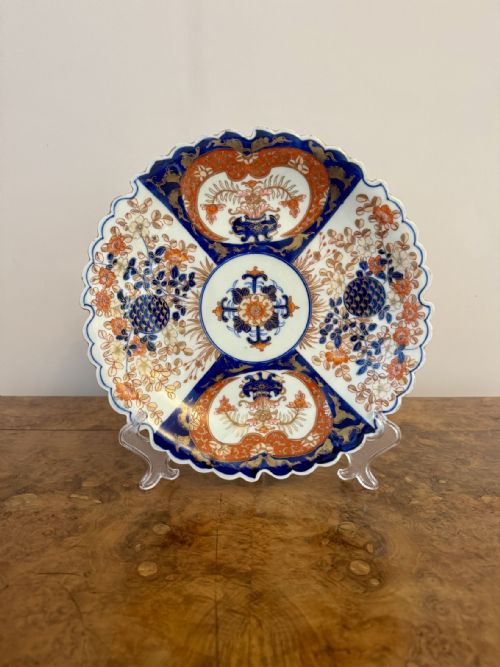
The most common forms on this page are round, square, scalloped, and fluted plates or chargers originating from Japan, often showcasing characteristic floral motifs. Alongside these sit English porcelain and ironstone pieces from makers such as Hicks & Meigh and Mason's, demonstrating how potters in Europe adapted eastern palettes.
These items range from modest side dishes to large chargers intended to anchor a room or sideboard. Their forms reflect domestic utility paired with ornamental ambition, spanning centuries of kiln craft.
What varies in quality
The distinction between ordinary and exceptional pieces lies in the crispness of the hand-painted brushwork and the complexity of the floral compositions. Superior examples display precise control of cobalt blue and iron-red enamel, with clean lines that remain sharp across the entire surface.
The survival of original gilding and the purity of the white porcelain ground also dictate the standing of a dish. Pieces that retain vibrant enamel colours without excessive rubbing or fading demonstrate superior preservation and materials.
Listings feature porcelain, ironstone, and ceramic vessels spanning the Victorian and Georgian eras alongside the Japanese Meiji and Edo periods.
Hicks & Meigh
The Vintage Imari Floral Dish Glossary
- Imari
- A style of Japanese porcelain featuring a tripartite palette of underglaze blue, iron-red enamel, and gold. It originated in Arita and was exported extensively through the port of Imari.
- Charger
- A large decorative plate intended for wall hanging or display on a sideboard rather than daily dining service. These substantial vessels often showcase the most ambitious painting.
- Ironstone
- A type of heavy, durable earthenware patented in the nineteenth century as a tough alternative to porcelain. It readily absorbed rich enamels and transfer-printed patterns.
- Meiji Period
- An era in Japanese history spanning from 1868 to 1912 characterised by extensive international trade and the widespread export of decorative ceramics. Pieces from this time show high technical proficiency.
- Scallop edge
- A curved, shell-like rim shaping applied to plates and bowls to add textural interest. This profile requires careful hand-trimming before the glaze firing.
Vintage Imari Floral Dish: Frequently Asked Questions
How do I hang a heavy charger?
Large chargers require robust, coated wire spring hangers that distribute the weight evenly around the rim without placing stress on the ceramic body. Ensure the wall fixing is secured directly into a stud or uses a proper wall anchor.
Avoid adhesive disc hangers for heavy porcelain pieces, as the glaze and age of the ceramic can compromise the bond over time.
Can I use these dishes for food?
Most antique porcelain and ironstone dishes are suitable for dry foods or occasional serving, though hand-washing is essential to protect surface enamels and gilding. Historic glazes can contain trace elements, so daily use for acidic foods is best avoided.
Inspect pieces for old hairline cracks or repairs before serving wet foods, as porous historic bodies can absorb moisture through micro-fissures.
How do I date a Japanese imari piece?
Dating relies on assessing the weight of the porcelain body, the vibrancy of the underglaze cobalt, and the presence of Meiji period characteristics. Earlier eighteenth-century pieces often feature thicker, slightly uneven potting compared to later Meiji output.
Examine the foot ring for kiln grit and unglazed clay characteristics, which provide clues about the firing techniques of specific decades.