


Decorative Marquetry Chest
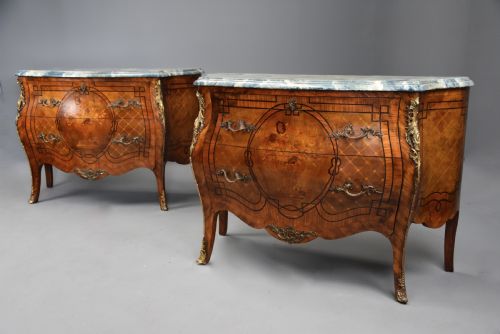
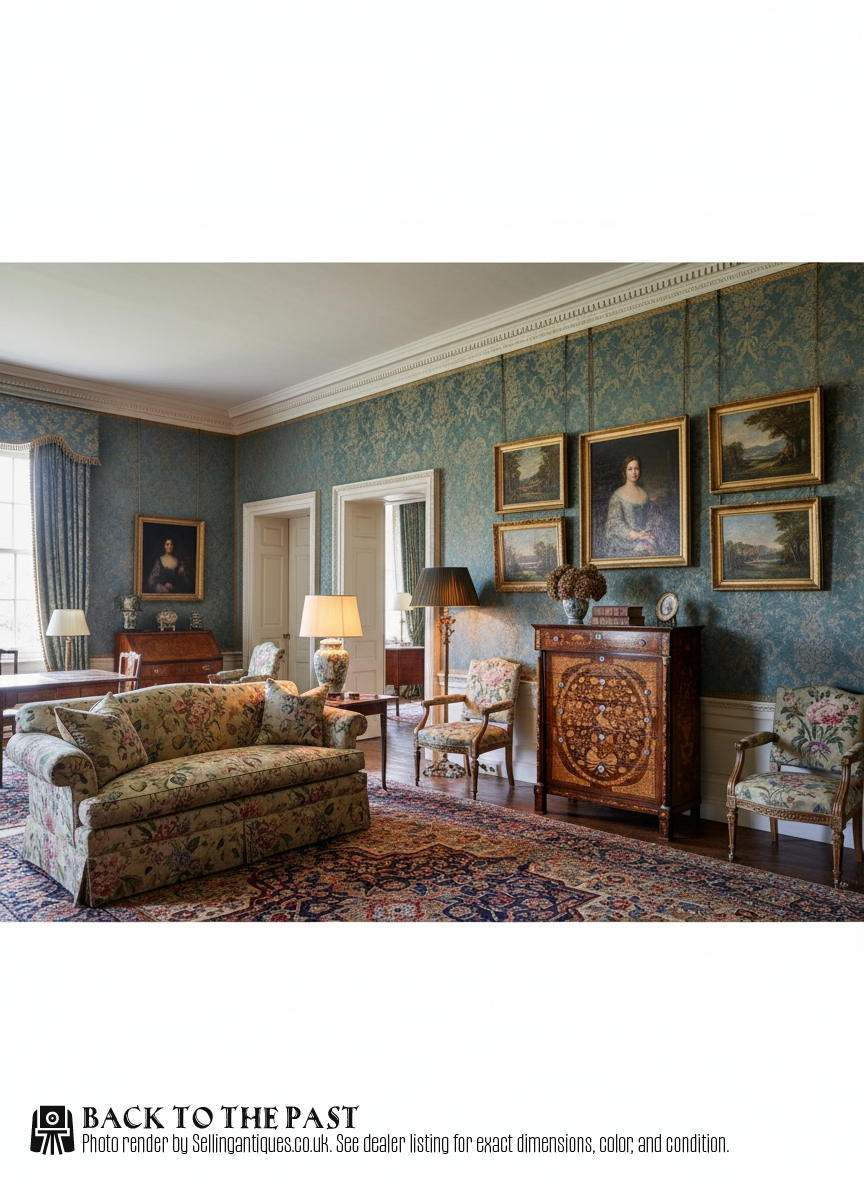
A decorative marquetry chest brings tactile warmth and intricate patterned timber into a room, serving as a striking focal point for storage.
Decorative Marquetry Chest
A decorative marquetry chest encompasses a diverse array of fitted storage vessels, from large commodes and music boxes down to compact tea caddies, caskets, and trinket boxes. These pieces function primarily as refined containers for valuables, correspondence, or dry goods, combining practical utility with intricate surface artistry.
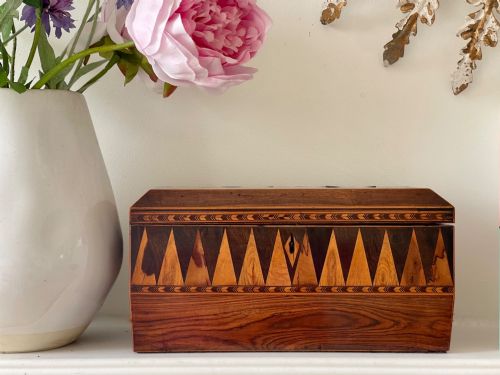
Buyers browsing this selection encounter numerous examples spanning the Georgian and Victorian eras, alongside 19th-century French and Swiss creations. Tea caddies and smaller tabletop boxes appear most frequently, constructed from dense hardwoods and embellished with elaborate geometric or floral veneers.
The assortment bridges domestic utility and fine craftsmanship, reflecting regional preferences for elaborate woodwork across Britain and continental Europe. Each object demonstrates how makers applied precise veneer work to modest containers and substantial furniture alike.
Markers of Quality
Excellence in these pieces rests upon the precision of the veneer work and the variety of contrasting timbers utilised by the maker. Sharp junctions between individual wood elements and clean integration of brass or bone details indicate superior workshop practices.
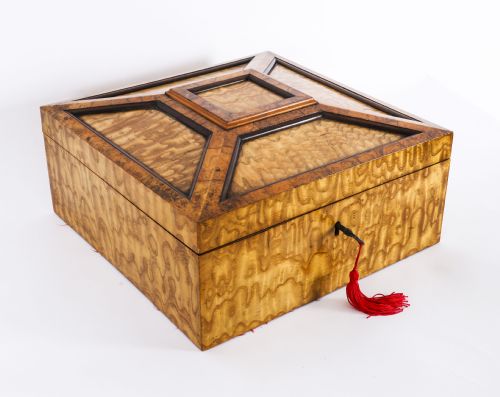
The integrity of the internal fittings, such as original silk linings, fitted canisters, working locks with keys, and delicate musical movements, separates standard utility items from masterworks. Consideration also extends to the restraint and balance of the overall design rather than mere surface complexity.
Listings feature items incorporating burr walnut, rosewood, boxwood, and tortoiseshell alongside specialised 19th-century Swiss musical movements.
The Decorative Marquetry Chest Glossary
- Marquetry
- The art of applying decorative pieces of veneer to a structure to form intricate patterns or pictures. This technique defines the visual character of the surface ornament.
- Tunbridge Ware
- A distinct form of woodworking originating in Kent featuring mosaic patterns assembled from thousands of tiny tinted wood blocks. It creates remarkably detailed pictorial motifs on small boxes.
- Boulle
- A style of marquetry utilising brass and tortoiseshell developed in France and popularised during the nineteenth century. The contrasting metallic lustre creates a rich optical depth.
- Sarcophagus
- A term applied to tea caddies and boxes shaped with a sloping lid and pedestal base resembling ancient stone monuments. This architectural form was favoured during the Regency and Georgian periods.
- Caddy
- A small container originally designed to store loose tea leaves securely under lock and key. These boxes often feature internal compartments and mixing bowls.
Decorative Marquetry Chest: Frequently Asked Questions
What were tea caddies used for?
Tea caddies served as secure domestic containers for storing expensive imported tea leaves in the Georgian and Victorian households. Because tea held high value, these boxes usually featured locking mechanisms to restrict access.
Inside, divided compartments separated different varieties of tea, and many included small glass or crystal bowls for blending leaves before brewing.
How do I care for antique marquetry?
Preserving antique marquetry requires stable indoor humidity and protection from direct sunlight, which can fade delicate dyed veneers and dry out old timbers. Dusting with a soft, dry cloth is sufficient for routine maintenance.
Applying microcrystalline wax occasionally helps nourish the wood surface and protect the intricate veneer work without building up heavy residues.
How do I distinguish Georgian from Victorian pieces?
Georgian pieces generally favour classical restraint, clean architectural proportions, and subtle stringing or shell inlays executed in satinwood and mahogany. Construction often relies on simpler, robust joinery suited to daily utility.
Victorian items frequently exhibit heavier proportions, bolder use of burr walnut or rosewood, and complex revival styles incorporating diverse materials like brass, mother-of-pearl, and tortoiseshell.
Are musical boxes difficult to maintain?
Mechanical musical boxes require careful handling of the cylinder, comb, and winding mechanism to prevent damage to the tuned steel teeth. Keeping the movement clean and free from dust is essential for consistent acoustic performance.
Professional servicing is recommended if the mechanism binds or fails to play the pinned airs correctly, as amateur repairs can permanently harm the comb.