
Decorative Mantel Urns
Decorative mantel urns are architectural ornaments designed for display on a fireplace shelf, bringing symmetry and classical presence to a room.
Decorative Mantel Urns
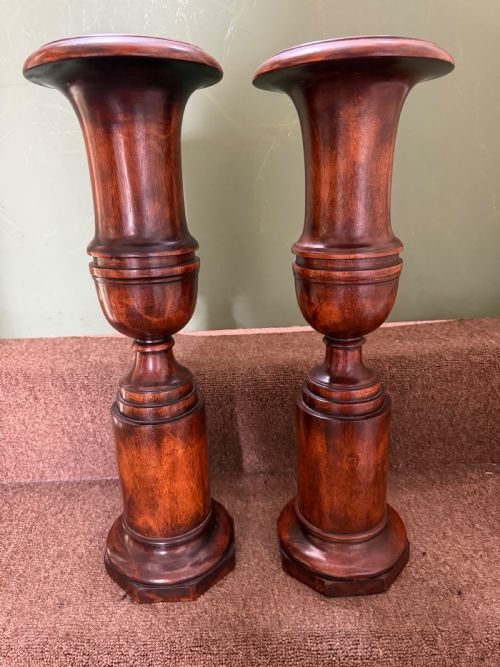
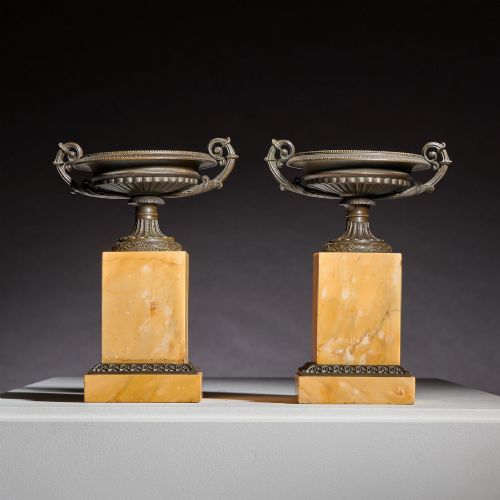
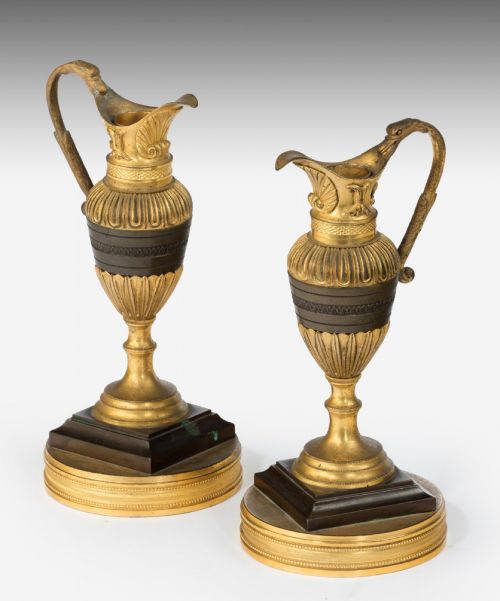
When buyers search for decorative mantel urns, they encounter paired ornamental vessels intended for display on fireplace shelves or console tables. These pieces emerge predominantly from the nineteenth and early twentieth centuries, spanning periods from the 1850s to the 1930s.
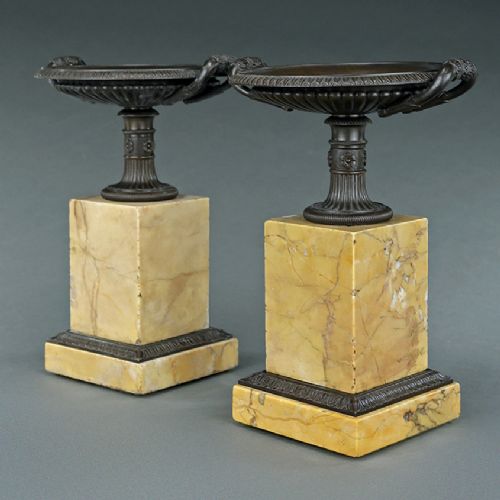
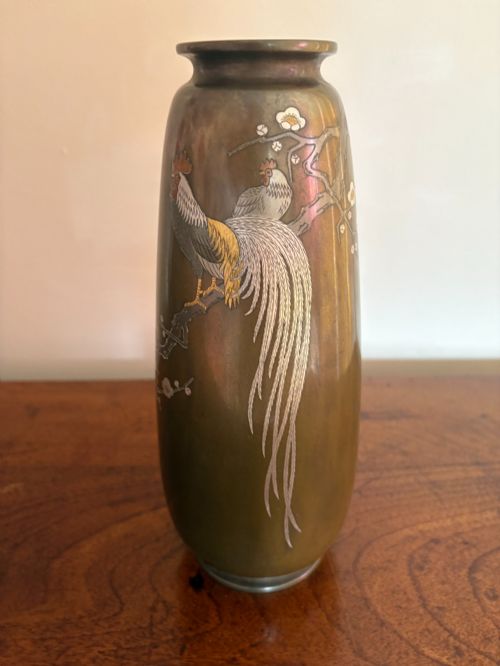
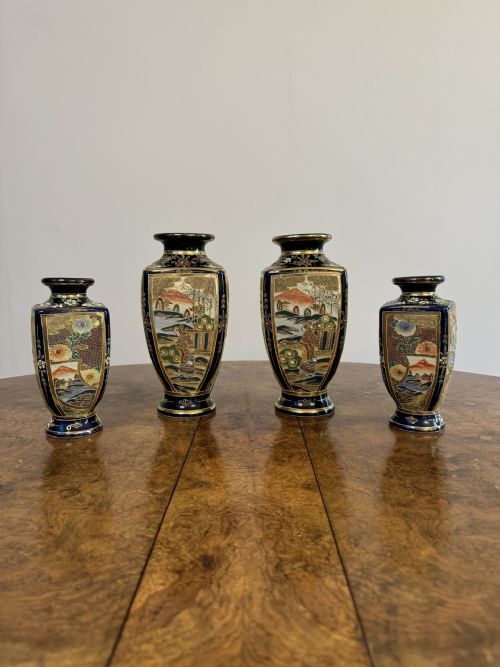
The objects take many forms, including campana shapes, classical garnitures, and tazzas paired with matching mantel clocks. Stylistic influences draw heavily upon Neoclassical, French Empire, and Rococo Revival designs, alongside Japanese Meiji period craft.
Most examples function purely as visual ornaments rather than containers for flowers or liquids. Pairs dominate the selection, designed to create balanced arrangements on either side of a central clock or mirror.
Materials and construction
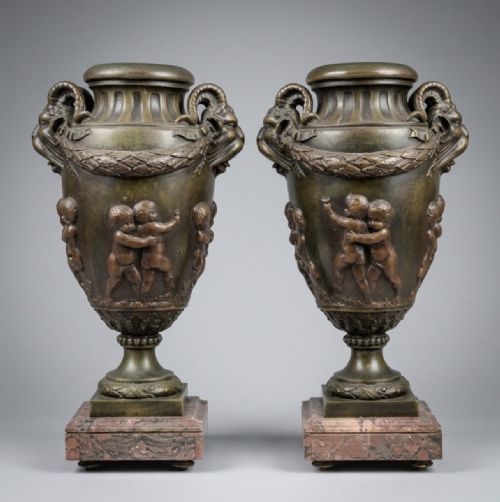
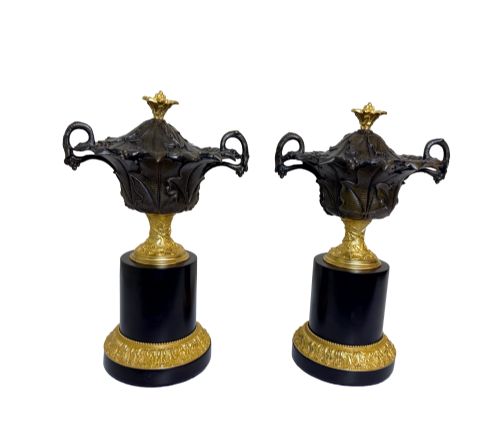
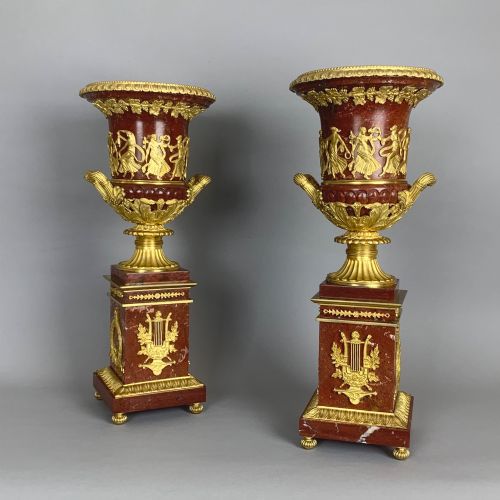
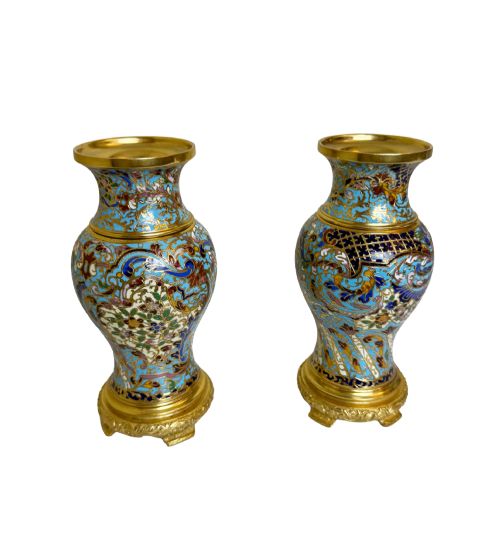
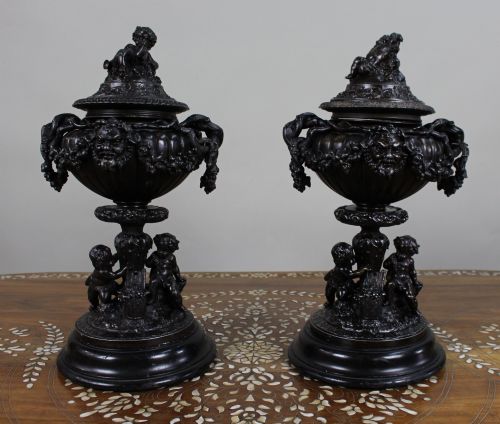
Makers utilised cast bronze, ormolu, and gilt bronze frequently, often pairing metalwork with white onyx, Siena marble, or mottled green marble bases. Champlevé enamel and cloisonné add vibrant colour accents to metallic surfaces.
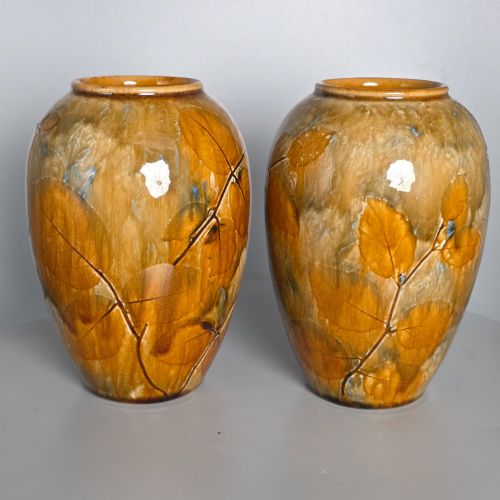
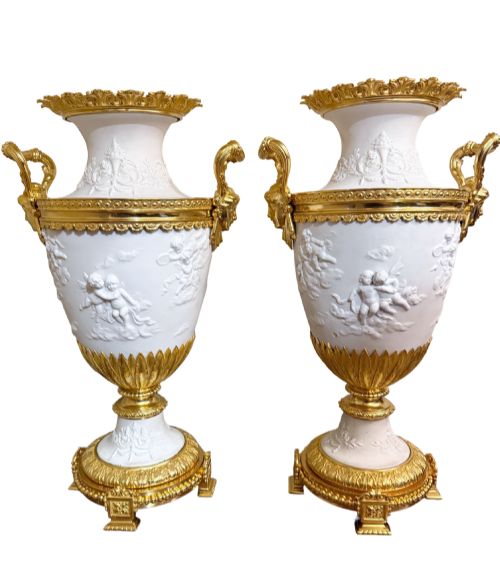
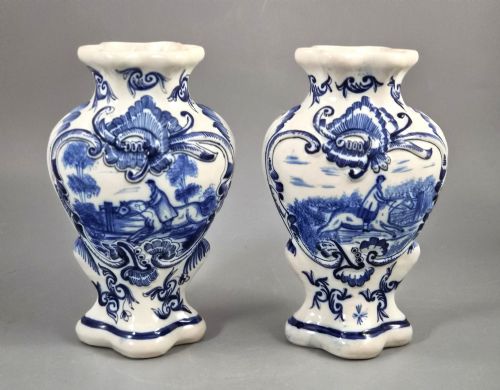
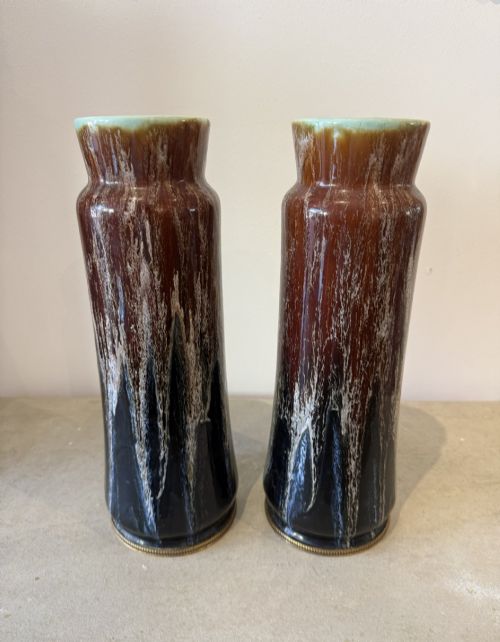
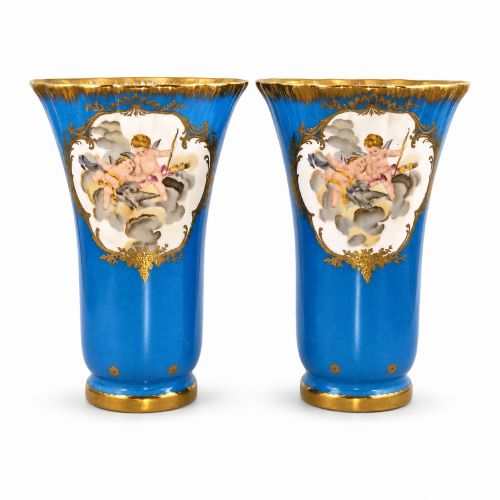
Ceramic versions incorporate soft-paste porcelain, earthenware, and faience, sometimes decorated in the Sèvres taste or finished with blush ivory and gold leaf. Spelter appears as a cost-effective alternative to bronze, usually finished with a dark patination.
Construction methods combine foundry casting for metal bodies with hand-turned stone bases and hand-painted ceramic glazes. Mounts and handles are frequently cast separately and mechanically secured to the main body.
Several Victorian pairs include cheerful Bacchic masks and leaping putti clinging to the handles.
Assessing craftsmanship and finish
Quality separates through the crispness of the chased detail on bronze and ormolu mounts, where sharper casting lines indicate superior foundry work. Plain or blurred surface enrichment suggests mass production rather than bespoke craftsmanship.
The integration of mixed materials dictates value, particularly the stability and figuring of marble or onyx plinths supporting metal bodies. Heavier, solid material combinations outlast hollowed or thinly plated alternatives.
Painted ceramic decoration shows variation in brushwork precision, especially on porcelain pieces featuring hand-painted scenes or intricate gilt borders. Finer enamel work displays even vitrification without pitting or discoloration.
Royal Doulton·Fourmaintraux-Courquin·Boch Freres·Samson Paris·Royal Worcester·Chelsea Porcelain·Robert T Lallement
The Decorative Mantel Urns Glossary
- Campana urn
- A bell-shaped vessel with an inverted conical body and a flared lip, frequently associated with classical garden and mantel decoration.
- Ormolu
- Finely ground high-carat gold applied to a bronze base using a mercury amalgamation technique, common in French decorative arts.
- Tazza
- A shallow saucer-like ornamental dish or vase mounted on a stem and foot, often utilised in pairs for classical display.
- Champlevé
- An enamelling technique where troughs or cells are sunk into a metal surface and filled with vitreous paste before firing.
- Garniture
- A set of matching ornamental vases or urns, usually consisting of three or five pieces designed to stand together on a mantelpiece.
- Spelter
- A zinc-based alloy used as a substitute for bronze, typically painted or electroplated to imitate higher-grade metals.
Decorative Mantel Urns: Frequently Asked Questions
What is a garniture set?
A garniture set consists of three or more matching decorative vessels designed to be displayed together on a mantelpiece or sideboard.
The central piece is usually taller or differently shaped from the matching flanking pair, creating a balanced decorative scheme.
How were these urns used?
These pieces served purely as decorative ornaments to display wealth, taste, and classical learning in nineteenth and early twentieth-century interiors.
They stood permanently on mantel shelves, often framing a central clock or mirror rather than holding functional items.
How do I care for bronze and marble?
Dust bronze and ormolu surfaces gently with a soft dry brush to prevent the accumulation of dirt in recessed chased details.
Marble bases require simple wiping with a damp cloth, avoiding chemical cleaning agents that can dull the polished stone surface.
How can I tell bronze from spelter?
Bronze feels heavier and cooler to the touch, showing a rich metallic patina beneath wear rather than a painted finish.
Spelter is softer, lighter, and frequently exhibits grey metal beneath chipped paint or surface plating.