
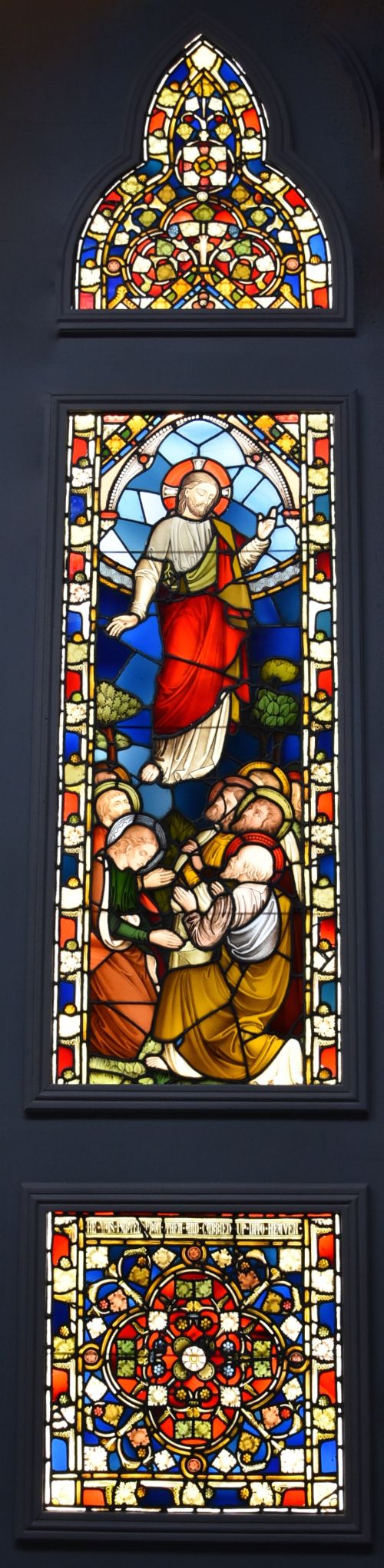


Decorative Leaded Glass Window
These decorative leaded glass window pieces bring rich colour and historic character into a room through hand-painted scenes and traditional leading.
Decorative Leaded Glass Window
A decorative leaded glass window combines architectural salvage with intricate artisanal work, spanning periods from the Victorian era through Edwardian times and into the nineteen-thirties. Buyers searching this phrase will find panels and full windows featuring hand-painted designs, clear bullseyes, and figurative subjects.
The selection ranges from large triptychs and paired windows down to individual stained glass panels. Common motifs include countryside scenes, winter landscapes, fruit, flowers, and specific cultural designs such as Dutch folk art.
Origins stretch across the nineteenth and twentieth centuries, taking in Gothic Revival and Art Nouveau aesthetics alongside simpler domestic styles. Most pieces integrate timber framing, pine wood, or softwood surrounds to support the heavy glass and lead structure.
Materials and construction
Glass panels are held together by flexible lead cames, creating a sturdy matrix that outlines the pictorial design. Artisans often incorporated hand-painted details onto the glass surfaces, depicting figures, animals, and natural landscapes before firing the pigment.
Support structures typically consist of wood, timber, pine wood, or softwood frames. These frames secure the architectural glass for installation in interior partitions or exterior openings.
Keep an eye out for domestic animals peering through the glass, including painted birds, foxes, and parrots.
Factors determining quality
Quality rests upon the intricacy and execution of the hand-painted artistry within the glass. Detailed countryside scenes, religious subjects, or distinct figurative emblems indicate higher artistic ambition than repeating floral motifs.
The integrity of the lead cames and the condition of the surrounding timber or softwood frame dictate the structural soundness of the piece. Intact triptychs and matched pairs hold greater architectural presence than single salvaged fragments.
The Decorative Leaded Glass Window Glossary
- Came
- A slender channel of lead used to hold pieces of glass together in a window. These pliable strips form the geometric and figurative grid of the design.
- Bullseye
- A circular patch of glass formed at the centre of a glassblower's punty rod. These appear as distinct circular accents within older window panes.
- Triptych
- A panel or window divided into three sections, typically hinged or displayed together. They often feature large-scale narrative artwork.
- Architectural salvage
- Building components rescued from older structures for reuse in interior design. This category includes windows, panels, and timber surrounds.
Decorative Leaded Glass Window: Frequently Asked Questions
How do I hang a heavy leaded glass window?
These pieces require secure anchoring into a structural wall stud or a custom wooden frame that bears the full weight of the glass and lead. Hanging brackets should be fastened to the surrounding timber rather than the lead cames.
For interior placement, mounting the window in front of a light box or a backlit wall opening provides even illumination without exposing the antique glass to exterior weather.
Can these windows be installed in exterior walls?
While originally built for exterior or interior architectural use, antique leaded windows often require secondary glazing or protective outer panes for modern weatherproofing. The historic lead and softwood frames need careful sealing against moisture.
Consulting a professional glazier ensures the historic structure is not damaged by modern building regulations or thermal movement.
How do I clean antique stained glass?
Cleaning requires a soft cloth and a gentle, non-ammonia soap solution applied lightly to the glass surface. Harsh chemicals can damage both the painted details and the lead cames.
Avoid pressing hard against the lead lines, as older cames become fragile over time and can flex or separate from the glass segments.
What is the difference between Victorian and Edwardian styles?
Victorian windows often lean towards heavier Gothic Revival influences, religious themes, and deep, saturated colour palettes. The craftsmanship prioritises dense pictorial scenes and formal symmetry.
Edwardian and later Arts and Crafts pieces tend to embrace lighter pastel tones, stylized floral patterns, and simplified domestic motifs that let in more natural light.