

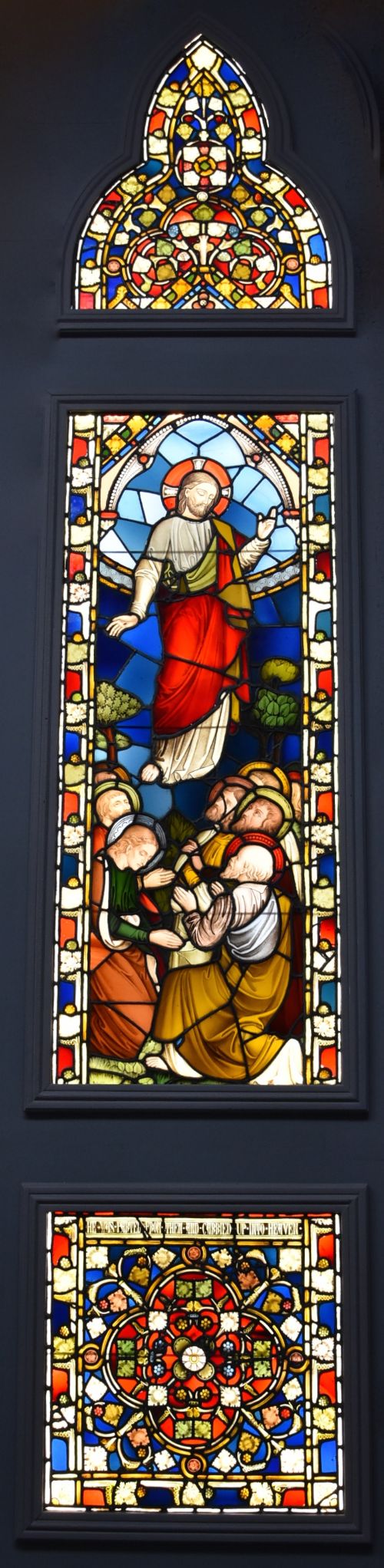


Multicoloured Stained Glass Panel
These multicoloured stained glass panel pieces bring rich colour and historic character into a room through light.
Multicoloured Stained Glass Panel
A multicoloured stained glass panel forms a decorative architectural window or partition designed to filter natural light through coloured glass. These works appear in forms ranging from large triptychs and two-section windows to individual architectural panels.
The pieces on this page span the nineteenth century, the Victorian era, and the early twentieth century. Examples include Gothic Revival church windows alongside domestic pieces featuring countryside scenes, farmhouses, knights, and birds.
Buyers encounter panels reflecting the aesthetic movements of their time, including Edwardian, Arts and Crafts, and Art Nouveau styles. Most examples rely on leaded construction to hold the individual coloured and painted glass segments together within timber frames.
How they were made
Glaziers built each multicoloured stained glass panel by cutting coloured glass to shape and joining the pieces using flexible lead cames. Artisans then soldered the lead joints at the intersections to form a stable geometric web.
Many panels incorporate hand-painted details on the glass surface, such as figurative scenes and landscapes, which were fired in a kiln to fuse the pigment permanently. Craftsmen frequently housed the finished leaded matrix within wooden frames made from timber, pine wood, or larger architectural surrounds.
Multicoloured Stained Glass Panel Retail Price Guide 2026
Typical asking prices for multicoloured stained glass panel among the pieces listed under this phrase on Sellingantiques today, from the lower quarter to the upper quarter. They describe what is for sale here now, not the wider market.
Materials recorded across the selection include lead, timber, pine wood, and hand-painted stained glass configured into windows and triptychs.
What varies in quality
The artistic ambition of the design and the complexity of the hand-painted elements separate standard decorative panels from superior works. Detailed narrative scenes, such as historical figures or specific countryside landscapes, demand a higher level of draughtsmanship than purely geometric or repeating patterns.
The integrity of the lead matrix and the condition of the individual glass pieces dictate the structural success of a panel. Original timber framing and undisturbed lead cames preserve the historic authenticity of the piece more effectively than modern repairs.
The Multicoloured Stained Glass Panel Glossary
- Came
- A slender strip of cast lead with a grooved channel on either side used to hold pieces of glass together in a window. These pliable strips are soldered at the joints to form the structural grid.
- Triptych
- A work divided into three distinct sections or panels, typically hinged or displayed together as a unified composition. This format frequently appears in larger religious or architectural settings.
- Gothic Revival
- An architectural and decorative style drawing inspiration from medieval design, prominent in nineteenth-century churches and institutional buildings. It is characterised by pointed arches and ecclesiastical motifs.
- Art Nouveau
- A decorative style from the late nineteenth and early twentieth centuries inspired by natural forms, plant stems, and flowing organic curves. Panels from this movement often utilise sinuous lead lines and vibrant glass colours.
Multicoloured Stained Glass Panel: Frequently Asked Questions
How were these stained glass panels originally installed?
These panels were primarily fitted into exterior window openings, internal doorways, or partition walls within domestic homes, churches, and public buildings. They served to provide privacy while allowing daylight to pass through coloured glass into the interior space.
Larger installations often required robust timber frames and structural iron armatures to support the weight of the leaded glass against wind pressure. In domestic settings, smaller panels were frequently hung in front of existing clear glass windows using brackets and chains.
How do I hang a large stained glass panel on a wall?
Hanging a heavy architectural panel against a solid wall requires professional framing and secure weight-bearing brackets fixed into structural studs or masonry. Because these pieces are designed to be viewed with transmitted light, placing them in front of a specially constructed backlit light box produces the best visual effect indoors.
Standard picture wire is rarely sufficient for supporting leaded glass panels due to their considerable weight. Consulting a specialist framer ensures the timber surround and hanging fixings distribute the load safely without stressing the lead cames.
How do I tell Victorian panels from early twentieth-century examples?
Victorian panels often align with the Gothic Revival movement, featuring heavy ecclesiastical themes, deep rich pigments, and hand-painted figures like knights in armour or religious iconography. The framing timber is typically substantial pine or hardwood suited to nineteenth-century architectural proportions.
Early twentieth-century pieces, particularly those from the Arts and Crafts and Art Nouveau periods, tend to feature more naturalistic countryside scenes, birds in flight, and flowing organic lines. The glass selection in these later works frequently incorporates opalescent and textured varieties that diffuse light in softer ways.