




Floral Stained Glass
Floral stained glass panels and windows bring botanical colour into interiors through leaded or painted glass.
Floral Stained Glass
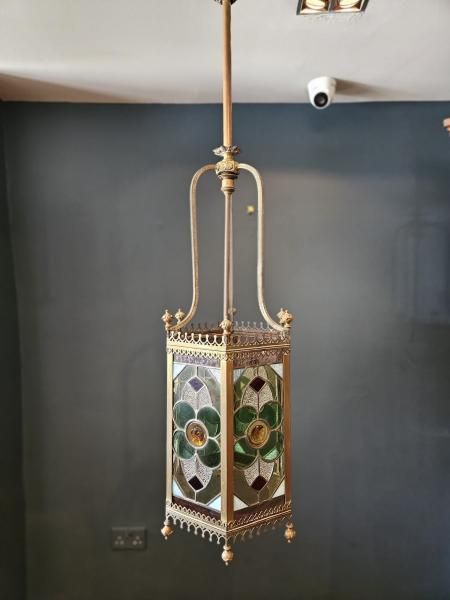
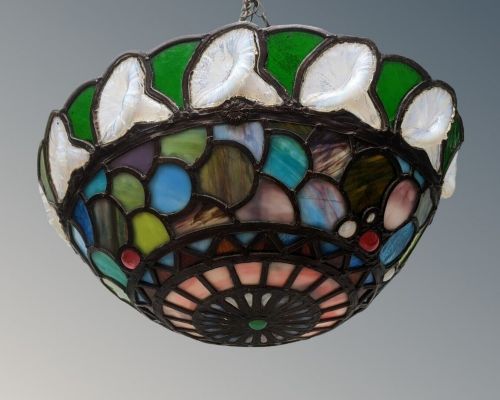
Floral stained glass encompasses decorative windows, panels, and lighting components created across the Victorian, Edwardian, and Art Nouveau periods. These works integrate botanical motifs such as hand-painted flowers, swags, and bullseyes within leaded frames.
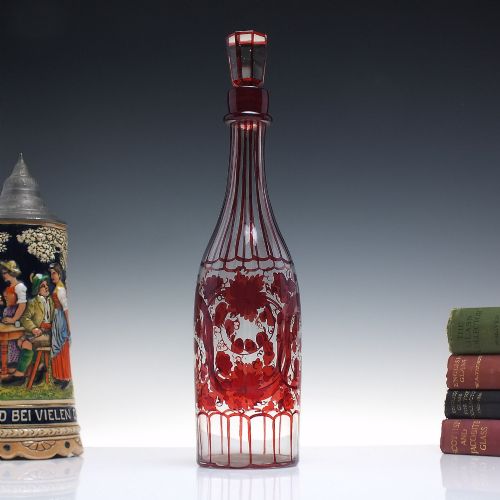
Buyers will most frequently encounter leaded glass windows featuring floral designs alongside vessels and lighting fixtures incorporating enamel or bronze elements. Pieces range from large two-section windows to smaller decorative bowls and caskets.
Materials and construction
The primary construction of these pieces relies on glass and lead, forming structural panels that hold painted or coloured glass segments together. Artisans incorporated enamel, brass, and bronze in accessories and lighting components.
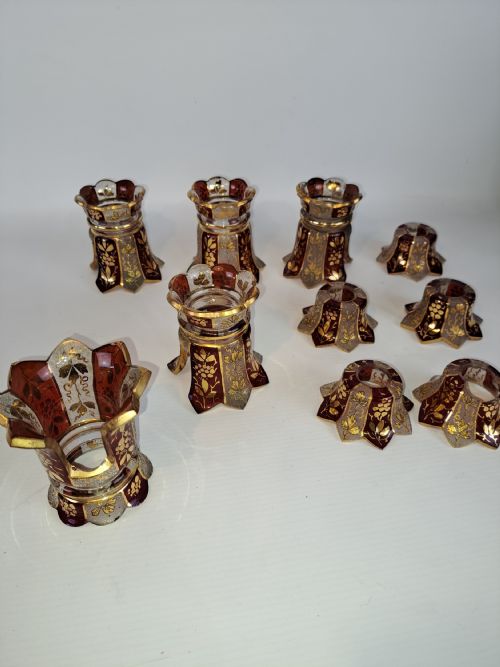
Many works combine leaded glass construction with hand-painted floral details, sometimes enhanced by amber bullseyes or etched gilding. Frames and structural mounts frequently utilise wood or bronze.
Periods represented span from the nineteenth century through the 1920s, covering Victorian, Edwardian, and Art Nouveau styles.
Assessing quality
Quality in floral stained glass distinguishes between standard decorative output and works featuring detailed hand painting and complex leaded geometries. The sophistication of the floral design and the integration of specialised elements like bullseyes elevate individual pieces.
The choice of materials, such as heavy bronze mounts or refined enamel work on bowls and windows, indicates the standard of production. Attribution to notable makers or specific artistic movements also distinguishes superior examples.
S Theeman·Rene Lalique·Sir Edward Burne-Jones·William Morris
The Floral Stained Glass Glossary
- Leaded glass
- Glass pieces joined together strips of lead to form a window or panel. This technique creates the structural grid that holds botanical designs.
- Bullseye
- A circular centrepiece of blown glass with a prominent pontil scar. These are often incorporated into windows to add texture and amber tones.
- Plique-a-jour
- An enamelling technique where enamel is applied in cells without a backing, resembling miniature stained glass. It appears in decorative vessels and bowls.
- Art Nouveau
- A stylistic movement characterised by flowing, organic lines and floral motifs. Works from this period emphasise natural asymmetry and botanical forms.
Floral Stained Glass: Frequently Asked Questions
How are floral stained glass windows installed?
These windows are typically mounted within wooden frames or secured directly into architectural openings depending on their size.
Larger multi-section panels require professional structural support to bear the weight of the lead and glass.
What periods do these pieces date from?
The available pieces span the Victorian, Edwardian, and Art Nouveau periods, with dates ranging across the nineteenth and early twentieth centuries.
Earlier examples often reflect Victorian Gothic or Pre-Raphaelite influences, while later items align with Art Nouveau aesthetics.
How do I clean antique stained glass?
Cleaning requires a soft cloth and mild, non-abrasive solutions to protect painted glass surfaces and lead cames.
Harsh chemicals must be avoided to prevent damage to the enamel work and painted floral details.
Can ceiling lighting fixtures be rewired?
Lighting components and ceiling lights can generally be adapted by a qualified electrician to meet modern standards.
Preserving the original bronze, brass, or glass housing ensures the historical integrity of the fixture is maintained.