








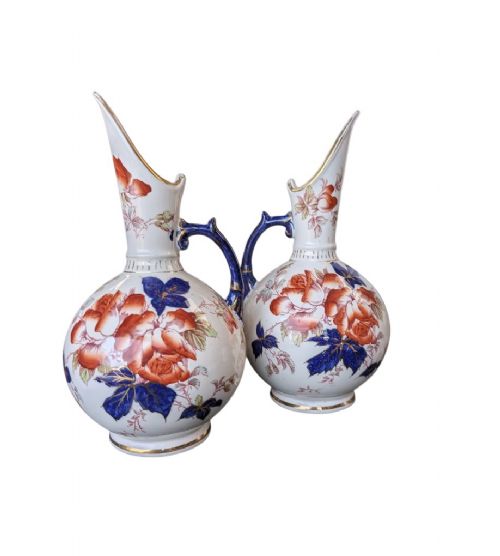
Decorative Imari Ware
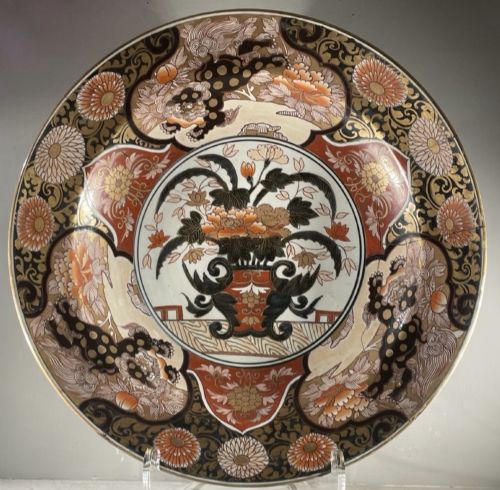
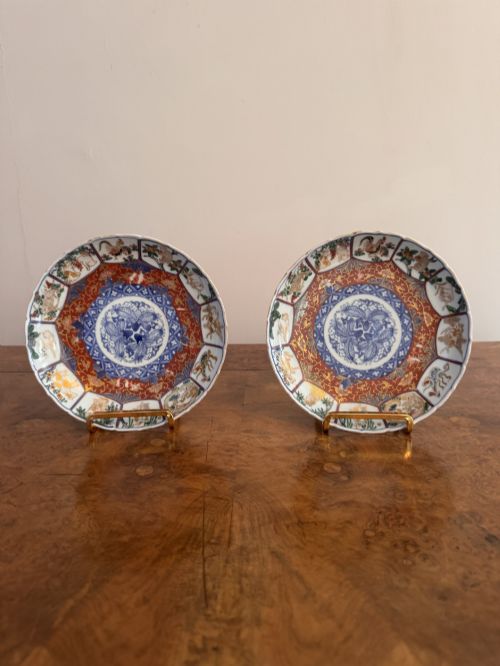
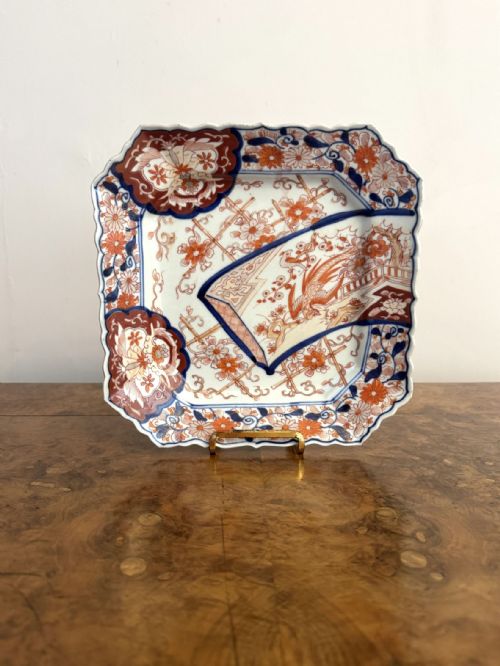
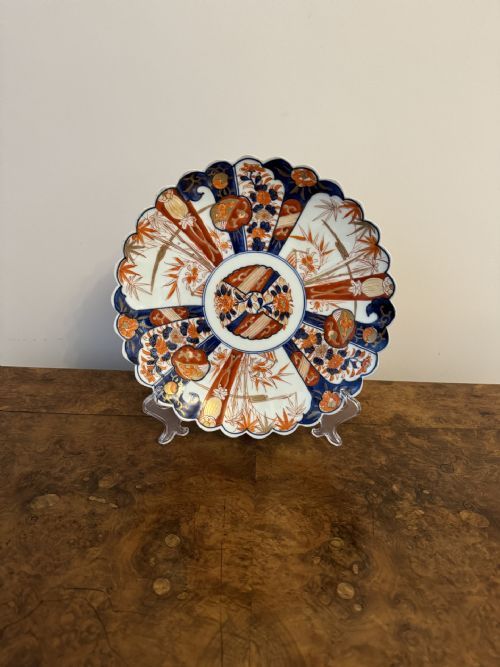
Decorative imari ware brings together bold cobalt blue, rich iron red, and gilt highlights to create commanding ceramics for display.
Decorative Imari Ware
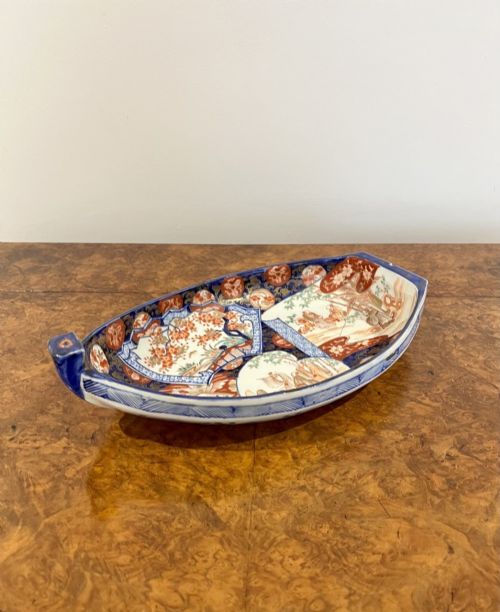
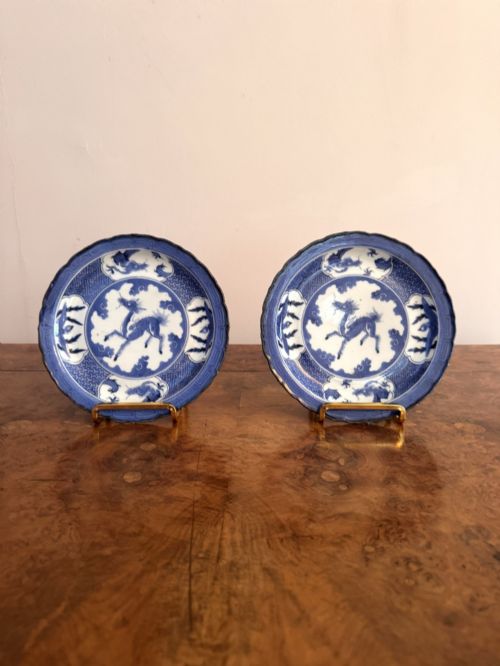
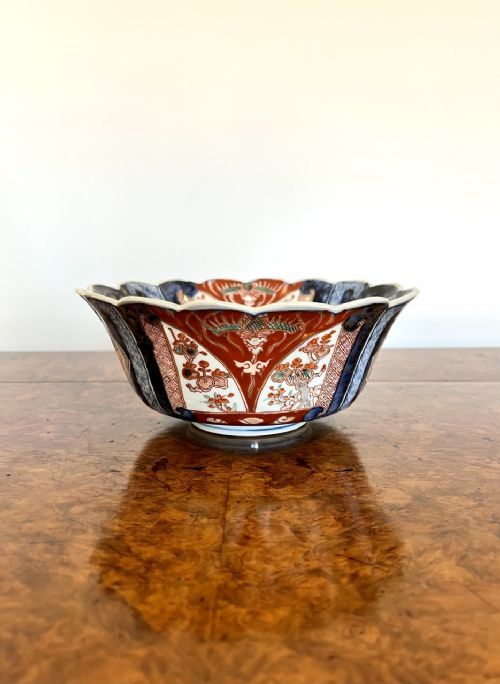
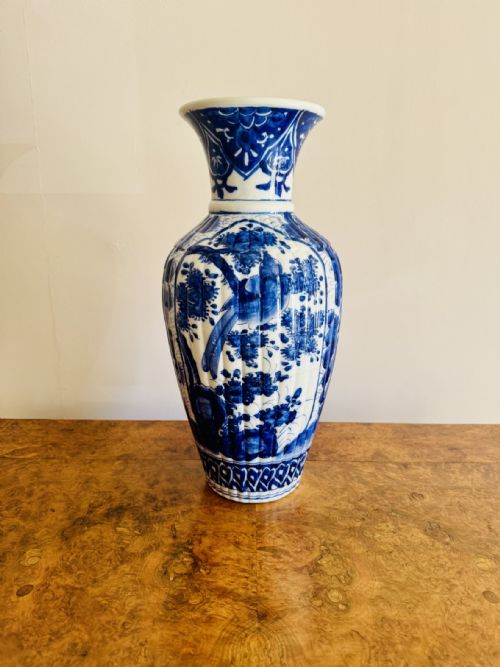
Decorative imari ware comprises plates, chargers, bowls, vases, and pitchers originating predominantly from Japan, alongside select British adaptations. These pieces function as striking focal points in a room due to their intense coloration and intricate surface patterns.
Forms vary from standard circular bowls and plates to unusual hexagonal, square, and leaf-shaped configurations. These vessels were made for display, offering robust porcelain bodies covered in densely patterned decoration.
How they were made
Hard-paste porcelain forms the physical foundation of these objects, fired at high temperatures to create a durable, vitreous body. Artisans then applied underglaze cobalt blue before a secondary firing for the remaining palette.
Enamel colours, particularly iron red, were painted over the glaze alongside gold leaf and fine gilding. This layered technique produced the characteristic tactile surface where metallic and enamelled details sit slightly proud of the white porcelain ground.
Decorative Imari Ware Retail Price Guide 2026
Typical asking prices for decorative imari ware among the pieces listed under this phrase on Sellingantiques today, from the lower quarter to the upper quarter. They describe what is for sale here now, not the wider market.
The listings feature hard-paste porcelain forms spanning from the eighteenth century through the Victorian era and into the early twentieth century.
What varies in quality
The refinement of the hand-painted motifs dictates the upper tiers of quality, separating hurried commercial output from deliberate studio work. Crisp execution in the floral, bird, and scrolling foliate borders demonstrates superior brushwork.
The richness and application of the gilding and enamel pigments define the visual depth of a piece. Finer examples balance the dense palette carefully across complex shapes like hexagonal bowls or scalloped edges without overcrowding the form.
The Decorative Imari Ware Glossary
- Imari
- A style of Japanese porcelain originating from the port of Imari, exported from Arita, defined by a palette of cobalt blue, iron red, and gold. This aesthetic heavily influenced both Asian production and European factories.
- Charger
- A large ornamental plate designed primarily for display on a wall or sideboard rather than for serving food. These pieces provide a wide canvas for complex pictorial designs.
- Garniture
- A set of matching vases or vessels intended to be displayed together on a mantelpiece or shelf. Such sets usually comprise three or more graduated or matching pieces.
- Arita
- The Japanese town and surrounding region in Hizen province where the clay resources enabled the birth of Japanese porcelain production. Arita ware forms the backbone of traditional imari manufacturing.
- Scalloped
- A decorative edge shaped into a series of continuous curves resembling the shell of a scallop. This moulding technique adds textural movement to plates and bowls.
Decorative Imari Ware: Frequently Asked Questions
What is decorative imari ware?
Decorative imari ware is a style of Japanese and European porcelain characterised by a strong palette of cobalt blue, iron red, and gold. The pieces span plates, chargers, vases, and bowls.
These ceramics were made primarily for visual display rather than daily utility. Their dense, hand-painted motifs make them distinct additions to traditional and eclectic interiors.
How do I style imari plates at home?
Imari plates and chargers suit wall mounting, cabinet display, or placement on plate stands where their detailed borders remain visible. Their strong colours anchor neutral room schemes.
Pairing pieces of similar palettes creates a cohesive display across a wall or sideboard. Mixing shapes like hexagonal bowls with circular plates adds visual depth to a collection.
How do I tell Edo period pieces apart?
Edo period pieces often exhibit distinct weight, clay impurities, and hand-mixed pigments characteristic of earlier production methods. Examining the foot ring reveals details about how the vessel sat in the kiln.
Later Victorian and Meiji period pieces tend toward greater standardisation in porcelain body and brighter, more precise enamel application. Comparing the density of the floral and bird designs helps contextualise the date.