
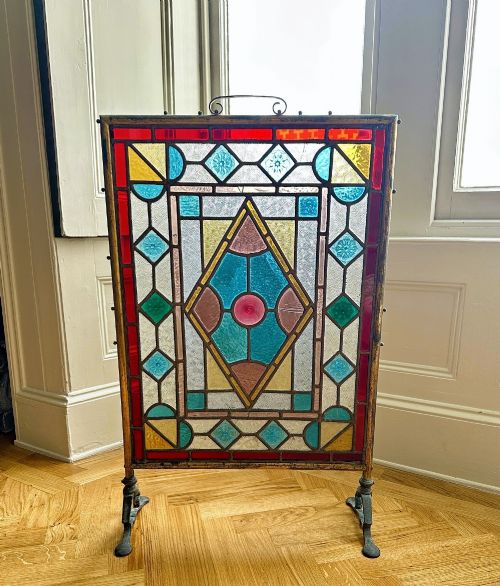


Decorative Glass Panel
A decorative glass panel brings rich colour and historic character into a room through leaded, painted, or etched light.
Decorative Glass Panel
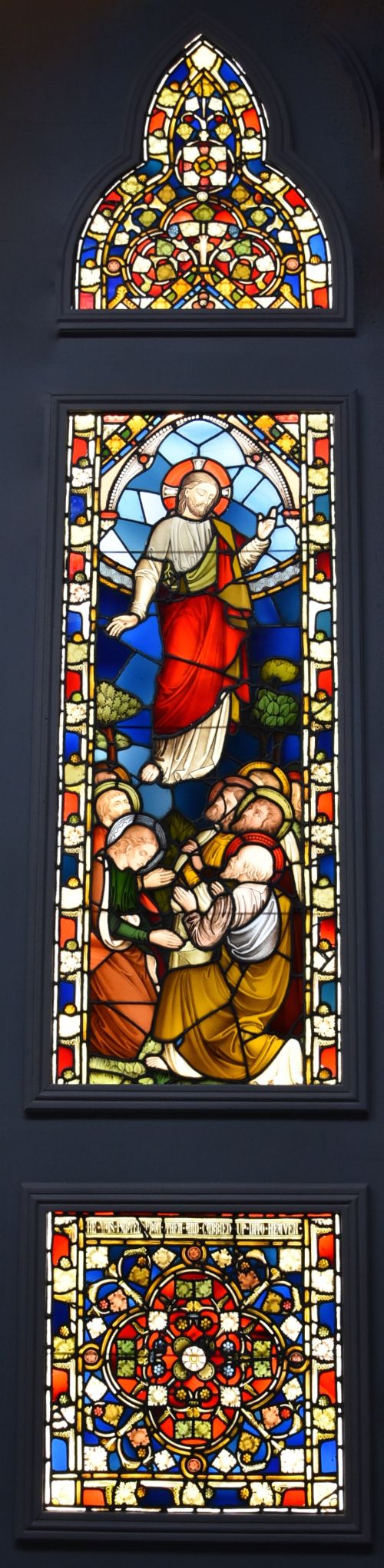
When you search for a decorative glass panel, you encounter a diverse group of architectural items and furnishings spanning the nineteenth and twentieth centuries. These objects range from ecclesiastical stained glass windows and leaded domestic panels to reverse-painted signs, firescreens, and architectural salvage.
You are most likely to meet pieces originating from the Victorian, Edwardian, and nineteen-hundreds periods on this page. Common manifestations include leaded windows featuring hand-painted countryside scenes, floral motifs, or figural designs housed within timber or metal frames.
What varies in quality
The distinction between standard and exceptional pieces rests upon the finesse of the hand-painting and the complexity of the glass composition. Finely detailed brushwork in pictorial scenes, such as landscapes or figures, elevates a panel far above repetitive or mechanically produced motifs.
Integrity of construction and material selection further define the hierarchy of these items. Original lead cording, uncompromised glass panes, and high-calibre framing in materials like giltwood or wrought iron indicate superior workshop production.
Listings feature periods from the nineteenth century through the nineteen-forties, including Victorian, Edwardian, and Arts and Crafts examples.
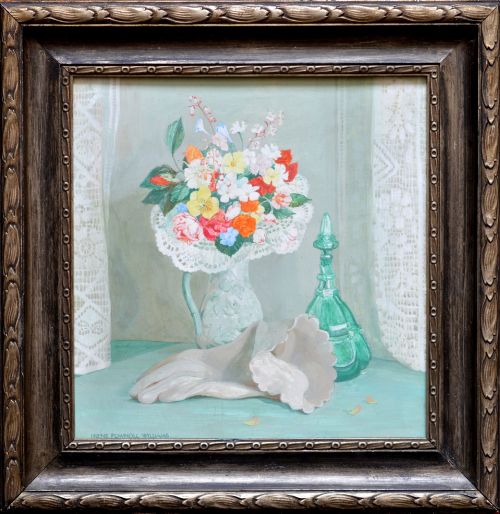
Irene Christobelle Pownoll Williams
The Decorative Glass Panel Glossary
- Stained glass
- Glass that has been coloured by adding metallic salts during its manufacture. This material forms the foundation of many historic windows and decorative panels.
- Leaded glass
- Individual pieces of glass joined together by strips of lead called cames. These lead lines create a structural grid that outlines the design.
- Reverse glass painting
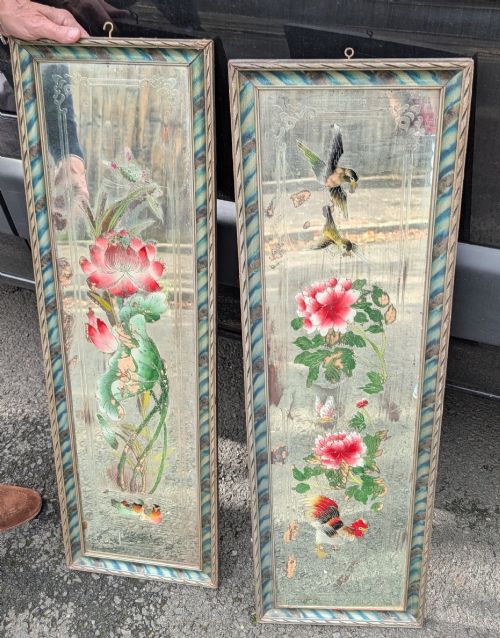
- An art form where the image is painted directly onto the back of a glass sheet so that the finished work is viewed through the front. This technique yields a glossy surface and preserved pigments.
- Trumeau mirror
- A decorative wall mirror incorporating an upper panel featuring a painting or carved relief. These French-inspired pieces combine reflective glass with pictorial art.
- Bullseyes
- Circular distortions or thick centres found in hand-blown crown glass panes. They often appear as textural accents in nineteenth-century windows.
Decorative Glass Panel: Frequently Asked Questions
How were stained glass panels originally used?
These panels primarily served as architectural elements in Victorian and Edwardian buildings, functioning as windows, transoms, or internal partitions to divide spaces while permitting light to pass through.
They also appeared in domestic settings as firescreens or decorative wall hangings, incorporating painted scenes or heraldic emblems to add colour and privacy.
How do I hang a heavy glass panel?
Due to the weight of lead cording and wooden or iron frames, these panels require secure wall fixings tied directly into structural studs or masonry.
Many architectural salvage pieces and mirrors feature integrated hanging hardware, but professional installation using weight-rated brackets ensures safe display.
How do I date a decorative glass panel?
Dating relies on stylistic clues such as the floral motifs of Arts and Crafts pieces, the linear designs of Art Nouveau, or the specific hand-painted countryside scenes typical of nineteen-hundreds production.
Frame construction, timber types, and the method of lead cording also provide physical evidence that points toward Victorian, Edwardian, or later mid-century eras.
Can these panels be used as room dividers?
Historic windows and architectural salvage panels adapt well to interior placement as room dividers or decorative inserts within larger wall structures.
Their translucent qualities allow natural light to travel between spaces while maintaining a visual barrier and displaying intricate painted or leaded designs.