
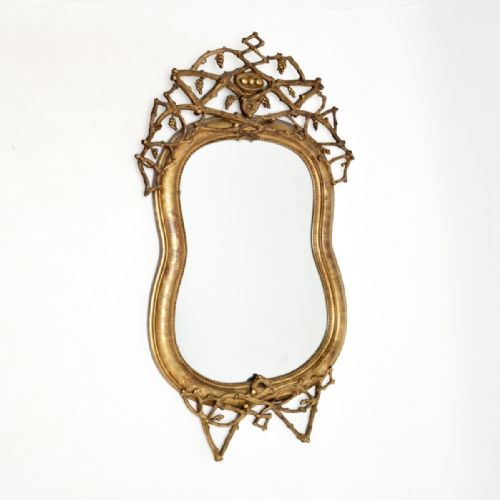


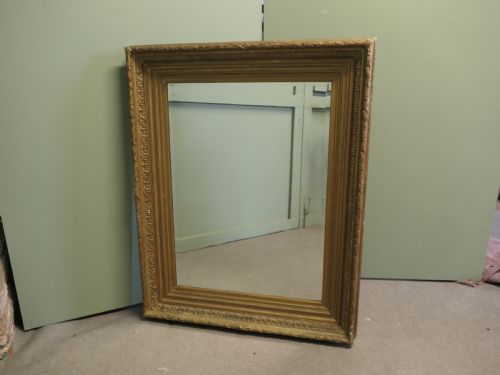
Decorative Giltwood Mirror
A decorative giltwood mirror brings warmth and reflective depth to a room through centuries of carved and gilded craftsmanship.
Decorative Giltwood Mirror
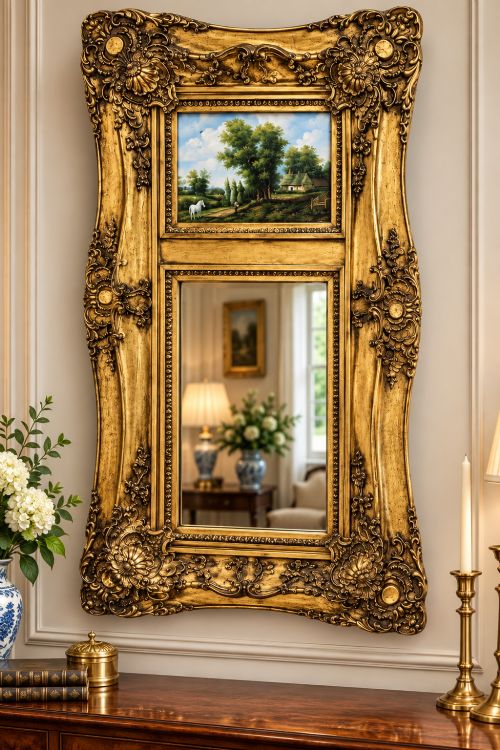
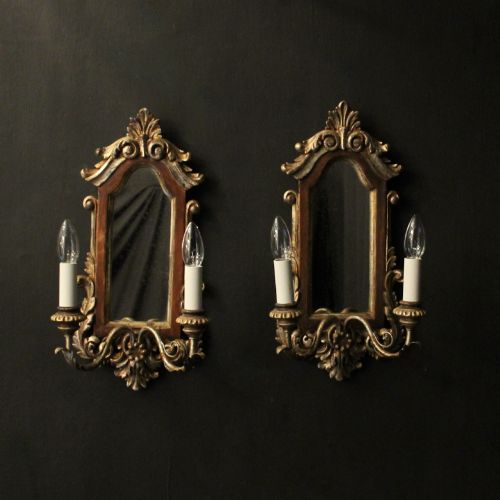
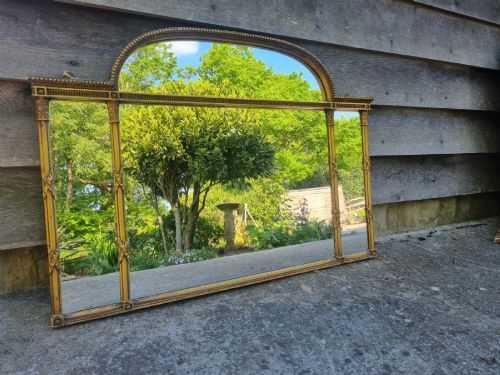
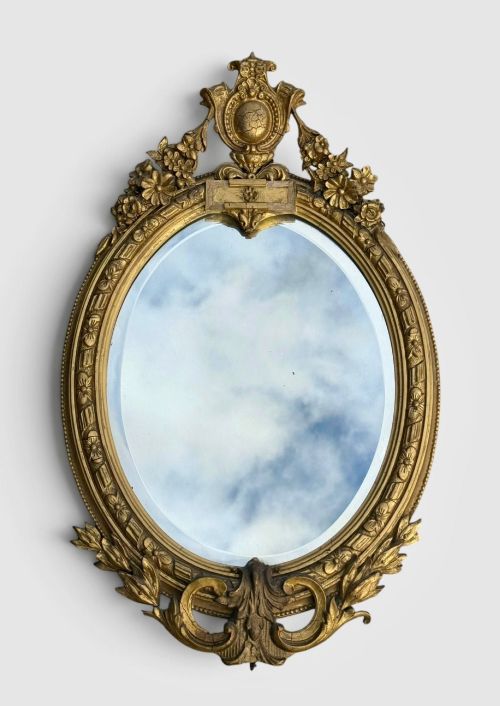
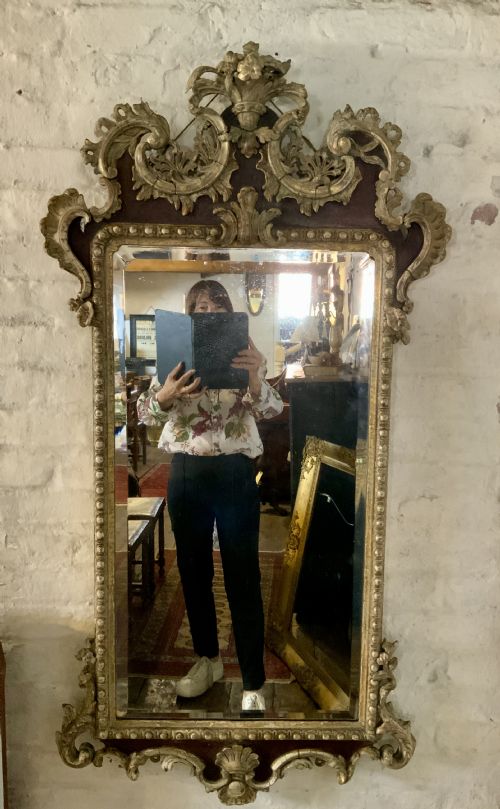
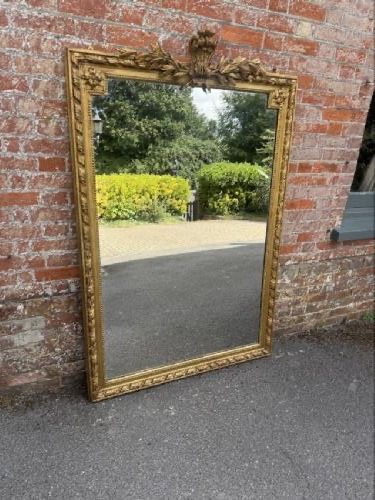
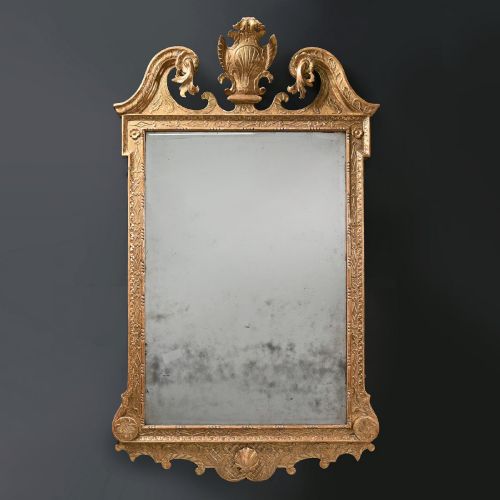
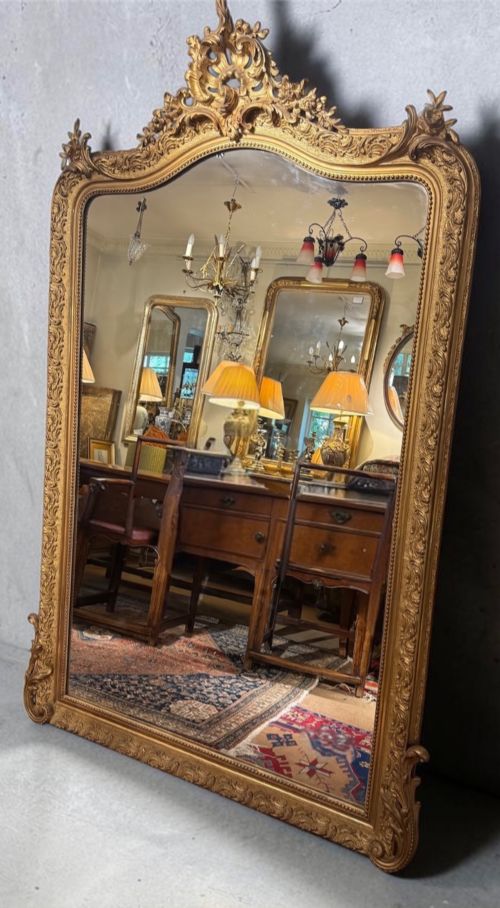
A decorative giltwood mirror combines reflective glass with a gilded timber frame, spanning wall mirrors, overmantels, pier mirrors, and girandoles. These pieces serve both practical and ornamental purposes in domestic spaces.
The selections on this page draw from 18th century origins through Victorian revivals and into the early 20th century. Buyers frequently encounter large overmantel frames and carved Italian or French wall pieces.
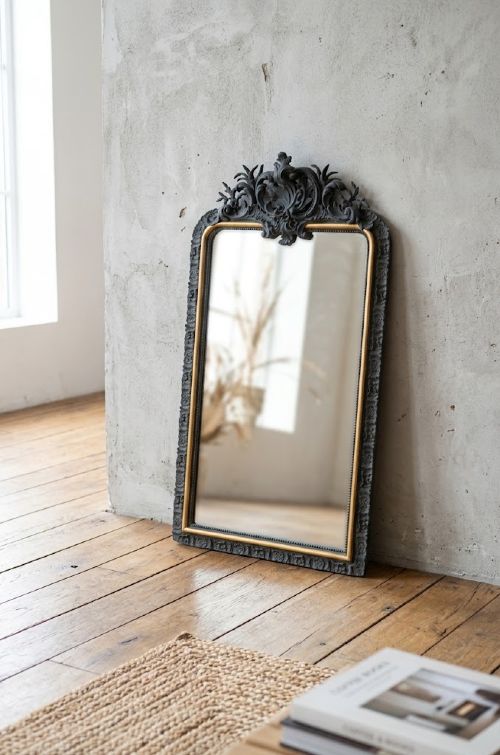
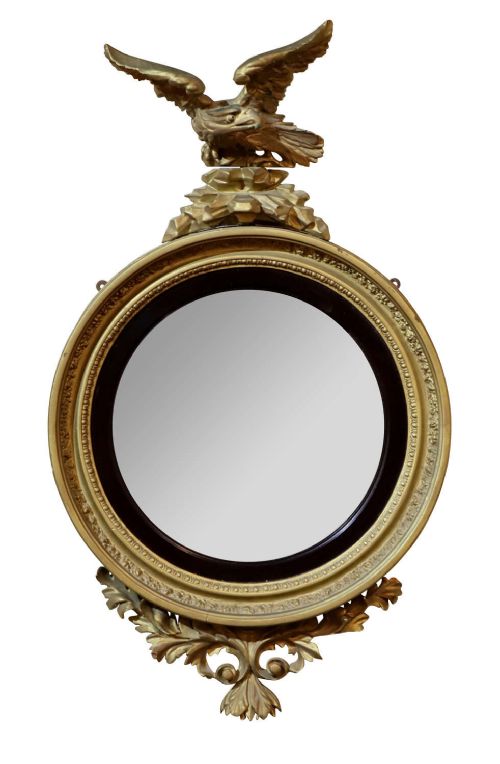
Forms range from circular convex mirrors with eagle surmounts to arched top frames and cushion-moulded designs. Walnut and ebonised wood often appear alongside traditional gilt finishes.
How they were made
Carved wood provides the structural foundation for many frames, utilising timber such as pine or walnut. Gesso is then applied to the carved wooden base to create a smooth, buildable surface for ornamentation.
Gold leaf or silver leaf is laid over the prepared gesso and bole layers, sometimes combined with paint or ebonised slips. This traditional gilding technique yields a rich, reflective metallic surface that ages with character.
Listings feature 18th century, Victorian, and 1920s periods, using materials like gesso, ebonised wood, and gold leaf.
What varies in quality
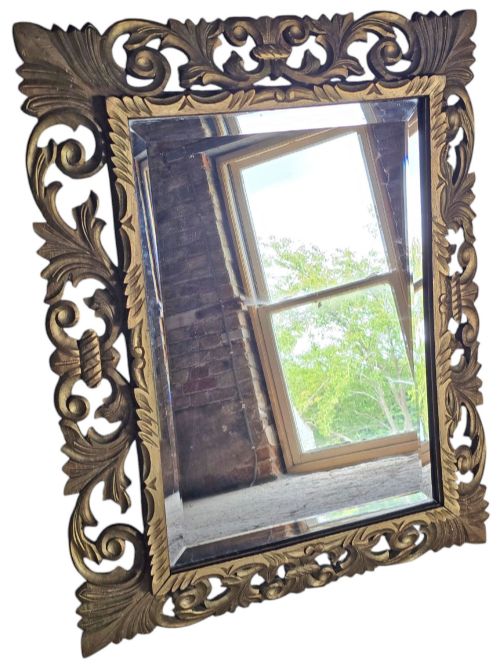
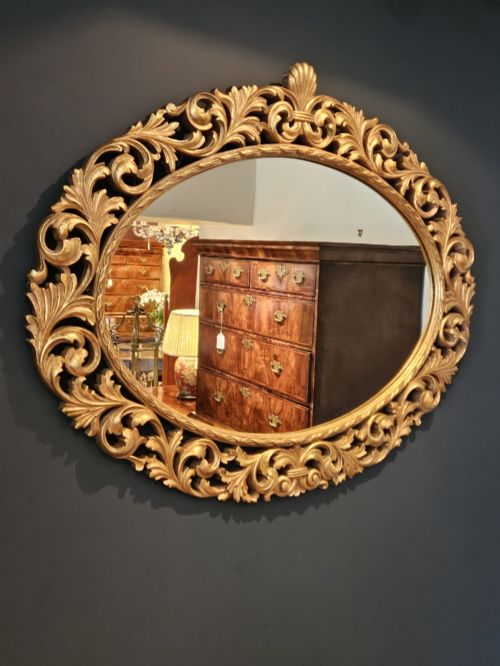
The crispness of the carved details dictates much of the visual distinction between examples. Hand-carved acanthus leaves, floral motifs, and figural elements show varying degrees of depth and precision.
The integrity of the original gesso and gold leaf surface influences the overall character. Age-related foxing on mirror glass and the retention of early gilding separate masterwork pieces from standard later interpretations.
The Decorative Giltwood Mirror Glossary
- Giltwood
- Wood covered with gold leaf or metal leaf. This finish creates a luminous frame surface.
- Gesso
- A plaster mixture applied to wood frames before gilding. It provides a smooth base for intricate carved details.
- Overmantel mirror
- A large mirror designed to hang above a fireplace mantel. These pieces frequently feature extended horizontal proportions.
- Convex mirror
- A round mirror with a bulging curved glass surface. It creates a wide-angle reflection of the entire room.
- Trumeau mirror
- A decorative wall mirror combined with a painted panel or artwork above the glass. Originating in France, it was designed to fit specific architectural wall spaces.
- Pier mirror
- A tall, narrow mirror designed to hang on the wall space between windows. They often match the height of adjacent furnishings.
Decorative Giltwood Mirror: Frequently Asked Questions
Where should I hang an overmantel mirror?
An overmantel mirror traditionally sits directly above a fireplace mantelpiece to anchor the room's focal point. Its large proportions reflect light across the space while balancing the architectural weight of the hearth.
Ensure the wall fixings match the substantial weight of these timber and gesso frames. Positioning the mirror at the correct height allows it to capture reflections from opposite windows effectively.
What is a convex mirror used for?
A convex mirror provides a wide, distorted panoramic reflection of an entire interior space. Historically, these circular frames allowed people to monitor activity across a room from a single vantage point.
They function well in hallways, dining rooms, and studies where a concentrated decorative accent is required. The curved glass creates a distinct visual depth compared to flat mirror plates.
How do I identify a Regency giltwood mirror?
Regency giltwood mirrors often feature classical motifs such as reeded columns, ball details, and eagle surmounts. The frames typically date from the early nineteenth century and display precise, restrained ornamentation.
Looking at the construction of the timber backboards and the wear on the gold leaf helps confirm the period. Convex formats with ebonised inner slips are also common signatures of this era.