






Decorative Desk Inkstand
These decorative desk inkstand examples bring tactile weight and refined craftsmanship to a writing surface, offering period function paired with sculptural presence.
Decorative Desk Inkstand
A decorative desk inkstand is a functional writing accessory designed to hold one or more inkwells, often accompanied by pen rests and compartments for stationery. Buyers exploring this category encounter a range of forms spanning the nineteenth and twentieth centuries, reflecting changing domestic and professional writing habits.
The selections on this page draw from Victorian, Edwardian, and Art Nouveau periods, alongside Continental and French Second Empire designs. Walnut, brass, marble, and gilded bronze appear frequently, often combined with cut glass inserts or ceramic components.
Most pieces date from the mid-nineteenth century through to the early decades of the twentieth century. These items range from simple wooden desk stands to elaborate figural or architectural mounts featuring hinged lids and original glass bottles.
Materials and construction methods
Makers utilised cast and chased metals such as brass and gilded bronze, frequently mounting them onto heavy stone bases like marble or incorporating carved timber bodies in walnut and coromandel-wood. These substantial materials provided the necessary stability to support heavy glass ink bottles and prevent tipping during use.
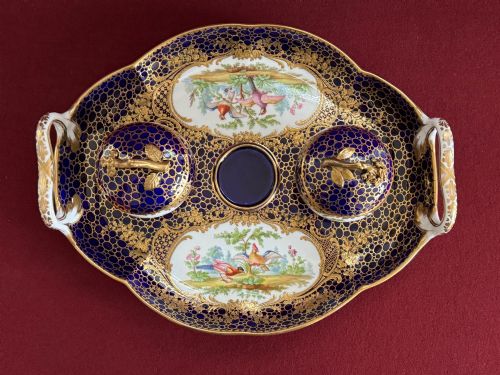
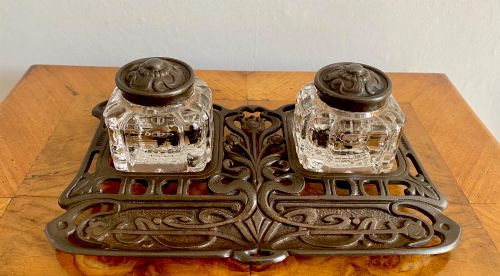
Decorative surfaces display applied cabochons of agate, hand-painted porcelain panels, and intricate cast motifs ranging from geometric Art Nouveau tendrils to figural animal studies. Glass elements were typically heavy, cut, or moulded to fit snugly within metal collars.
Construction involved secure mechanical fixings such as threaded screws and pins to join metal feet, galleries, and hinges to the wooden or stone chassis, ensuring durability for daily desk use.
Decorative Desk Inkstand Retail Price Guide 2026
Typical asking prices for decorative desk inkstand among the pieces listed under this phrase on Sellingantiques today, from the lower quarter to the upper quarter. They describe what is for sale here now, not the wider market.
Listings feature periods from the nineteenth century through the Edwardian era and 1930s, utilising brass, marble, walnut, and cut glass.
Factors of distinction
Quality rests in the crispness of the metal casting, the thickness and clarity of the glass inserts, and the choice of supplementary materials such as banded agate or select hardwoods. Superior examples display refined hand-chasing on bronze mounts and seamless integration between stone bases and metal fittings.
The presence of matching original ink bottles with intact collars and stoppers elevates an inkstand, as does documented metalwork from known workshops rather than anonymous production. Harmony of scale between the central stand and its lidded inkwells also defines the more successful compositions.
Albert Marionnet·Bergmann
The Decorative Desk Inkstand Glossary
- Cabochon
- A polished, convex gemstone or mineral cut without facets, frequently mounted onto nineteenth-century metalwork as a decorative accent. These smooth stones add vibrant colour contrasts to brass and bronze surfaces.
- Coromandel-wood
- A dense, heavily figured exotic timber from Asia with dark brown and black grain patterns, utilised for luxury nineteenth-century desk accessories. It provides a rich, polished foundation for brass mounts.
- Gilded Bronze
- Bronze metal coated with a thin layer of gold or gold-coloured alloy to give a rich, permanent metallic sheen. This technique protects the underlying metal from tarnishing while offering a luminous finish.
- Grand Tour
- A cultural journey undertaken by wealthy Europeans in the nineteenth century, acquiring local souvenirs such as marble and bronze desk ornaments. These items often emulate classical architecture or Continental decorative arts.
- Inkstand
- A comprehensive desk tray or stand incorporating one or more inkwells, pen holders, and sometimes a sander or wafer box. It serves as the primary station for correspondence.
Decorative Desk Inkstand: Frequently Asked Questions
What is a decorative desk inkstand?
A decorative desk inkstand is a desktop tray or stand designed to hold inkwells, pens, and sealing equipment for handwritten correspondence.
These pieces combine utilitarian function with ornamental metalwork, stone, or wood, serving as a focal point on a nineteenth or early twentieth-century writing desk.
How do I care for brass and marble?
Clean brass surfaces gently with a dry or slightly damp cloth, avoiding harsh chemical polishes that strip original patination. Wipe marble bases with a soft cloth and mild soap, keeping moisture away from unsealed wood joints.
Regular dusting preserves the surface finish without disturbing the historical integrity of the materials.
Are the ink bottles usually original?
Many surviving desk stands retain their original cut-glass or moulded ink bottles, often fitted with hinged metal collars and lids. Some examples show replacement bottles that fit the original apertures.
Checking the collar fit and glass clarity helps determine whether the components have stayed together since manufacture.
How can I tell the period?
Period indicators include manufacturing techniques, stylistic motifs, and material combinations such as Victorian walnut or Art Nouveau cast tendrils. The weight of the metal and the style of the hinges offer further clues to the decade of production.
Comparing structural details against documented nineteenth and early twentieth-century examples helps narrow down the date.