





Antique Bronze Pen Rest
These antique bronze pen rest pieces are small desk accessories designed to hold writing instruments, offering both practical utility and decorative charm for a traditional workspace.
Antique Bronze Pen Rest
An antique bronze pen rest serves as a dedicated support for writing tools, often integrated into larger desk sets or combined with inkwells and desk tidies. These pieces appear across Victorian, Edwardian, and later periods, reflecting changing tastes in desktop organisation.
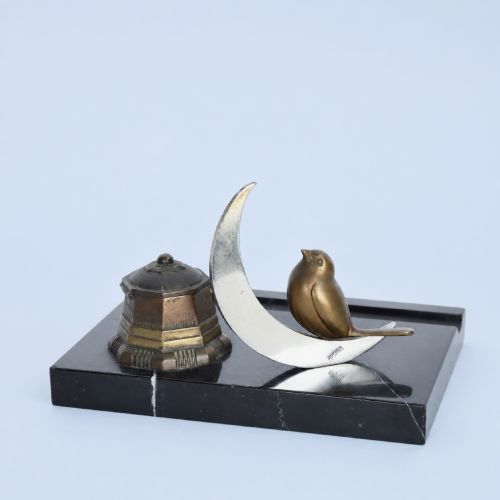
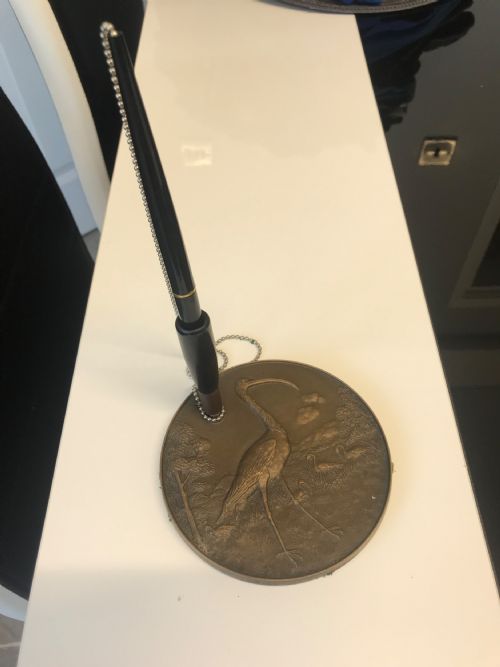
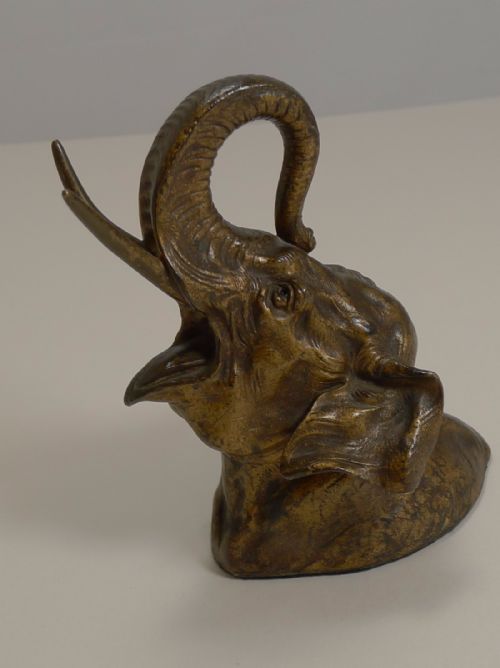
The versions most commonly met on this page include figural designs featuring animals such as birds, stags, and dogs, alongside stylised Art Nouveau and Art Deco examples. Makers incorporate materials like marble, onyx, and glass alongside the metal to create substantial desk ornaments.
Origins span English, French, and Austrian workshops, demonstrating a wide geographical reach in nineteenth and early twentieth-century metalwork. Buyers find everything from simple bronze trays to elaborate gilded ensembles bearing distinct signatures and foundry marks.
Materials and construction methods
Foundries utilised bronze, gilded bronze, ormolu, and silvered bronze, casting the metal to achieve intricate figural and decorative details. Artisans frequently mounted these metal sculptures onto heavy stone bases such as black marble or onyx.
Decorative elements often involved chasing and gilding the cast metal surfaces by hand, whilst auxiliary components like inkwells incorporated fitted glass inserts and delicate glass eyes.
Antique Bronze Pen Rest Retail Price Guide 2026
Typical asking prices for bronze pen rest among the pieces listed under this phrase on Sellingantiques today, from the lower quarter to the upper quarter. They describe what is for sale here now, not the wider market.
Several bronze desk pieces watch over your workspace with original glass eyes intact.
Factors of distinction
Quality rests upon the crispness of the bronze casting and the finesse of the hand-finishing, where superior examples show sharp details in animal fur, feathers, and stylised plant motifs. The integration of high-grade materials like solid marble or onyx bases elevates a piece above simpler metal trays.
Signed works by documented founders and retailers carry greater distinction, demonstrating superior artistic collaboration and meticulous attention to proportion and balance within the desk accessory.
A.Cohen & Co Ltd London·Asprey Of London·Albert Marionnet·Maurice Dufrene·Bergmann·Ernest Louis ADNIN
The Antique Bronze Pen Rest Glossary
- Ormolu
- Gilded bronze, where a mercury and gold amalgamation is applied to the metal surface and heated. This technique produces a rich golden finish characteristic of French decorative objects.
- Desk tidy
- A desk accessory designed to hold various writing implements, stamps, and small stationery items in one place. These often incorporate a pen rest alongside an inkwell.
- Patina
- The surface sheen and colour acquired by bronze over decades through handling and ageing. A desirable patina shows natural depth without excessive cleaning or damage.
- Chasing
- The manual technique of refining a metal casting from the front using punches and hammers. This process sharpens details and textures after the initial casting.
Antique Bronze Pen Rest: Frequently Asked Questions
What is an antique bronze pen rest used for?
These pieces were placed on writing desks to keep dip pens from rolling off the surface and staining the wood or blotting documents. They provided a clean, elevated spot for the pen whilst writing letters.
Over time, they evolved from standalone rests into integrated parts of larger desk sets and inkstands, combining utility with decorative sculpture.
How do I clean an antique bronze pen rest?
Dust the piece gently with a soft, dry brush to remove particles settled in the recesses of the casting. Avoid harsh metal polishes or abrasive cloths, which can strip away the original aged surface.
Preserving the natural surface colour maintains the historical character and visual depth of the metal.
How do I identify the period of a pen rest?
Examine the design style, such as the flowing organic lines of Art Nouveau or the geometric symmetry of Art Deco. Materials like black marble bases or specific glass inserts also offer clues to the decade of manufacture.
Maker marks, signatures, and stamps on the underside or edge of the bronze provide definitive evidence of origin and maker.
Are these pen rests suitable for modern fountain pens?
Most antique pen rests accommodate traditional dip pens and slimmer vintage writing instruments comfortably. Some channels may prove too narrow or short for oversized modern fountain pens.
Testing the pen against the specific groove dimensions ensures a secure fit on the desk.