


Decorative Cut Glass Bowl
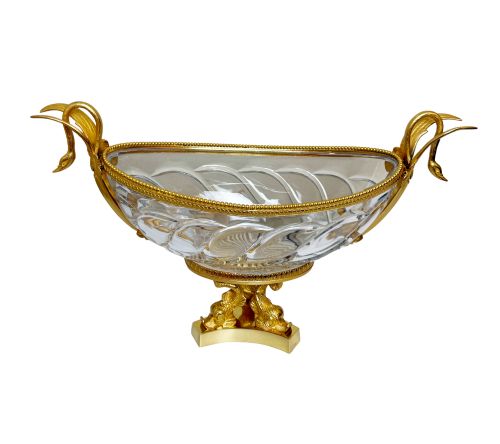
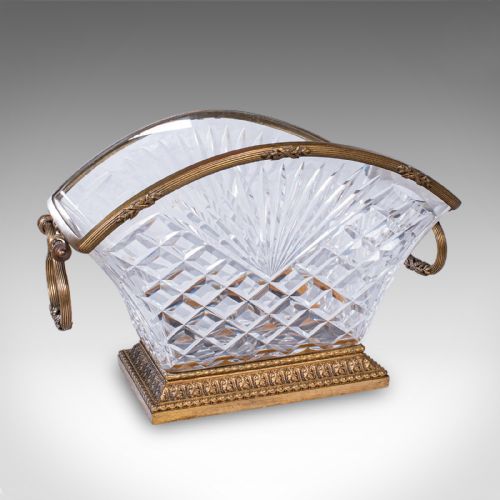
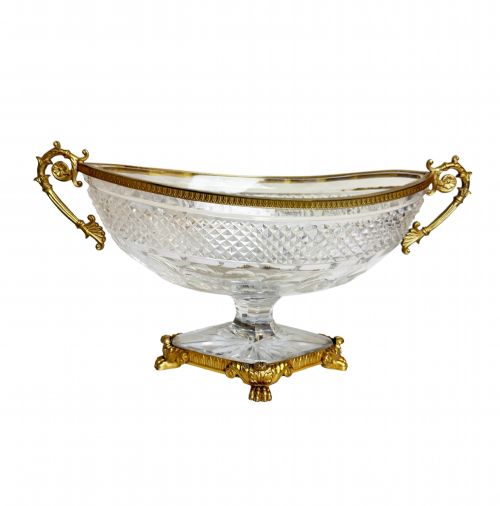
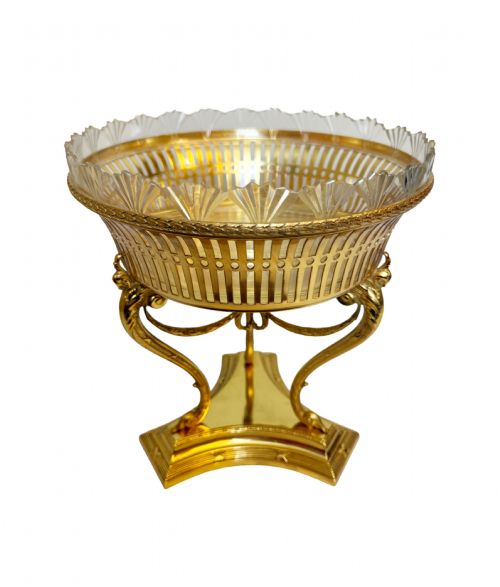
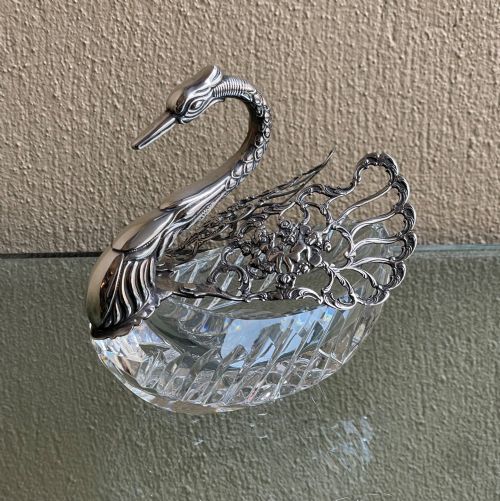
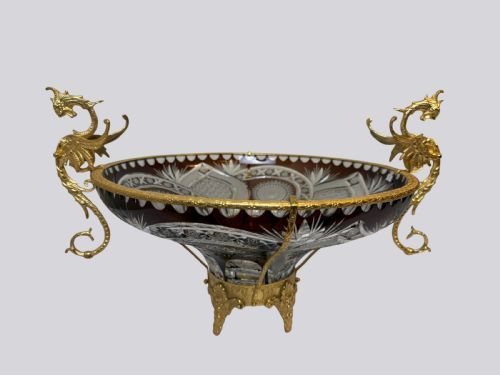
These decorative cut glass bowls combine heavy crystal and cast metal mounts to serve as striking centrepieces and serving dishes.
Decorative Cut Glass Bowl
When you search for a decorative cut glass bowl, you encounter substantial vessels designed for display and service, frequently mounted in gilt bronze, ormolu, or silver plate. The pieces on this page span the Victorian, Edwardian, and mid-twentieth-century periods, showing influences from Empire, Rococo Revival, and Neoclassical styles.
Centrepieces and large presentation bowls dominate the forms, alongside tazzas, potpourri baskets, and serving dishes with fitted glass inserts. Many sit upon elaborate metal stands or incorporate swing handles, shifting the object from a simple container to an architectural table ornament.
Origins stretch across English and continental workshops, with French nineteenth-century examples appearing frequently alongside Belgian production. Coloured over-crystal and clear lead crystal represent the primary vessels utilised within these configurations.
How they were made
Glassmakers produced these vessels using lead crystal, cut glass, and coloured over-crystal, shaping the heavy blanks through wheel-cutting to create deep prismatic facets. Artisans then polished the surfaces to achieve high transparency and sharp geometric or floral patterns.
Metal founders fabricated the mounts in gilt bronze, ormolu, and silver plate, employing casting and chasing techniques to secure the glass inserts safely within classical or revivalist frames.
Some Edwardian baskets feature swing handles designed to make passing potpourri round the drawing room feel remarkably dramatic.
What varies in quality
The depth and crispness of the glass cutting distinguish standard production from superior examples, where facets meet with absolute precision and the metal mounts show finer hand-chasing rather than cast blurring. Heavier metal gauge and intricate structural integration between the glass bowl and its bronze or silver-plated stand elevate the stature of the piece.
Material choice also influences the tier of the object, particularly where coloured overlay crystal or documented maker attribution lifts a standard table bowl into a piece of distinct design merit.
Joseph Simon·Val St. Lambert·William Comyns
The Decorative Cut Glass Bowl Glossary
- Cut crystal
- High-clarity glass containing lead oxide, shaped by abrasive wheels to form sharp decorative facets. This material produces a heavier weight and brighter refraction than standard glass.
- Ormolu
- Finely ground high-carat gold mercury-gilded onto a bronze base, providing a durable golden finish. This technique appears frequently on nineteenth-century French mounts.
- Tazza
- An elevated shallow bowl supported on a central foot or pedestal, designed for serving fruit or sweets. These pieces often feature cut glass tops paired with metallic stands.
- Over-crystal
- A manufacturing method where a layer of coloured glass is fused over a clear crystal base before being cut through to reveal the contrasting layer beneath.
- Silver plate
- A base metal coated with a thin layer of silver, commonly utilised for the handles, rims, and frames of Edwardian and Victorian serving dishes.
Decorative Cut Glass Bowl: Frequently Asked Questions
How were decorative cut glass bowls used?
These bowls served primarily as dining table centrepieces, holding fruit, flowers, or potpourri during formal meals and gatherings.
Their substantial mounts and decorative glass made them permanent fixtures of interior display on sideboards and central tables.
How do I distinguish Victorian pieces from later ones?
Victorian examples often rely on heavy cut glass paired with silver plate or ornate bronze frames, reflecting revivalist tastes like Rococo and Neoclassical.
Twentieth-century iterations introduce cleaner lines, specific coloured over-crystal techniques, and occasional factory marks associated with Art Deco design.
How do I care for a mounted glass bowl?
Clean the glass insert separately using lukewarm water and mild soap, avoiding harsh abrasives that might scratch the surface.
Keep moisture away from the gilt bronze or silver-plated mounts to protect the metallic finish from tarnishing or degradation.