
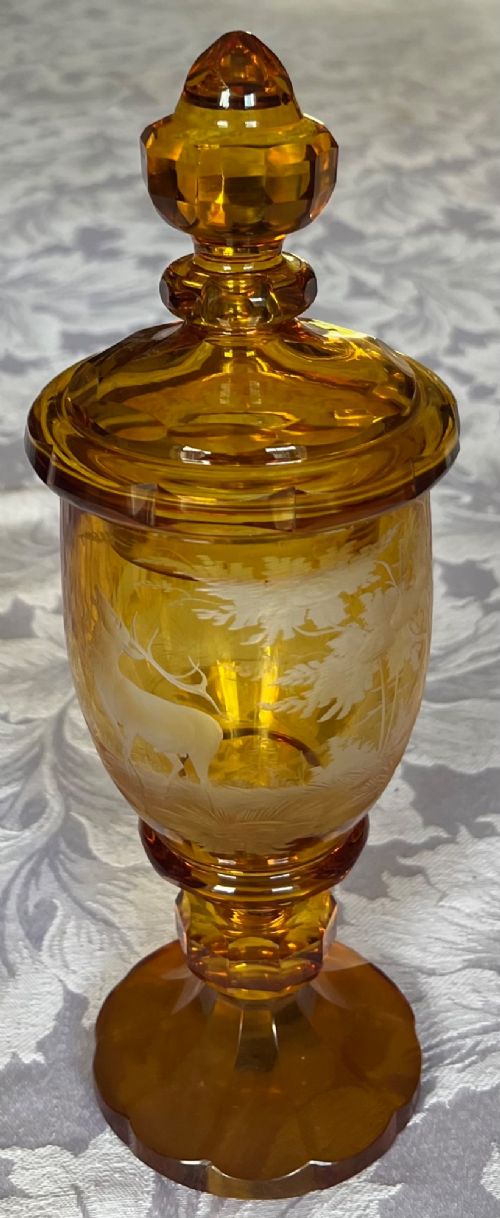


Lidded Crystal Vessel
These lidded crystal vessel pieces combine heavy cut glass with silver mounts, offering a practical way to store preserves, trinkets and sweets.
Lidded Crystal Vessel
A lidded crystal vessel brings together cut glass bodies with silver mounts, forming jars, preserve pots and vases designed for display and domestic storage. The pieces on this page span the Victorian and Edwardian eras, alongside items marked as nineteenth century and nineteen twenty.
Most examples function as preserve jars, trinket boxes or sweetmeat jars, often paired with matching lids and sometimes sterling silver fittings or spoons. Forms range from large vases and urns to smaller desk accessories and decorative jars.
Makers and origins include Bohemian production alongside English work by firms such as Asprey, reflecting both continental decorative techniques and domestic table traditions. Buyers encounter varied functional forms, from small lidded glue pots to substantial nineteenth century covered urns.
How lidded crystal vessel items were made
Construction relies on heavy lead crystal and cut glass, shaped and faceted to catch the light across botanical and geometric patterns. Bohemian examples frequently utilise engraved decoration alongside deep cutting.
Silver mounts, collars and lids are fashioned from sterling silver, affixed to the glass bodies with secure seals and hinged or loose covers. Makers such as Asprey incorporated solid silver tops and spoons to complete the functional design.
Materials recorded across the selection include cut glass, lead crystal, sterling silver and amber glass.
What varies in quality in a lidded crystal vessel
Quality rests upon the depth and crispness of the glass cutting, where sharper facets and finer engraving distinguish superior vessels from simpler pressed or moulded items. The weight and clarity of the lead crystal itself dictate the baseline standard of the object.
The integration of the silver mounts plays a decisive role, with hallmarked sterling silver collars and substantial fitted lids indicating higher workshop standards. Pieces bearing identified maker marks demonstrate finer finishing throughout both the glasswork and metal components.
Asprey and Co
The Lidded Crystal Vessel Glossary
- Lead crystal
- Glass containing metal oxides that increases weight, refractive index and clarity. This material allows for deeper, sharper facet cutting.
- Sweetmeat jar
- A covered vessel historically used for small confectionery, sweetmeats or preserved fruits. These pieces typically feature decorative glass covers.
- Preserve pot
- A small container designed for jams or jellies, often accompanied by a matching silver spoon and fitted lid. They sit upon dining and breakfast tables.
- Sterling silver
- An alloy of silver containing ninety-two point five percent pure silver by mass. It appears on mounts, lids and spoons across these items.
Lidded Crystal Vessel: Frequently Asked Questions
What were lidded crystal vessel pieces used for?
These pieces served practical storage roles on tables, desks and dressing surfaces across Victorian and Edwardian households. They held preserves, sweets, glue or small personal trinkets.
The inclusion of fitted lids kept contents clean, while silver spoons and mounts added utility and display value. Many items doubled as decorative ornaments when not in active domestic use.
How do I date a lidded crystal vessel?
Dating relies on stylistic markers, glass cutting techniques and silver hallmarks stamped onto the metal mounts. Victorian and Edwardian pieces exhibit distinct proportions and decorative motifs.
Silver hallmarks provide the most precise indication of age, revealing the assay office and year of manufacture for the metal components. Glass styles often corroborate these date ranges.
Are all lidded crystal vessel pieces made of lead crystal?
Most examples utilise heavy cut glass or lead crystal, though listings also record amber glass and standard glass compositions. The density and ring of the material help identify lead content.
Bohemian and English makers selected heavy glass to support deep facet cutting and engraving without compromising structural stability. The weight remains a key indicator of material quality.
How should I care for a lidded crystal vessel?
Maintenance requires gentle hand washing in lukewarm water with mild soap to protect both the glass surfaces and silver mounts. Harsh detergents and modern dishwashers can damage silver and dull glass facets.
Silver components benefit from periodic cleaning with appropriate metal polishes, taking care to avoid contact with the glass. Proper handling prevents chips to the rims and heavy cut patterns.