




Antique Crystal Glass Urn
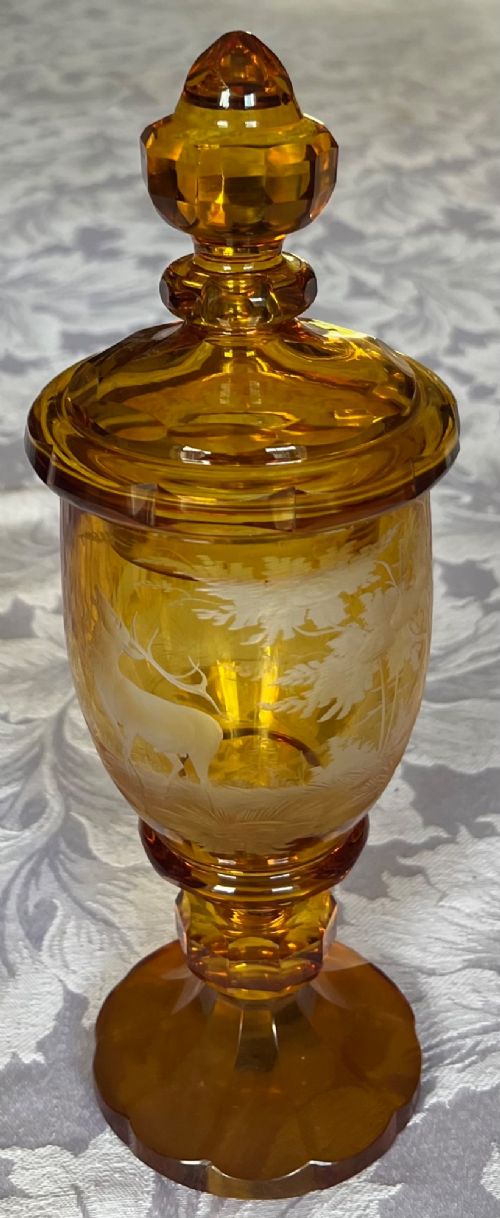
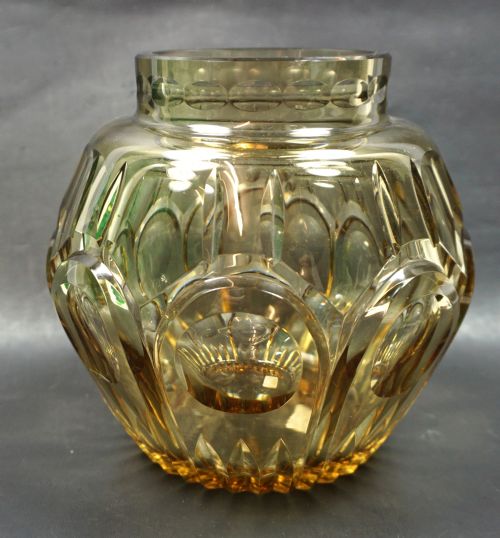
An antique crystal glass urn brings heavy refractive sparkle and classical presence to a room, drawing the eye with deep wheel-cut facets.
Antique Crystal Glass Urn
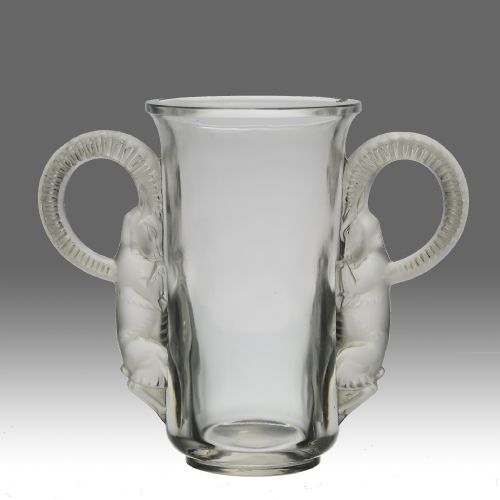
The Victorian era supplies substantial cut glass lidded vases and cobalt blue vessels, while Art Deco examples introduce sapphire tones and clear moulded forms by makers such as René Lalique. Regency coolers and Edwardian pairs demonstrate how these heavy vessels served functional roles on dining tables and sideboards.
You are most likely to meet Victorian cut glass lidded jars and nineteenth-century bohemian pieces on this page, alongside twentieth-century champagne coolers and table lamps mounted in gilt metal or chrome.
How they were made
Makers shaped lead crystal and clear glass through hand-blowing and moulding before applying deep geometric cutting wheels to achieve sharp facets and polished surfaces. Overlay techniques required fusing layers of coloured glass over a clear core, allowing cutters to slice through the outer layer and reveal contrasting panels underneath.
Decoration often involved wheel-etching, paste gilding, or the integration of silver and gilt metal mounts, gold leaf, and chrome components. These varied techniques combined heavy material substance with precise surface ornament characteristic of French Belle Epoque, Regency, and Art Deco workshops.
Victorian households kept sweetmeat jars fully stocked with candied fruits to test the willpower of visiting guests.
What varies in quality
The distinction between ordinary production and superior work rests on the crispness of the cutting, the depth of the metal polish on the facets, and the weight of the lead crystal. Heavy, resonant glass with sharp, unrounded facet junctions separates the finest Victorian and Bohemian production from lighter, softer moulded alternatives.
Design ambition and material purity further define the range, from simple press-moulded jars to grand hand-blown champagne coolers with intricate overlay or signed maker attribution. The quality of supplementary mounts, whether Dutch silver or gilt bronze, contributes directly to the standing of the piece.
René Lalique
The Antique Crystal Glass Urn Glossary
- Lead crystal
- Glass containing lead oxide, which increases weight, brilliance, and refractive index while making the material softer for wheel-cutting. This heavy composition gives antique vessels their characteristic ring and clarity.
- Cut to clear
- A technique where a layer of coloured glass is cased over clear glass and partially ground away to create contrasting clear patterns. The depth of the cut determines the sharpness of the design.
- Sweetmeat jar
- A covered vessel originally designed for serving delicate confectionery, nuts, or preserved fruits. These pieces often feature faceted lids and pedestal bases.
- Overlay
- A method of casing one layer of coloured glass over another contrasting colour or clear body. Artisans cut through the outer skin to expose the base material.
- Paste gilt
- A decorative method using powdered gold mixed with a binding medium applied to the glass surface and fired. It provides metallic ornament on decorative bowls and vases.
Antique Crystal Glass Urn: Frequently Asked Questions
How were antique crystal glass urns used?
These vessels served diverse domestic functions, from cooling champagne and wine on dining tables to storing sweetmeats and confitures in lidded jars. Many functioned purely as decorative centrepieces or large vases on sideboards and pedestals.
Over time, some utilitarian coolers and jars transitioned into pure display objects, while others were later adapted into table lamps with metal mounts.
How do I date an antique crystal urn?
Dating relies on stylistic clues, cutting techniques, and material characteristics associated with periods such as the Regency, Victorian, and Art Deco eras. Heavy, deep-cut lead crystal and cobalt blue vessels frequently point to nineteenth-century English or Bohemian origins, whereas stylised flora and clear moulded bodies suggest the twentieth century.
Associated hardware like Dutch silver mounts or specific maker signatures provide further chronological markers for pieces from the eighteen-eighties onward.
Are these urns made of lead crystal?
Many of the listed pieces utilise heavy lead crystal or cut crystal, which provides the high refractive index and weight characteristic of fine antique glassware. The presence of lead allowed artisans to cut deep, sharp facets that catch the light.
Not every piece is heavy lead glass, as some twentieth-century examples employ moulded clear glass or specialised overlay techniques instead.
How do I live with a crystal urn?
Place these heavy glass vessels away from direct foot traffic where they might be knocked, and position them near natural light sources to maximise the sparkle of the cut facets. Ensure they rest on stable surfaces capable of supporting substantial lead glass and metal mounts.
Hand washing in lukewarm water with mild soap keeps the glass clear, avoiding abrasive materials that could scratch the polished surface or damage paste gilt decorations.