
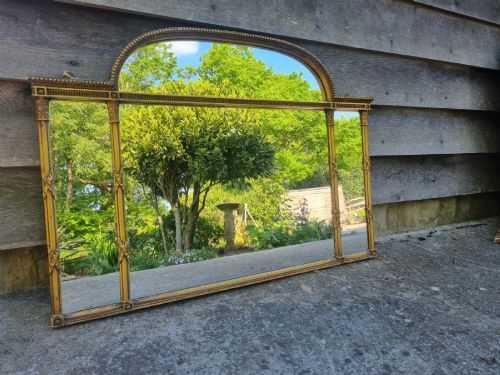
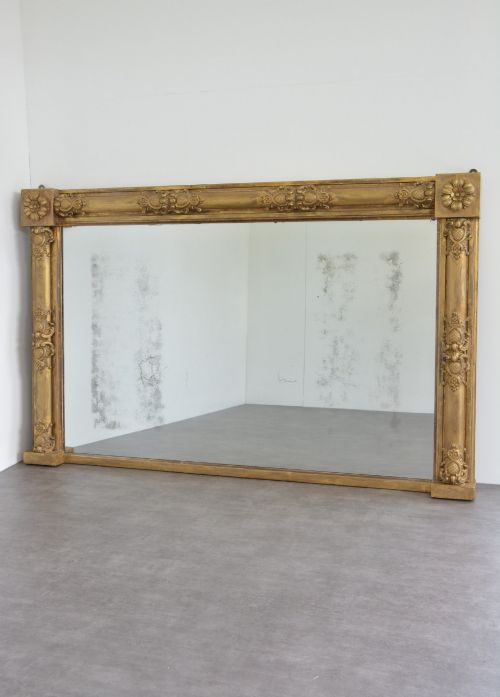


Decorative Chimney Glass Mirror
These large decorative chimney glass mirror pieces bring architectural weight and bright reflection to a room, which is why collectors seek them.
Decorative Chimney Glass Mirror
A decorative chimney glass mirror sits above a fireplace, filling the wide horizontal space where a mantelpiece meets the wall. These large items function as overmantel mirrors, wall mirrors, and trumeau mirrors designed to bounce light across a grand interior.
The versions most common here date from the nineteenth century, including Regency, Victorian, and William IV periods. They appear in English and French tastes, featuring arched tops, shaped tops, and triple plate configurations.
Makers shaped these frames from wood, gesso, and composition, applying gold leaf, paint, and giltwood finishes. Many retain foxed mirror glass that shows the gentle speckling of age.
How they were made
Carved wood and moulded composition or gesso form the structural framework for these large frames. Artisans applied thin layers of gold leaf or paint over the gesso base to achieve a brilliant metallic sheen.
Mirror plates were set into the timber rebates behind protective backboards, sometimes utilising multiple glass sections like triple plates. Etching and bevelling added surface detail directly onto the glass panes.
Formats range from simple rectangular wall mirrors to grand architectural overmantel mirrors with triple plate glass.
What varies in quality
Depth and precision of the carved wood and gesso ornamentation separate standard examples from finer works. Crisp mouldings and deeply carved rope twists or neoclassical motifs show the hand of a skilled artisan.
The preservation of the original mercury or silvered mirror glass and the integrity of the giltwood surface dictate the desirability of a piece. Lightly foxed glass adds period character, whereas heavy deterioration alters the reflective quality.
The Decorative Chimney Glass Mirror Glossary
- Overmantel mirror
- A large mirror specifically designed to hang or stand on the mantelpiece above a fireplace. These pieces often feature wide horizontal proportions to match the hearth below.
- Gesso
- A plaster-like mixture applied to wood frames to create a smooth surface for gilding or painting. Artisans carved intricate details directly into this layer.
- Foxed glass
- Mirror glass that has developed dark spots or a speckled hazy appearance due to the degradation of the silver backing over time. This chemical shift creates a characteristic antique look.
- Trumeau mirror
- A decorative wall mirror that incorporates a painted panel or carved artwork above the glass plate. These French-inspired pieces were typically built into interior wall panelling.
- Composition
- A moulded mixture of whiting, resin, glue, and oil pressed into shape and applied to wooden frames. It allowed makers to produce elaborate decorative ornaments quickly.
Decorative Chimney Glass Mirror: Frequently Asked Questions
How do I hang a heavy overmantel mirror?
These large mirrors carry considerable weight from their timber frames and thick glass plates, so secure wall fixings into masonry or studs are essential. Many period pieces were designed to rest directly on the mantelpiece while being anchored to the wall for stability.
Professional installation ensures the frame's weight distributes evenly without straining the original construction or brackets. It is wise to consult a specialist art handler for the larger country house examples.
Can I place these mirrors in a dining room?
Placing an overmantel mirror in a dining room creates a striking focal point while reflecting candlelight and tableware across the space. Their wide proportions suit placement above a sideboard or serving table just as well as a fireplace.
Ensure the wall can bear the physical scale of a nineteenth-century frame before mounting it away from a traditional hearth. The gilded finishes help brighten darker corners of reception rooms.
What is the difference between Regency and Victorian mirrors?
Regency mirrors often lean towards classical restraint, featuring clean architectural lines, ball-accented cornices, and bolder giltwood surfaces. They frequently date from the early nineteenth century and reflect neoclassical or pillar-supported designs.
Victorian pieces tend towards heavier, more exuberant ornamentation, including elaborate carved wood, gesso, and arched or shaped tops. Aesthetic Movement examples from later in the century introduce distinct artistic touches and painted details.
Should I clean foxed glass?
Foxed glass should be left untouched because the speckled degradation is a natural result of ageing and oxidation. Cleaning off the underlying silver loss destroys the historic patina that collectors value.
Dust the surface gently with a soft dry cloth and avoid harsh chemical glass cleaners that might seep behind the frame. Preserving the original glass maintains the authentic character of the antique.