




Decorative Ceramic Display Charger
A decorative ceramic display charger is a large, ornamental plate intended primarily for wall hanging or cabinet display rather than dining use.
Decorative Ceramic Display Charger
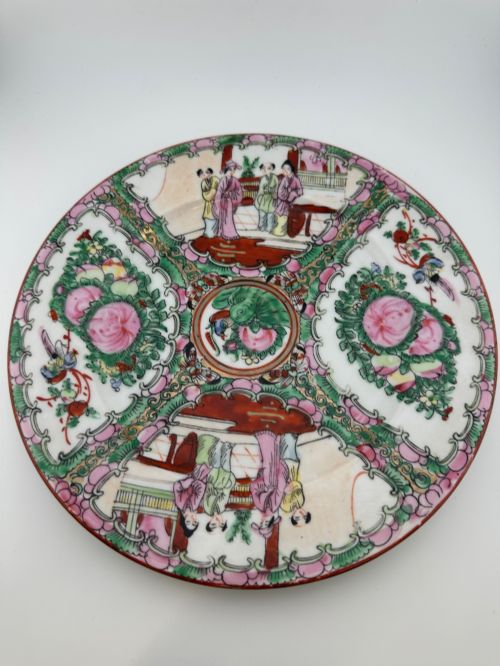
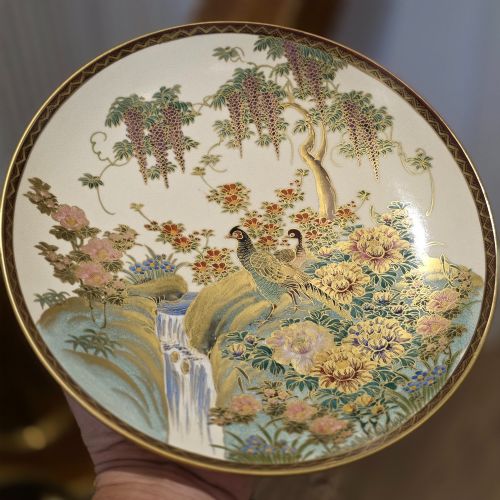
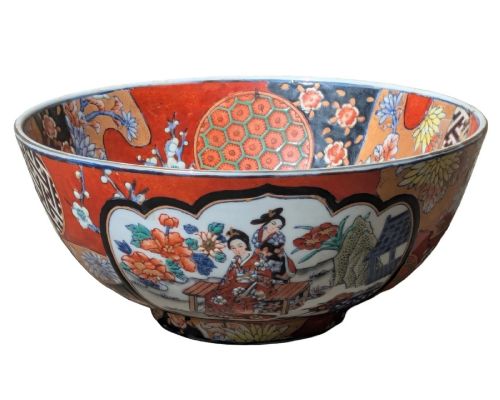
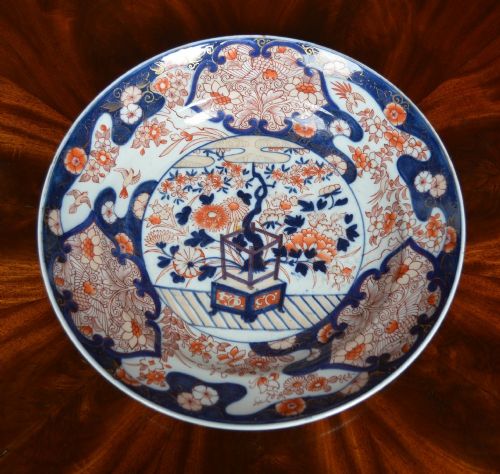
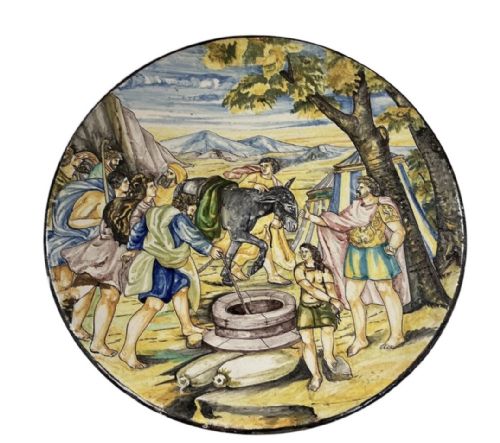
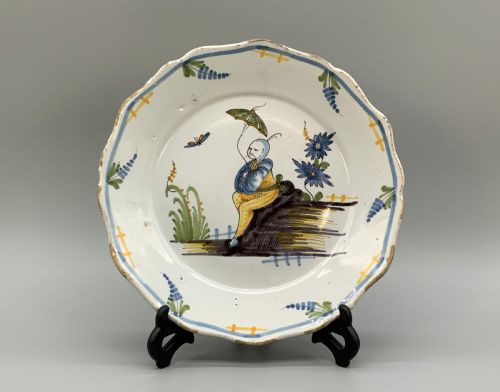
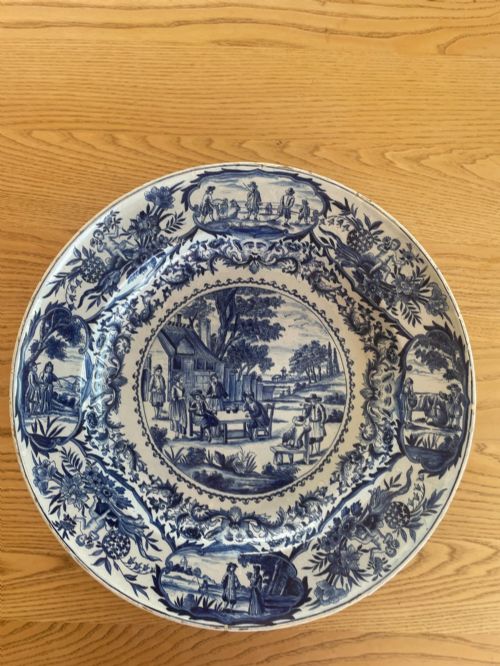
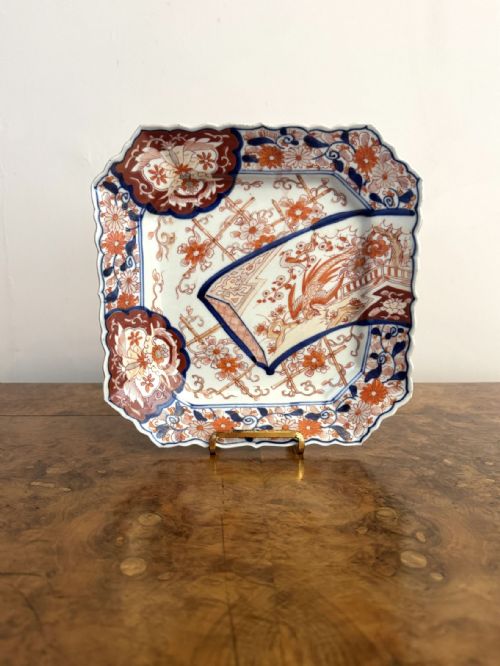
A decorative ceramic display charger spans several centuries of international ceramic production, with Japanese Imari porcelain from the Meiji period appearing most frequently alongside Dutch and French Delft earthenware.
Buyers will encounter various large plate and charger formats, including scalloped edges, square shapes, and traditional circular dishes produced across the eighteenth, nineteenth, and early twentieth centuries.
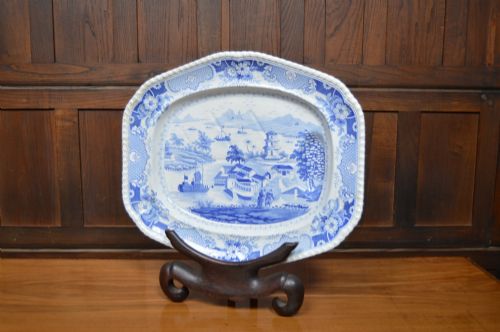
The selection ranges from blue and white transferware and Chinese export porcelain to vibrant Japanese Kutani, Satsuma, and Arita wares designed specifically for visual impact.
Materials and Technique
Makers utilised high-fired porcelain and earthenware bodies, applying mineral glazes and hand-painted pigments before secondary or tertiary kiln firings.
Techniques combine underglaze blue painting with overglaze enamels, occasionally incorporating gilding, gold leaf, and manganese or yellow highlights to achieve rich surface decoration.
Current listings feature porcelain and earthenware bodies spanning the eighteenth, nineteenth, and early twentieth centuries.
Artistic Execution
Quality rests in the precision of the hand-painted detail, where fine brushwork, balanced composition, and depth of pigment separate superior studio or factory output from routine production.
The crispness of moulded edges, the stability of the glaze without excessive pitting, and the complexity of multi-coloured enamels or armorial crests determine the standing of each piece.
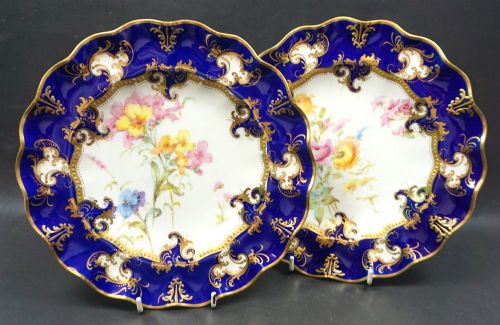
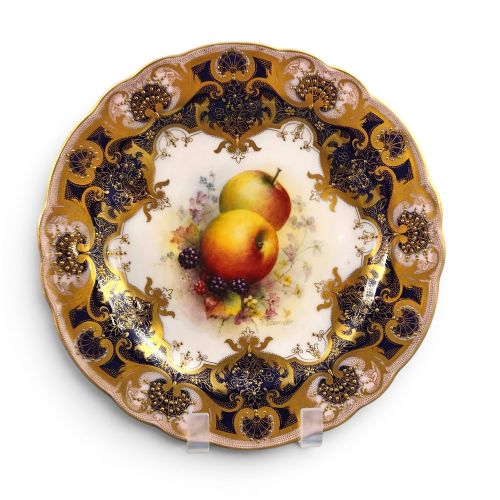
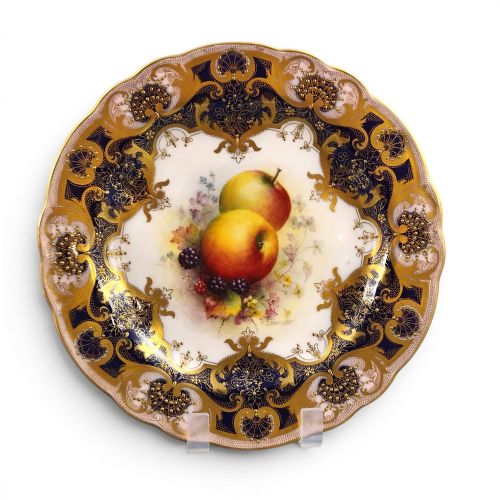
Royal Worcester·Royal Crown Derby·Copeland Pottery·Pucher Deroche
The Decorative Ceramic Display Charger Glossary
- Charger
- A large decorative plate or dish, traditionally exceeding the diameter of standard dinner service plates. These were made to be showcased on sideboards or hung on walls.
- Imari
- A style of Japanese porcelain exported from the port of Imari, typically characterised by a palette of underglaze blue, iron red, and gilt highlights.
- Delftware
- Tin-glazed earthenware originating in the Netherlands and France, often featuring blue and white or polychrome designs influenced by Chinese porcelain.
- Faience
- Tin-glazed European pottery, particularly earthenware produced in France and Italy during the eighteenth and nineteenth centuries.
- Cabinet plate
- An ornamental porcelain plate created for display within a glass-fronted cabinet rather than practical service at the table.
Decorative Ceramic Display Charger: Frequently Asked Questions
How were decorative ceramic display chargers used historically?
These large plates were designed to ornament grand dining rooms and parlours, standing upright on sideboards or mounted on walls to display wealth and artistic taste.
Unlike everyday tableware, they served a purely visual function, celebrating fine craftsmanship and imported ceramics from Asia and Europe.
How do I hang a heavy antique charger safely?
Hanging heavy ceramic pieces requires specialised spring-loaded brass or coated wire hangers that distribute the weight evenly across the rim without exerting pressure on stress points.
It is essential to anchor the fixing directly into wall studs or use appropriate wall plugs suited to the weight of porcelain and earthenware.
How should I clean and maintain antique ceramic chargers?
Dust these pieces gently with a dry, soft microfibre cloth to remove surface particles without risking abrasion to fragile overglaze enamels or gilt highlights.
Avoid immersion in water or chemical cleaning agents, particularly on porous earthenware or pieces with delicate nineteenth-century gilding.