

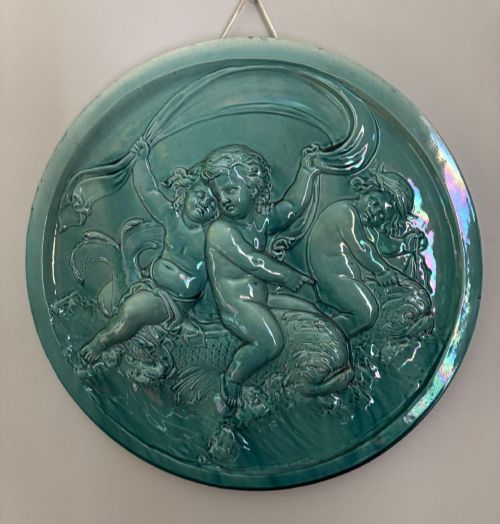


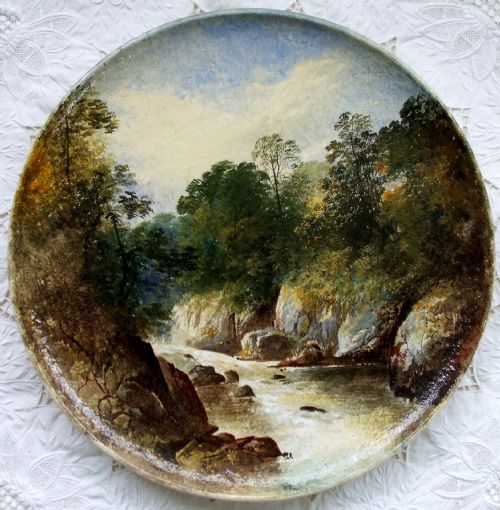


Green Ceramic Wall Plaque
These green ceramic wall plaque pieces bring rich colour and detailed glaze work to interiors, offering a distinct focal point for collectors of Victorian and Edwardian wall art.
Green Ceramic Wall Plaque
When you search for a green ceramic wall plaque, you encounter decorative pieces spanning the nineteenth century, the Edwardian era, and the Art Nouveau movement. The selection on this page centres on earthenware, porcelain, and tile formats designed specifically for wall hanging.
Most examples originate from English potteries, French workshops, and German porcelain centres, capturing botanical, landscape, and classical revival subjects. The forms range from framed tiles and hand-painted plates to large chargers and sculptural plaques.
Victorian and Edwardian versions dominate the selection, often featuring named scenes or botanical studies rendered in rich green glazes and enamels. These pieces combine functional ceramic bodies with purely decorative intent, created to adorn period interiors.
How they were made
Potters shaped these pieces from earthenware and porcelain bodies before applying liquid glazes, enamels, and hand-painted pigments. Copeland pottery, Sherwin and Cotton tiles, and Wedgwood jasperware each demanded precise kiln firing to fix the rich green tones and surface details.
Many items incorporate specialised techniques such as cloisonne over earthenware bases, known as Totai Shippo, or intricate hand-painting across porcelain surfaces. Signed works by artists like William Yale demonstrate the careful brushwork required for detailed landscape and figurative plaques.
Green Ceramic Wall Plaque Retail Price Guide 2026
Typical asking prices for green ceramic wall plaque among the pieces listed under this phrase on Sellingantiques today, from the lower quarter to the upper quarter. They describe what is for sale here now, not the wider market.
Listings feature earthenware, porcelain, and enamel glaze materials across Victorian, Edwardian, and Art Nouveau styles.
What varies in quality
Quality in these pieces rests on the depth of the glaze, the clarity of the hand-painting, and the artistic execution of the subject matter. Signed works by established ceramic artists and major pottery houses display superior pigment control and finer detail.
The sophistication of the moulded relief and the preservation of the enamel surface dictate the overall standard. Pieces with well-defined botanical forms or intricate pictorial scenes command greater attention from collectors than plain glazed surfaces.
Clement Messier·Copeland Pottery·Sherwin and Cotton·Wedgwood·William Yale
The Green Ceramic Wall Plaque Glossary
- Earthenware
- A porous pottery body fired at lower temperatures, commonly used for Victorian tiles and decorative wall plaques. It requires a glaze to become impermeable.
- Jasperware
- A fine-grained, unglazed stoneware developed by Wedgwood, frequently featuring white classical cameos contrasted against a coloured background.
- Totai Shippo
- A Japanese technique applying cloisonne enamel decoration over a ceramic or pottery base rather than traditional metal. This method produces textured surfaces imitating natural elements like tree bark.
- Enamel
- A glassy substance fused to ceramic or metal surfaces through kiln firing, providing durable and vibrant colour. Enamel glazes enhance the visual depth of painted plaques.
Green Ceramic Wall Plaque: Frequently Asked Questions
How do I hang a ceramic plaque safely?
Most antique plaques feature integrated rear wire loops, pierced foot rims, or purpose-built wooden frames designed for wall mounting.
Ensure the hanging hardware matches the weight of the ceramic body and secures firmly into wall studs or appropriate fixings.
How do I clean an antique ceramic plaque?
Dust the surface gently with a soft, dry brush to remove accumulated particles without disturbing delicate enamel or paint.
Avoid abrasive cleaners and liquid immersion, particularly on earthenware or pieces with exposed unglazed edges.
Are these plaques signed by the artists?
Certain pieces carry artist signatures, painter ciphers, or pottery factory marks impressed or painted on the reverse.
Signatures from makers like William Yale or factories such as Copeland provide clear attribution to nineteenth-century production periods.
What is the difference between a tile and a plaque?
Tiles were typically produced for architectural insertion or fireplace surrounds, later mounted into decorative frames for wall display.
Plaques were conceived primarily as independent works of art intended solely for interior wall decoration.