
Decorative Bronze Urn Pair
These decorative bronze urn pair examples bring classical symmetry and tactile weight to a room, drawing the eye with their sculptural silhouettes and patinated surfaces.
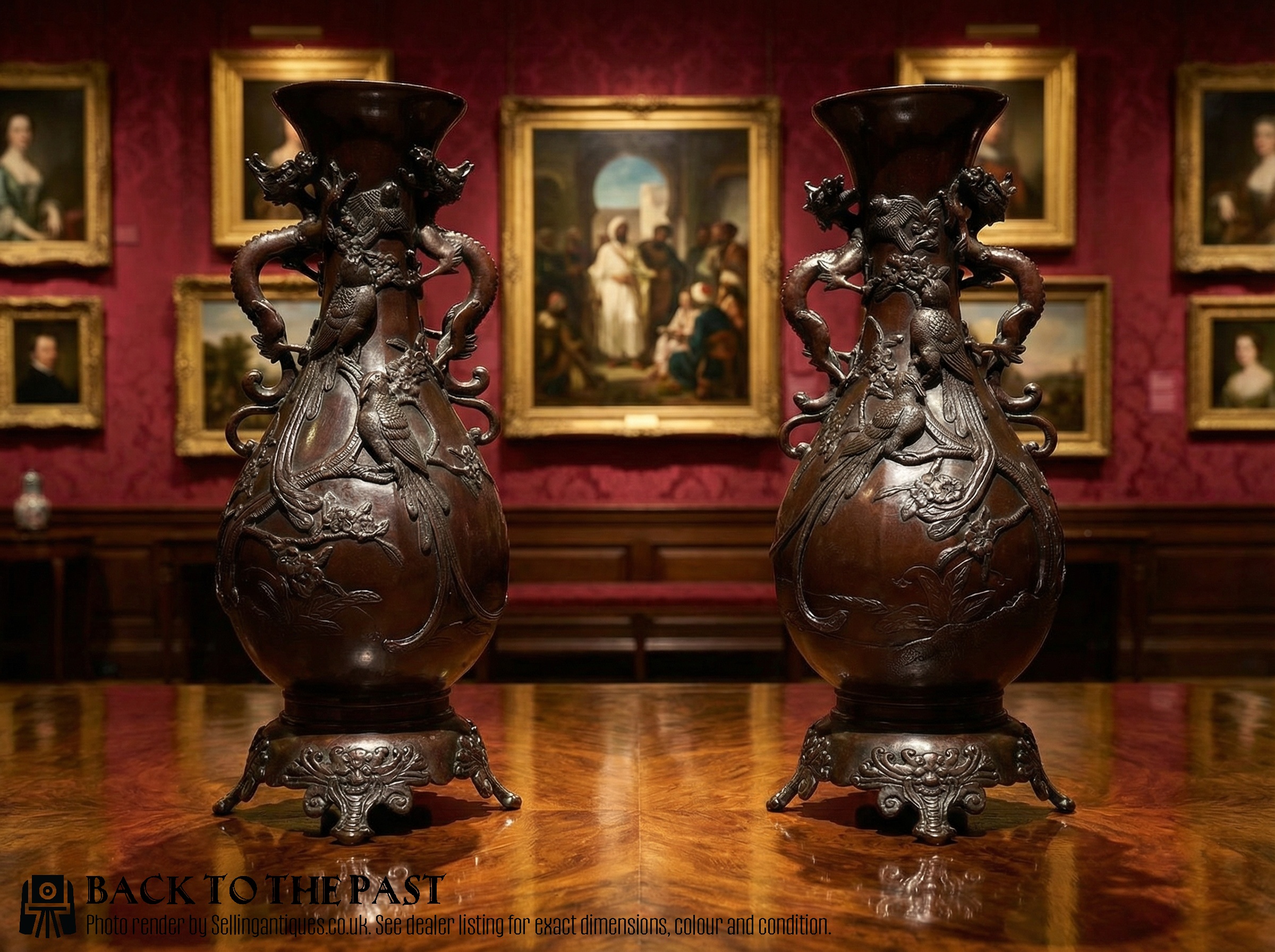
Decorative Bronze Urn Pair
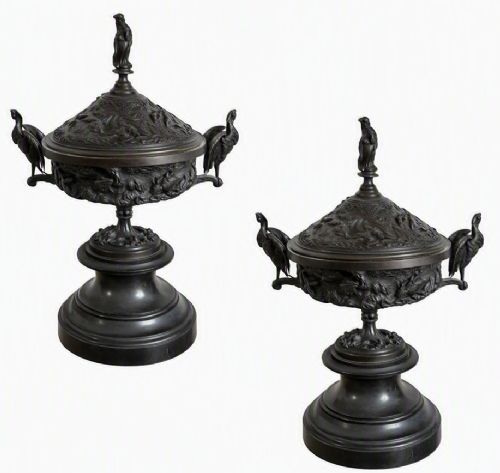
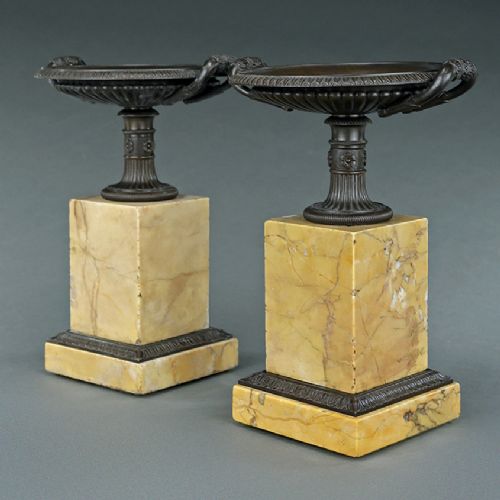
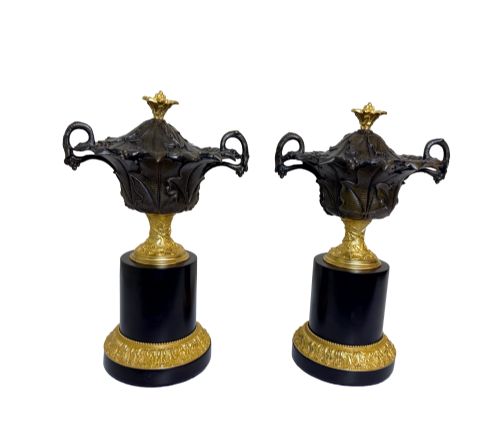
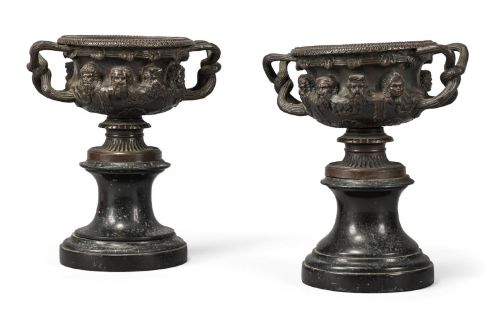
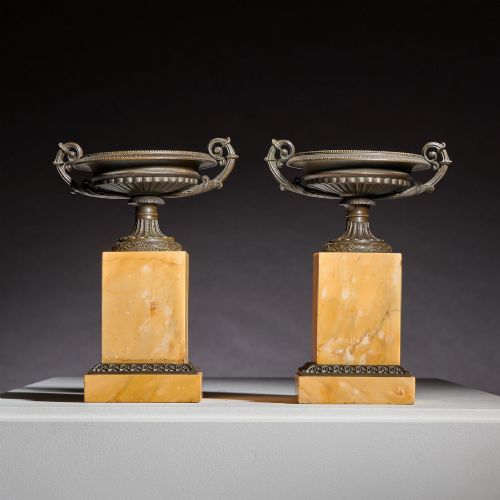
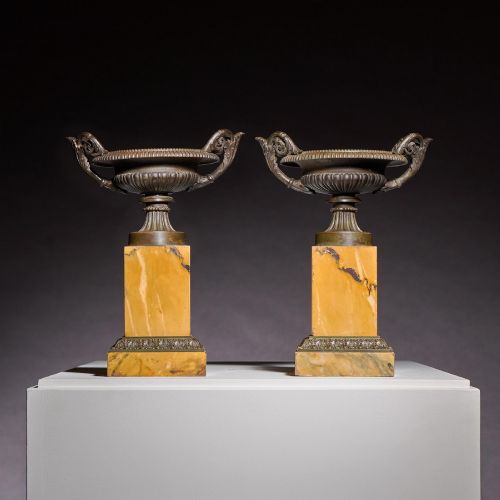
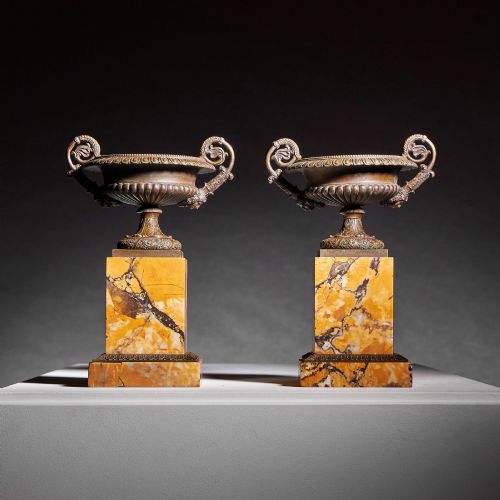
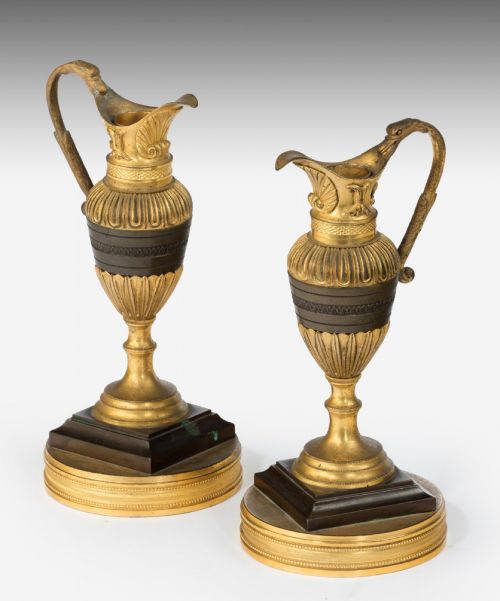
A decorative bronze urn pair brings together classical forms and dual display, most frequently encountered in nineteenth-century French and Japanese pieces spanning the Victorian era. These objects take various shapes including campana urns, tazzas, ewers, and cassolettes, often set upon marble bases or pedestals.
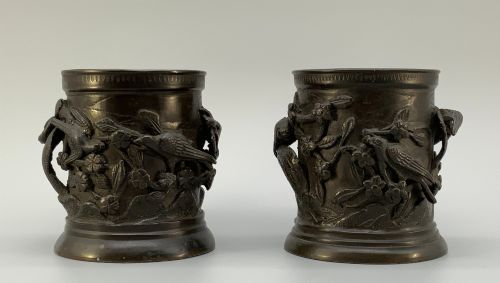
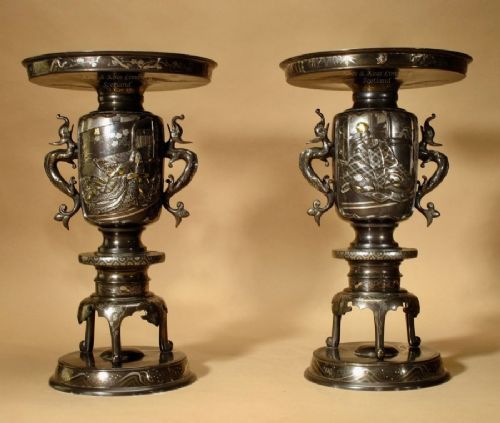
Many of these matched vessels reflect the Grand Tour aesthetic, drawing on classical antiquity through Neoclassical, French Empire, and Louis XVI styles. Others originate from the Japanese Meiji period, introducing birds, blossoms, and intricate metalwork to the traditional twin-handled urn format.
Materials and construction methods
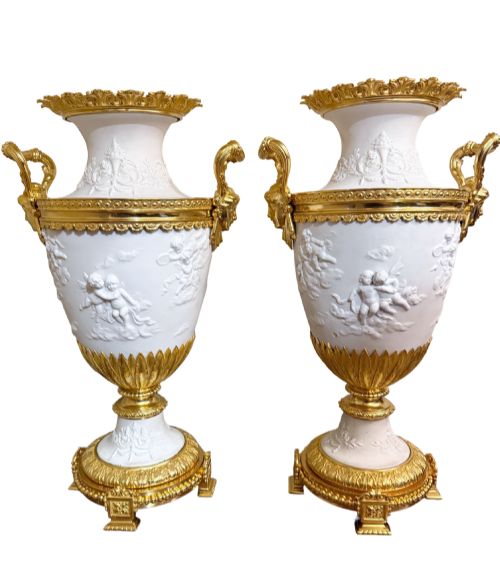
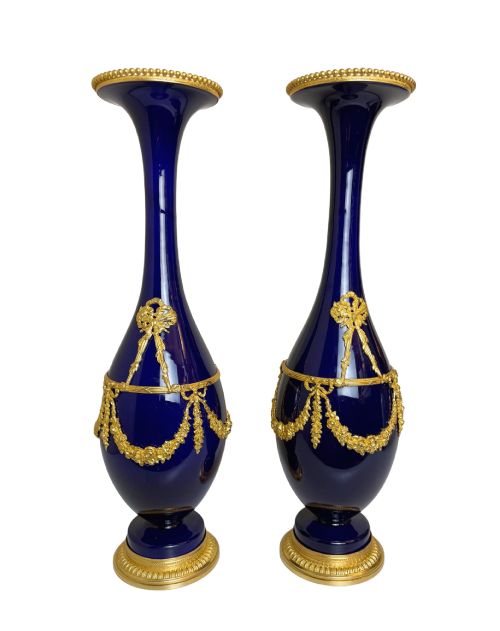
Foundry work relies heavily on bronze, patinated bronze, and ormolu or gilt bronze, frequently combined with contrasting media such as Siena marble, white onyx, porcelain, and enamel. Artisans cast these metals using traditional techniques before applying detailed hand-chasing, gilding, or chemical patination.
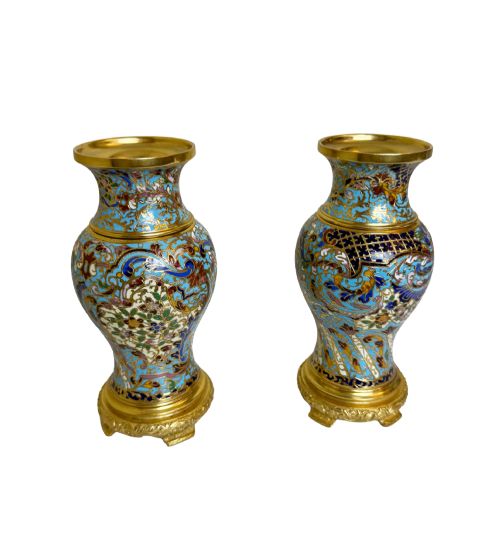
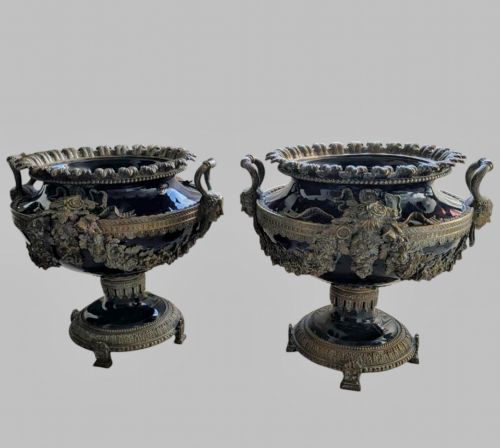
Composite pieces unite metal mountings with ceramic, glass, or stone bodies, secured with threaded pins or fitments. Champlevé enamel and inlaid detailing further enrich the surfaces of select Japanese and French examples.
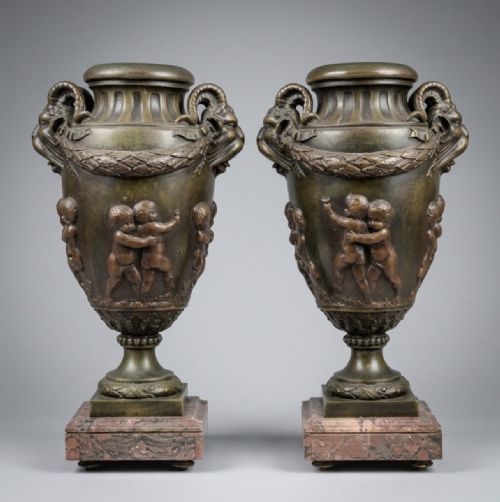
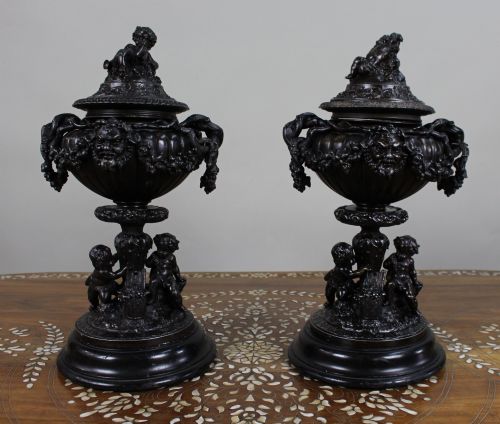
Several pairs hide bacchic masks and leaping putti within their classical handles, ensuring the party continues quietly on the mantelpiece.
Distinctions in craftsmanship and design
The degree of crispness in the chasing and casting separates standard production from exceptional work, particularly visible in the rendering of facial expressions, foliage, and classical masks. Sharp undercuts and deliberate hand-finishing give the metalwork depth and clarity.
The choice and integration of secondary materials dictate overall refinement, with dense natural marbles, unblemished porcelain bodies, and heavy fire-gilt ormolu mounts indicating superior workshop production.
Jules Moigniez
The Decorative Bronze Urn Pair Glossary
- Ormolu
- Gilt bronze produced by applying a finely ground high-carat gold mercury amalgam to a bronze base, then heated to drive off the mercury. This technique creates a durable, warm golden finish characteristic of French decorative arts.
- Campana urn
- A classical vessel shaped like an inverted bell with a flaring rim and a pedestal foot. It derives its name from ancient Roman pottery and bronze prototypes.
- Tazza
- A shallow saucer-like vessel or cup mounted on a stem and foot, often used for display in nineteenth-century interiors. These pieces frequently incorporate marble plinths and classical metal handles.
- Cassolette
- A decorative vessel featuring a reversible lid, designed to function either as an urn or as a burner for scented powders. They often appear in matched pairs with elaborate gilt bronze mounts.
- Patination
- The surface coloration developed naturally through age or artificially through chemical treatments applied to bronze. It enhances the visual texture and highlights the underlying metallic contours.
Decorative Bronze Urn Pair: Frequently Asked Questions
What is a decorative bronze urn pair?
These objects are matched dual vessels cast in bronze, brass, or spelter, often accented with gilding or mounted on stone bases. They were designed primarily for ornamental display on mantelpieces, sideboards, and pedestals.
Originating largely from the nineteenth century, they reflect historical revivals ranging from Roman antiquity to Japanese Meiji craftsmanship. Their balanced forms make them enduring focal points in traditional and eclectic interiors.
How were decorative bronze urns used historically?
During the nineteenth century, these vessels served as sophisticated interior ornaments rather than functional containers. They reflected the owner's cultural interests, particularly through the lens of European Grand Tour travels and classical revivalism.
Some iterations, such as cassolettes, doubled as scent burners, while others simply occupied prominent architectural positions in libraries, drawing rooms, and formal halls to project symmetry and erudition.
How do I style a decorative bronze urn pair at home?
A matched pair creates natural symmetry when placed at opposite ends of a mantelpiece, console table, or bookcase. Allowing adequate negative space around the vessels lets their metallic patinas and sculptural contours stand out against a wall or mirror.
Because these pieces carry considerable visual weight, they pair effectively with neutral stone surfaces, polished wood, and soft lighting that catches the gilt ormolu or bronze highlights.
How can I tell the difference between bronze and spelter?
Bronze is a heavy alloy of copper and tin that feels dense, rings with a clear tone when tapped gently, and takes a deep, stable patina. Spelter, a zinc-based alloy commonly used for more accessible nineteenth-century figures and urns, feels lighter and softer.
Examining the underside or interior often reveals the duller grey metal beneath a surface bronze-effect finish on spelter pieces, whereas genuine bronze maintains its metallic integrity throughout.