






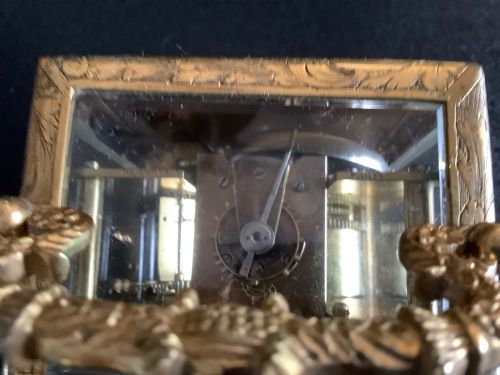
Decorative Brass Timepiece
A decorative brass timepiece brings precision engineering into the parlour, offering intricate dials and gleaming metalwork that elevate any interior surface.
Decorative Brass Timepiece
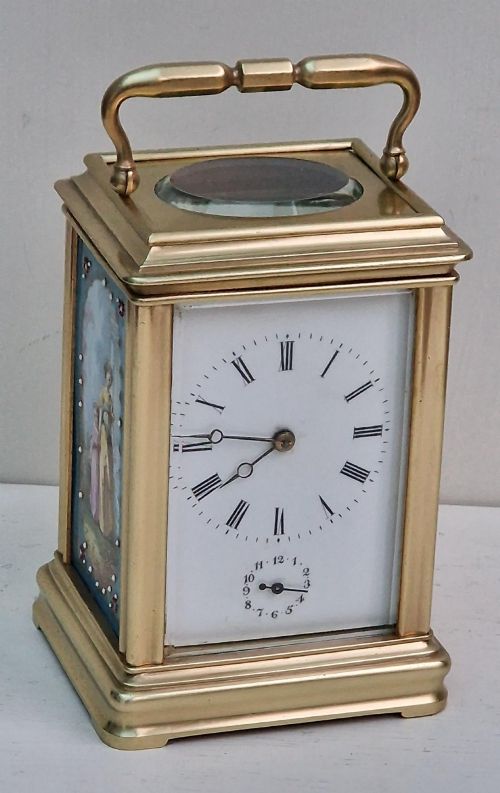
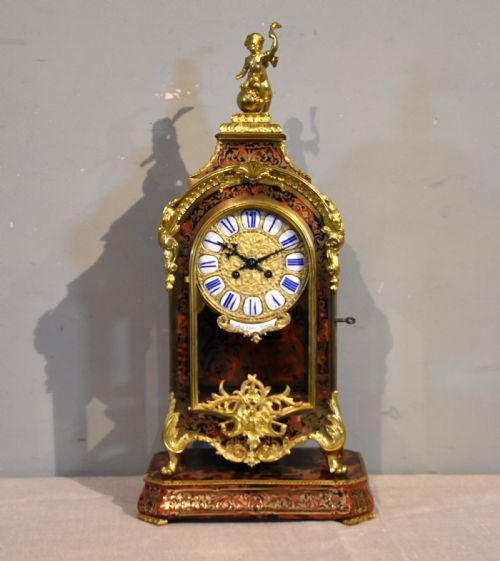
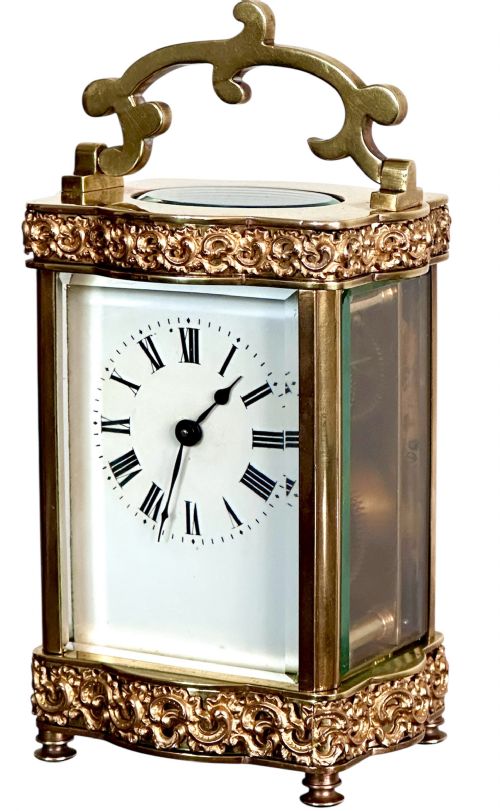
A decorative brass timepiece is primarily represented here by carriage clocks, mantel clocks, and desk clocks spanning the Victorian and Edwardian eras, alongside mid-nineteenth-century examples. These objects combine timekeeping mechanisms with ornate metal housings, often enriched with glass panels or enamel details.
Carriage clocks and four-glass mantel clocks dominate the selections, frequently displaying French origins in styles ranging from Rococo Revival to Louis XVI and Neoclassical designs. Buyers encounter everything from simple bedside travellers to architectural table pieces set upon bronze plinths.
Materials and methods of construction
Construction relies heavily on cast brass, ormolu, and gilt bronze, shaped into classical columns, frets, and serpentine cases, then paired with glass panels to reveal the movement within. Many examples incorporate champlevé enamel, porcelain panels, or hand-painted ceramic dials.
Makers utilised fusee movements and repeating mechanisms housed in heavy cast housings, occasionally integrating ebonised wood or marble bases to anchor the metalwork. Engraving and gilding finished the surfaces, creating reflective textures across dials and bezels.
Decorative Brass Timepiece Retail Price Guide 2026
Typical asking prices for decorative brass timepiece among the pieces listed under this phrase on Sellingantiques today, from the lower quarter to the upper quarter. They describe what is for sale here now, not the wider market.
Listings feature brass timepieces utilising enamel dials, marble bases, and gilt bronze, stretching from mid-Victorian examples to Edwardian carriage clocks.
Distinctions in quality
Quality rests on the crispness of the cast bronze or brass, the depth of the gilding, and the presence of hand-painted enamel elements rather than mass-produced transfers. Pierced frets and fully engraved side panels signal greater labour and skill during production.
The sophistication of the internal movement further defines the hierarchy, with repeating escapements, signed maker plates, and delicate miniature portraits or floral enamel work separating standard domestic clocks from workshop showpieces.
Duverdrey & Bloquel·Henri Jacot·John Bennett Cheapside London·Le Roy Paris
The Decorative Brass Timepiece Glossary
- Carriage clock
- A portable spring-driven timepiece designed for travelling, typically featuring a rectangular brass case with a glass top and bevelled side panels.
- Ormolu
- Finely ground high-carat gold mercury-gilded onto a bronze or brass base, producing a warm, durable metallic finish characteristic of French luxury pieces.
- Champlevé
- An enamelling technique where troughs or cells are hollowed out of the metal surface and filled with vitreous paste before firing.
- Fusee
- A conical pulley connected to the mainspring by a chain or cord, designed to equalise the torque as the spring unwinds to maintain steady timekeeping.
- Crystal regulator
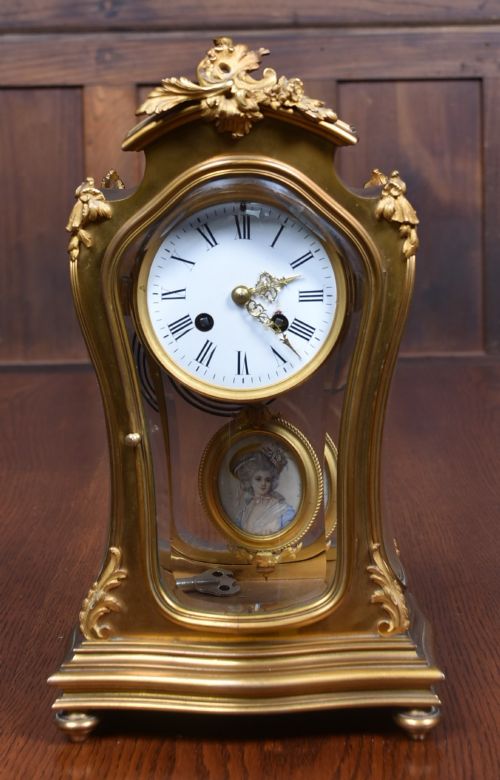
- A mantel clock enclosed in a glass case that allows light to pass through all sides, exposing the entire pendulum and movement.
Decorative Brass Timepiece: Frequently Asked Questions
How do I wind a carriage clock?
Most carriage clocks use a key that fits onto arbors located on the backplate of the movement. Turn the key gently until resistance is felt, taking care not to overwind the mainspring.
Keep the original key with the clock if possible, as replacement sizes vary and incorrect tools can damage the delicate square winding arbors inside the brass housing.
What is a repeating carriage clock?
A repeating carriage clock sounds the last hour and quarters on demand when a button or cord on the top of the case is pressed. This function allowed owners to check the time in total darkness.
Such mechanisms require additional gear trains and complex striking levers, which generally indicate a higher grade of manufacture and workshop assembly.
How should I clean a brass timepiece?
Dust the exterior surfaces regularly with a soft, dry artist's brush or microfibre cloth to prevent grime accumulation in engraved crevices and around glass bezels. Avoid chemical metal polishes, which strip away original gilding and damage delicate enamel dials.
Professional horological cleaning is recommended for the internal movement every few years to renew the lubricants and prevent wear on the brass pivots and wheels.
Why do some clocks have glass on four sides?
Four-glass clocks were designed to showcase the refined mechanical movement from every angle, often featuring a mercury or compensated pendulum swinging visibly within. These pieces emerged as status symbols in the late nineteenth century.
The absence of wooden framing placed total emphasis on the heavy brass casting, bevelled glass plates, and enamel dial layout.