
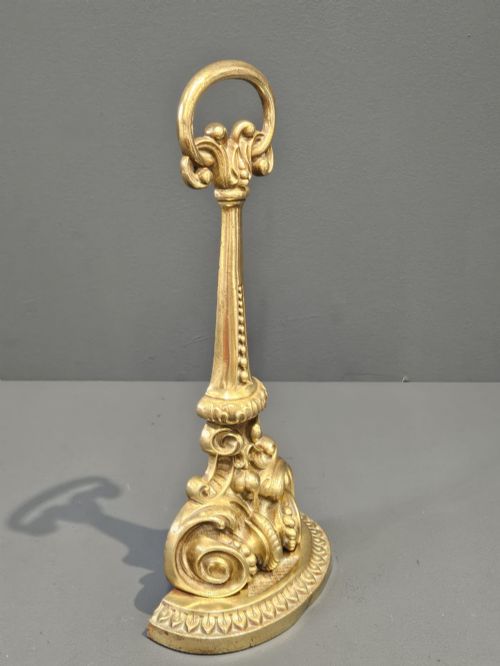
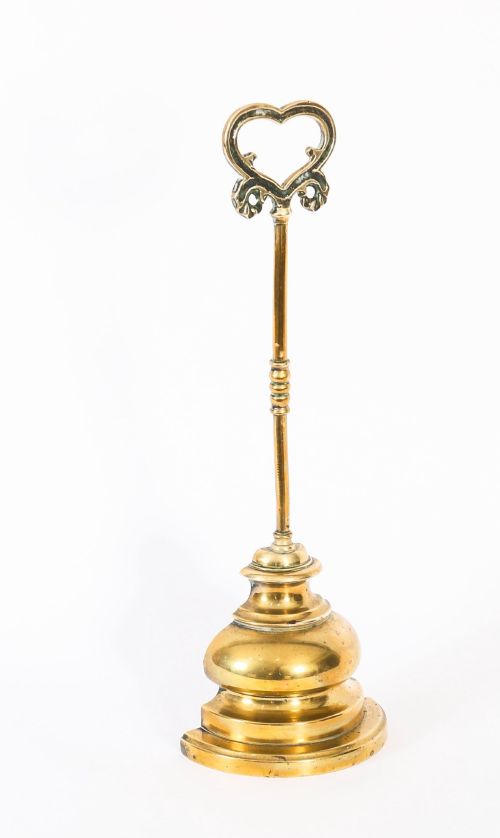
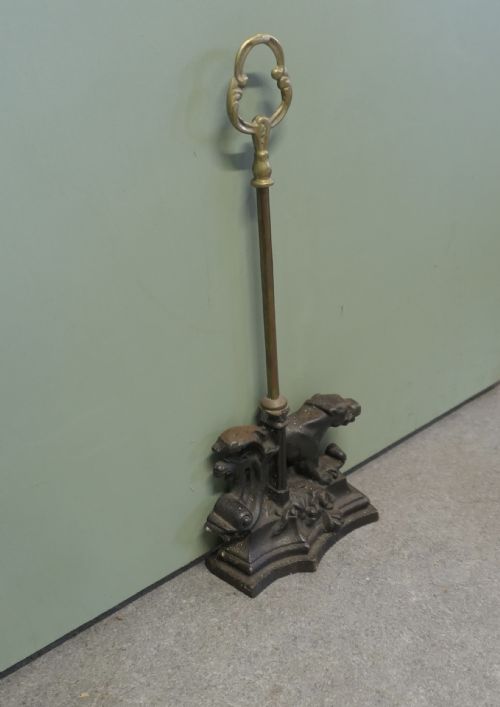
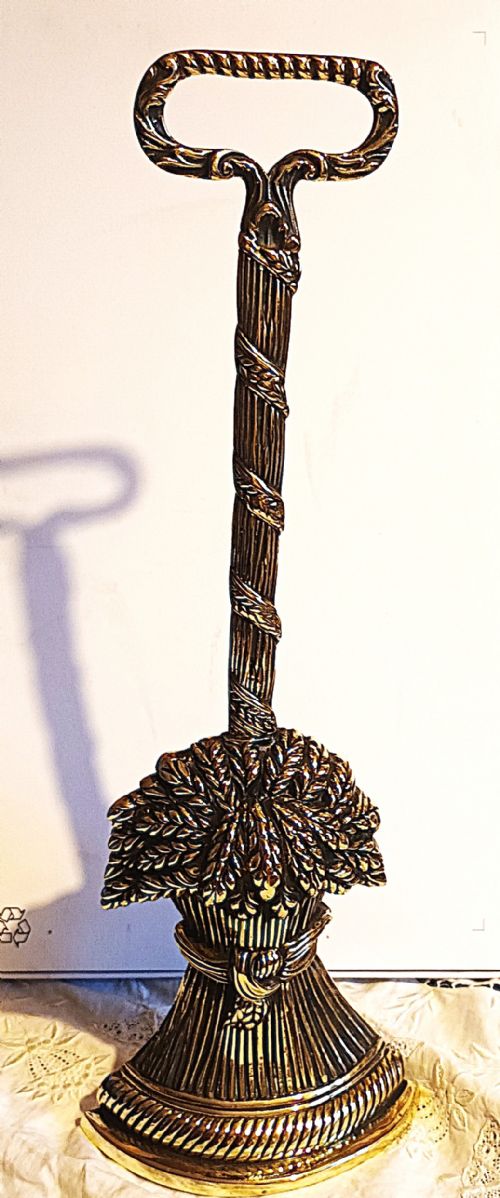
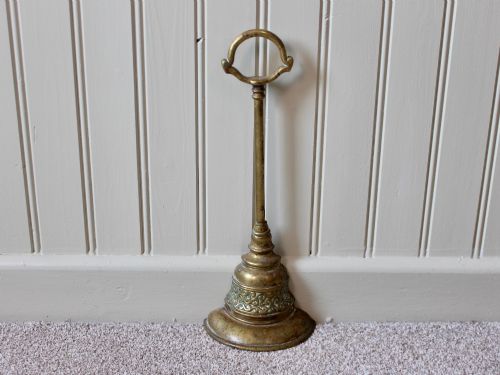



Decorative Brass Doorstop
These decorative brass doorstop pieces hold open heavy internal doors while bringing solid metalwork into a room.
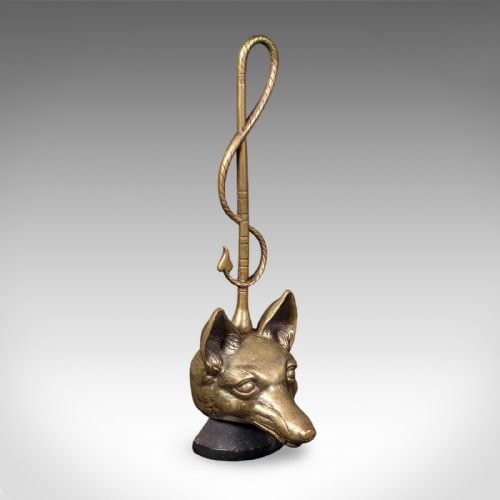
Decorative Brass Doorstop
A decorative brass doorstop stands heavy on the floor to keep heavy doors in place throughout a house. The examples found here span the Victorian era, the nineteenth century, and the Georgian period, alongside related items from English country houses and Scottish traditions.
Buyers meet varied forms on this page, ranging from figural subjects like cherubs, dolphins, and fox heads to sturdy porters and sporting items. Most pieces use heavy metal casting to achieve the weight needed for functional door keepers.
Materials and construction
Foundry workers utilised cast brass and cast iron to shape these heavy functional objects, sometimes weighting them further with lead or mounting them on granite and wood bases. Molten metal poured into moulds created the robust sculptural forms needed to withstand daily use against slamming doors.
Makers finished the metal surfaces through polishing and simple casting clean-up, leaving durable heavy structures designed to endure generations of foot traffic and drafts.
Decorative Brass Doorstop Retail Price Guide 2026
Typical asking prices for decorative brass doorstop among the pieces listed under this phrase on Sellingantiques today, from the lower quarter to the upper quarter. They describe what is for sale here now, not the wider market.
Listings here feature items from the Victorian, Georgian, and Regency periods, alongside materials including brass, cast iron, lead, granite, and wood.
Judging quality
Proportion and weight dictate how effectively a piece performs its task, with well-balanced castings sitting firmly on the floor without needing excessive bulk. The integrity of the original handle or ring mechanism further separates standard utility items from finer decorative pieces.
Tonks
The Decorative Brass Doorstop Glossary
- Door porter
- A heavy portable doorstop designed to be lifted by an upper handle rather than fixed to the floor or skirting board. These movable items allowed servants to shift them easily between rooms.
- Cast brass
- Molten copper and zinc alloy poured into a mould to create solid decorative shapes. This method allowed makers to produce repeating ornamental items with reliable weight.
- Regency
- A design period spanning the early nineteenth century defined by classical restraint and neoclassical motifs. Pieces from this era often lean on ancient Greek and Roman design elements.
- Victorian
- The period of British design lasting through the nineteenth century characterised by varied revivals and ornate decoration. Items from this time often embrace heavy detailing and natural subjects.
- Country house
- A term denoting sturdy domestic items made for large rural estates rather than formal urban residences. These objects prioritise practical utility combined with traditional decoration.
Decorative Brass Doorstop: Frequently Asked Questions
What is a door porter?
A door porter is a heavy portable doorstop equipped with an upright handle at the top. This design allowed users to lift and place the weight against a heavy door without bending down.
Such pieces usually combine substantial metal weight with a decorative upper grip shaped as an animal, ring, or classical motif.
How heavy are these doorstops?
These pieces possess substantial weight derived from solid brass, cast iron, and internal lead weighting. This mass prevents heavy internal doors from moving in draughty hallways.
Some examples also incorporate heavy stone bases like granite to increase their stopping power further.
Where were these pieces used?
Households placed these heavy items in principal rooms, grand hallways, and country house corridors to manage large interior doors. Their decorative forms ensured they looked appropriate in formal settings.
Servants moved them between chambers as ventilation or warmth required doors to remain propped open.
How do I date a brass doorstop?
Dating relies on stylistic clues, casting techniques, and the historical period of the decorative motifs used. Georgian and Regency pieces show classical restraint, while Victorian examples often feature ornate figural work.
Examining the underside and the manner in which the handle or weight is joined also helps determine the era of manufacture.