


Decorative Brass Andirons
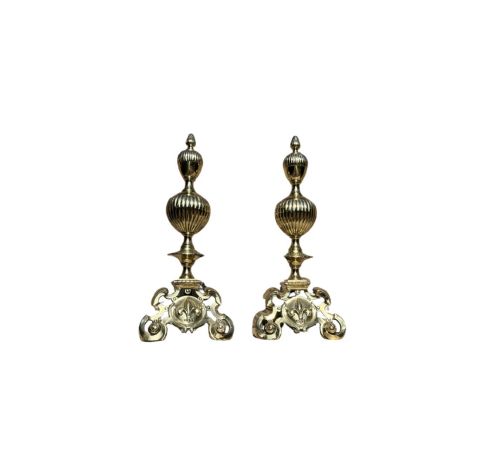
Decorative brass andirons anchor the hearth with sculptural form and functional weight, offering collectors a striking focal point for period fireplaces.
Decorative Brass Andirons
Decorative brass andirons are essential fireplace accessories designed to support logs above the hearth while providing a distinct visual display. When you search for decorative brass andirons, you encounter pairs originating from the eighteenth and nineteenth centuries, often rendered in substantial proportions.
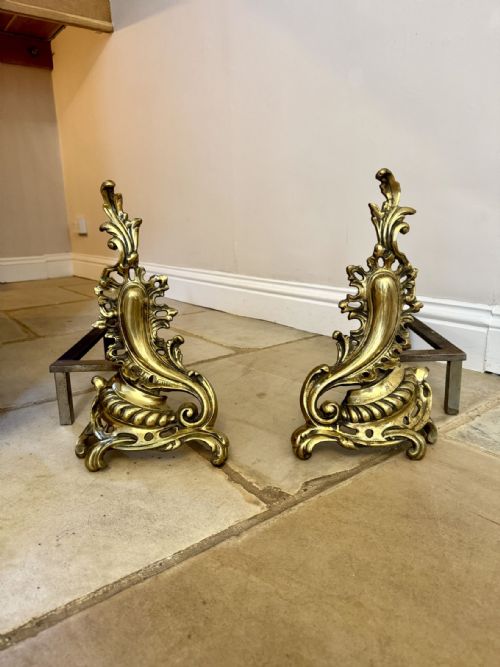
The pieces on this page heavily favour French rococo and Victorian interpretations, alongside Regency and Baroque revival styles. English examples appear alongside French work, frequently combining brass with cast iron or wrought iron for structural stability.
Materials and construction
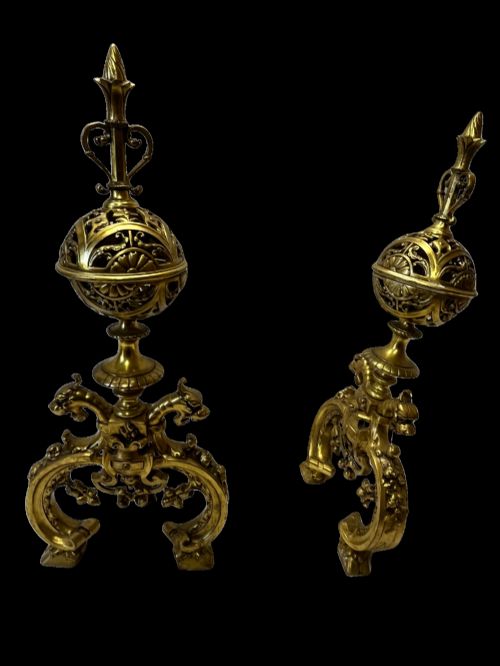
Maker construction relies heavily on cast brass, bronze, and gilt bronze, often termed ormolu, which brings a rich metallic lustre to the front columns and figural mounts. These decorative elements are mounted onto robust iron or cast iron bars designed to endure high hearth temperatures.
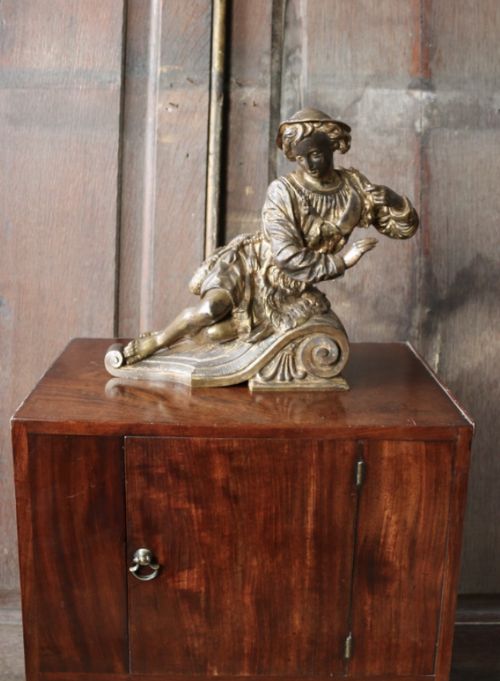
Casting techniques allow for elaborate scrollwork and statuary details, seen in figures like sphinxes or architectural revival motifs. Wrought iron components provide the underlying strength required for heavy fire baskets and supporting logs.
The inventory records fire baskets, firedogs, and figural statuette andirons reflecting Victorian and Georgian revival tastes.
Assessing quality and craftsmanship
Quality rests upon the crispness of the casting and the depth of the chasing on the brass and ormolu surfaces. Finer pairs display meticulous detail in facial expressions, acanthus leaves, and rococo scrolls, whereas simpler items show softer definition from worn moulds.
The integration of materials also defines the tier of the piece, with heavier bronze mounts and unified casting separating standard utility items from decorative works intended for formal reception rooms.
The Decorative Brass Andirons Glossary
- Andiron
- A metal support used in pairs to hold logs in a fireplace. They are also known as firedogs.
- Chenet
- The French term for an andiron, frequently applied to ornate continental pieces featuring figural or architectural mounts. These often incorporate gilt bronze.
- Ormolu
- Gilded bronze used for decorative mounts on furniture and fireplace accessories. The technique produces a bright gold appearance.
- Firedog
- An alternative name for an andiron, emphasising the utilitarian dog-leg shape that keeps fuel elevated.
- Fire basket
- A metal grate designed to hold coal or wood, sometimes flanked by integrated andirons. They form a complete hearth unit.
Decorative Brass Andirons: Frequently Asked Questions
What are decorative brass andirons used for?
These pieces support logs off the hearth floor to allow proper airflow beneath the fire. They also serve as permanent decorative ornaments when the fireplace is not in use.
Historically, they protected the back and sides of the hearth while displaying the wealth and taste of the homeowner through polished metalwork.
How do I date a pair of andirons?
Dating relies on stylistic clues such as the asymmetry of rococo revival or the strict symmetry of Georgian and Regency periods. Material combinations, such as early wrought iron paired with hand-finished brass, also point to specific decades.
Examining the casting methods and wear patterns helps confirm whether a piece belongs to the eighteenth or nineteenth century.
Are French and English andirons different?
French examples often lean towards elaborate rococo or baroque revival forms with gilt bronze and figural statuary. English pieces frequently combine brass fronts with sturdy wrought iron or cast iron intended for coal baskets.
Both traditions prioritise decorative presence, but French items typically feature more exuberant sculptural mounts.
Can I use antique andirons in a working fireplace?
Most antique andirons are robust enough for occasional fires, provided they are made of heavy iron and cast brass. You must ensure the billet bars can handle the heat without compromising the decorative front mounts.
Many collectors prefer to use them purely for display within period fireplace surrounds to preserve the delicate ormolu surfaces.