




Decorative Blue White Porcelain
These pieces of decorative blue white porcelain bring cobalt and glaze together across centuries of domestic display.
Decorative Blue White Porcelain
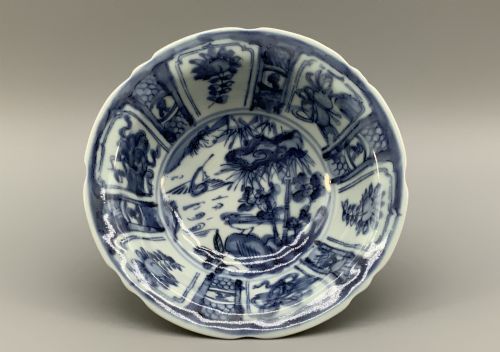
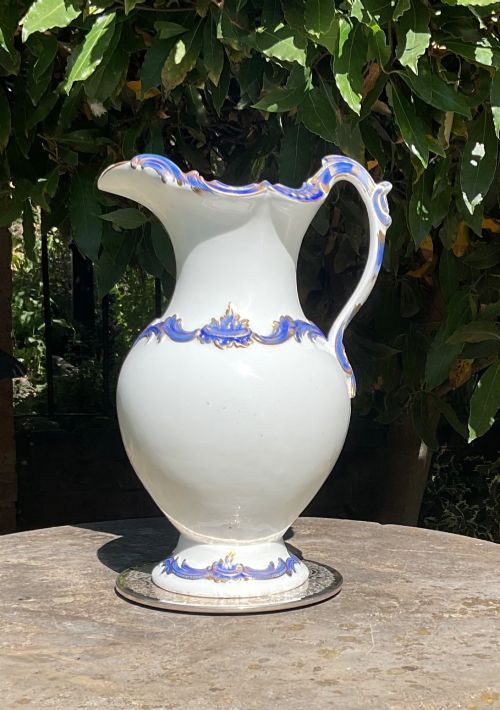
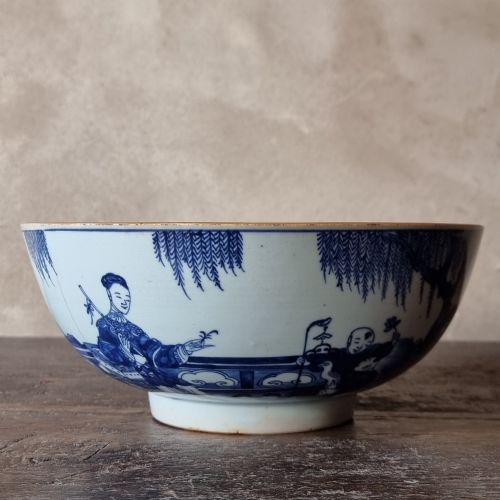
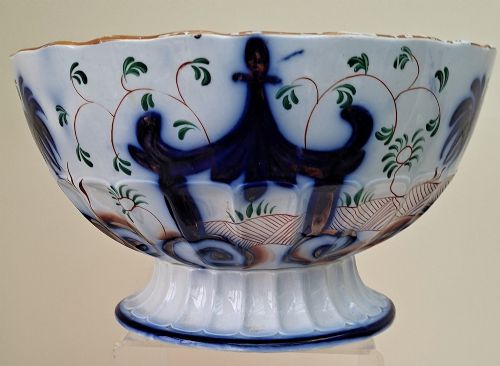
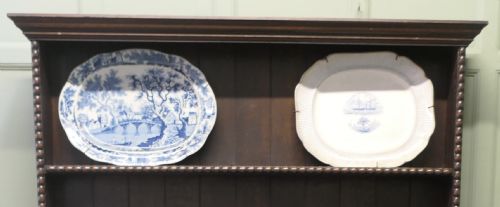
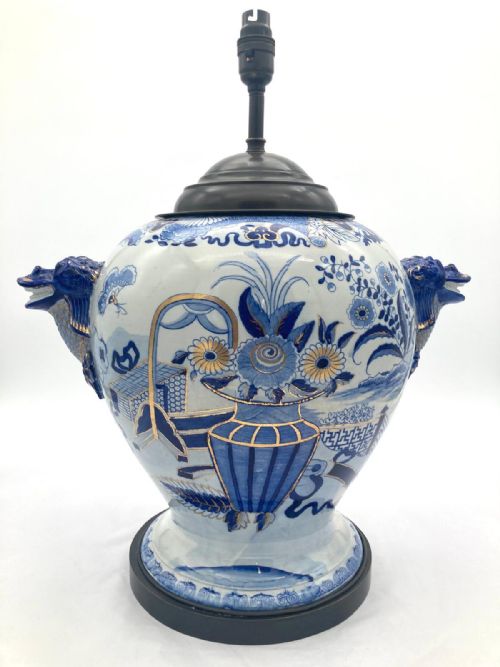
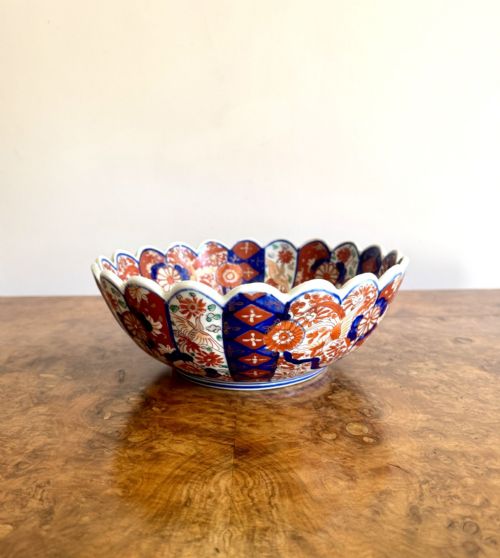
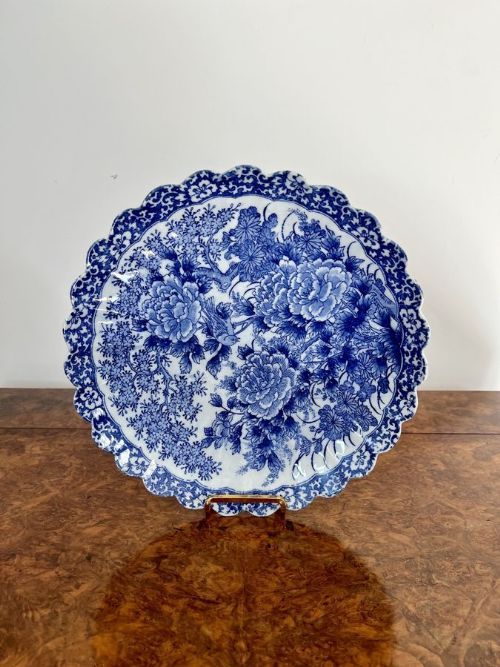
Decorative blue white porcelain spans centuries of global kiln production, running from early Chinese export wares to English transfer-printed earthenware and Japanese Imari chargers. When you browse this selection, you encounter items designed primarily for display or formal service, including punch bowls, large chargers, campana urns, table lamps, and botanical vessels. The inventory draws heavily on 18th-century pieces, nineteenth-century Victorian adaptations, and the output of Meiji period Japanese workshops.
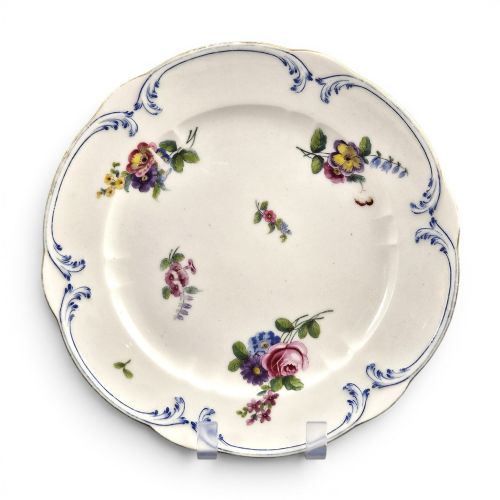
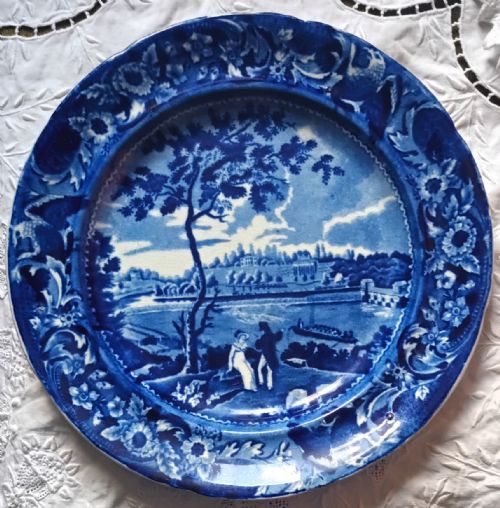
The English tradition is represented by transfer plates, ironstone vases, and jug sets from factories like Spode and Wedgwood alongside Delft chargers, while Asian works encompass Arita bowls, Kangxi period pieces, and Qing dynasty vessels. You will frequently meet scalloped edge bowls and large Japanese Imari plates alongside French hard-paste and soft-paste dining vessels. Each piece reflects the enduring appeal of cobalt ornamentation applied to a white ceramic ground.
How They Were Made
Makers utilised cobalt oxide beneath a clear glaze to achieve the characteristic blue decoration, which required high-temperature firing to fuse the pigment with the porcelain body. Transfer printing emerged later as a mechanical method for applying intricate pictorial scenes onto plates and jugs before glazing.
Many Japanese items incorporate hand-painted details and lacquer panels applied to the ceramic surface, whilst English factories frequently relied on ironstone and earthenware bodies shaped into urns or converted into table lamps.
Certain antique chargers depict spirited koi carp swimming across the porcelain glaze with surprising energy.
What Varies In Quality
The clarity and depth of the cobalt pigment dictate much of the visual success of each item, with superior examples displaying sharp lines and controlled bleeding under the glaze. Hand-painted motifs reveal the individual skill of the decorator through brushwork control and compositional balance, distinguishing bespoke items from mass-produced transfer wares.
The integrity of the porcelain body and the crispness of moulded edges, such as scalloped rims or applied bas-reliefs, separate refined studio output from utilitarian production. Provenance and original factory marks further distinguish notable works from standard domestic wares of the period.
Doulton Burslem·Wedgwood·Spode·Masons
The Decorative Blue White Porcelain Glossary
- Cobalt Glaze
- A blue ceramic pigment applied under or over the glaze before firing. It creates the characteristic deep blue coloration seen across traditional Asian and European ceramics.
- Transfer Printing
- A method of applying an engraved design to pottery via a paper transfer. This technique allowed factories to produce uniform pictorial scenes efficiently on plates and jugs.
- Imari
- A style of Japanese porcelain featuring cobalt blue and iron red decoration, often accented with gold. Named after the port of export, these pieces gained immense popularity in European interiors.
- Ironstone
- A heavy, durable type of earthenware developed in England as a robust alternative to porcelain. It accepted transfer printing well and was frequently utilised for large jugs and vases.
Decorative Blue White Porcelain: Frequently Asked Questions
How do I display a large charger safely?
Large chargers require sturdy wall mountings or dedicated plate stands designed to support their substantial weight.
Position them away from high-traffic areas to prevent accidental knocks against the rim.
Can these converted table lamps be rewired?
Many vases and urns from this selection were adapted into lamps during the twentieth century using standard electrical components.
An accredited electrician can update the wiring safely without altering the ceramic body.
How do I distinguish Imari from standard blue and white?
Imari pieces incorporate iron red and often gold leaf alongside the traditional cobalt blue decoration.
Standard blue and white porcelain relies exclusively on shades of blue pigment against a white ground.
Are these punch bowls suitable for serving food?
Most antique punch bowls and decorative vessels function best as display items rather than active tableware.
Age, previous repairs, and delicate glazes mean modern usage can compromise the integrity of the piece.