


Decorative Blue White China
These pieces of decorative blue white china bring centuries of cobalt glaze and ceramic craftsmanship directly to your table and display shelves.
Decorative Blue White China
When you search for decorative blue white china, you encounter an array of plates, bowls, platters, and figures spanning the eighteenth and nineteenth centuries. The selection encompasses English earthenware, ironstone, and porcelain alongside Japanese and continental European wares.
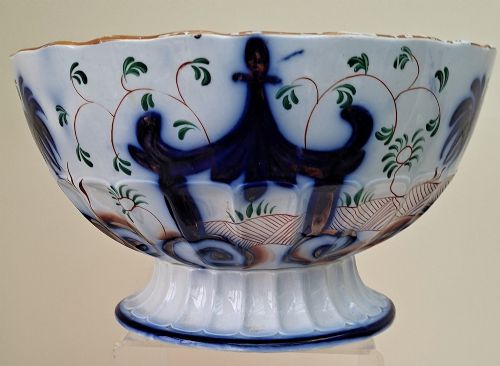
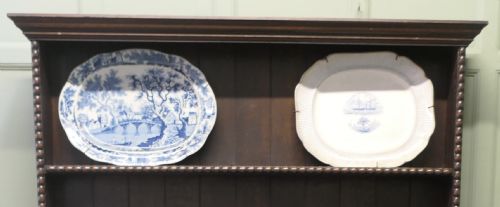
You are most likely to meet nineteenth-century Victorian chargers, serving platters, and footed bowls featuring traditional transfer-printed scenes or hand-painted motifs. These items range from Georgian Chinoiserie designs to robust ironstone cheese dishes and decorative vases.
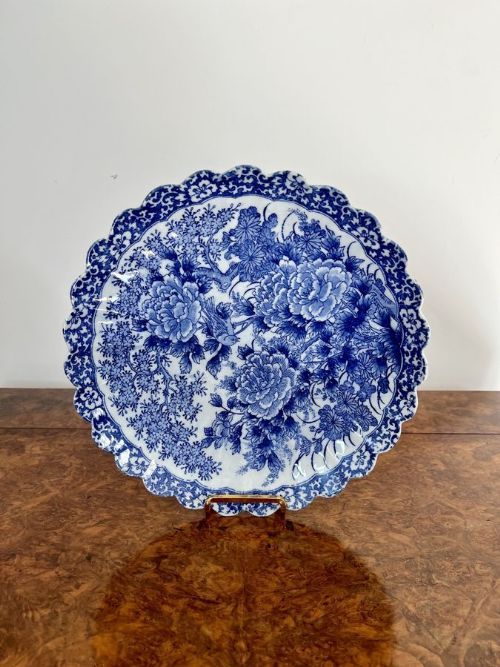
The category bridges utilitarian tableware and purely ornamental pieces, with forms extending from scalloped plates to covered pot pourri vessels and biscuit porcelain figures. Each piece displays the enduring appeal of blue and white decoration across diverse stylistic revivals.
Materials and production techniques
Makers utilised ceramic bodies ranging from refined porcelain and bone china to durable ironstone and earthenware. Cobalt glaze provided the primary pigment for painting or transfer printing directly onto the clay before firing.
Transfer printing revolutionised production during the Georgian and Victorian eras, allowing intricate patterns like Pagoda and Native scenes to be applied efficiently. Artisans also employed hand painting and occasionally added subtle touches of enamel or gold leaf for emphasis.
Several plates depict native birds and pagoda scenes, proving that nineteenth-century artisans possessed a very vivid imagination regarding faraway lands.
Distinctions in quality
The sophistication of the painting and the crispness of the cobalt transfer define the upper tier of these ceramics. Finer examples show careful brushwork, precise registration in printed patterns, and well-balanced forms.
The choice of body material also marks a distinction, with translucent porcelain and heavy, resonant ironstone representing different standards of manufacture. Potteries noted for superior body composition and glaze stability consistently yield finer results.
Doulton Burslem·Masons Ironstone·William Adams·John Davenport·Royal Crown Derby·Coalport
The Decorative Blue White China Glossary
- Cobalt glaze
- A metallic oxide pigment applied under or over the glaze to produce deep blue coloration during firing. This mineral withstands high temperatures without losing intensity.
- Ironstone
- A dense, durable type of earthenware patented in the nineteenth century to rival true porcelain. It resists chipping and forms a robust base for heavy-use platters.
- Transfer printing
- A mechanical method of applying complex designs to ceramics using an engraved copper plate and tissue paper. It enabled mass production of detailed pictorial scenes.
- Biscuit porcelain
- Unglazed porcelain fired once to a porous, matte state that resembles fine marble. It is frequently utilised for sculptural figures and decorative ornaments.
- Imari
- A Japanese style of porcelain featuring underglaze blue combined with iron red and gilt highlights. European potteries frequently imitated this distinctive aesthetic.
Decorative Blue White China: Frequently Asked Questions
How do I date these ceramics?
Examine the base for maker marks, registration diamonds, or specific factory stamps that indicate the period of manufacture. The composition of the ceramic body, from early earthenware to later ironstone, also provides chronological clues.
Style and transfer printing techniques further help narrow down the decade of production. Georgian pieces often display different border motifs compared to later Victorian iterations.
Can I use these plates for dining?
Many of these pieces were originally created as functional tableware, particularly the robust ironstone platters and dinner plates. However, age, glaze wear, and historical value often suggest decorative display rather than daily service.
Gentle hand washing preserves the surface integrity and any delicate enamel or gold leaf details. Avoid modern dishwashers to protect the historic glaze.
What does transfer printed mean?
Transfer printing is a technique where an engraved copper plate transfers an inked design onto tissue paper, which is then pressed onto the ceramic body. This process allowed potteries to produce intricate pictorial scenes consistently.
Close inspection with a magnifying glass often reveals the tiny stipple or line patterns characteristic of the printing process. This method distinguished mass decoration from purely hand-painted brushwork.
Why is some blue and white called ironstone?
Ironstone is a heavy, durable earthenware developed in the nineteenth century to provide a tougher alternative to delicate porcelain. It contains slag of iron or similar stone elements mixed into the clay body.
This composition made it exceptionally resistant to chipping, making it ideal for large serving platters and cheese dishes. It rings with a duller sound than porcelain when tapped.