



Deconstructed Wingback Chair
Deconstructed wingback chair forms offer raw structural honesty and exposed upholstery inner workings that collectors prize for modern interiors.
Deconstructed Wingback Chair
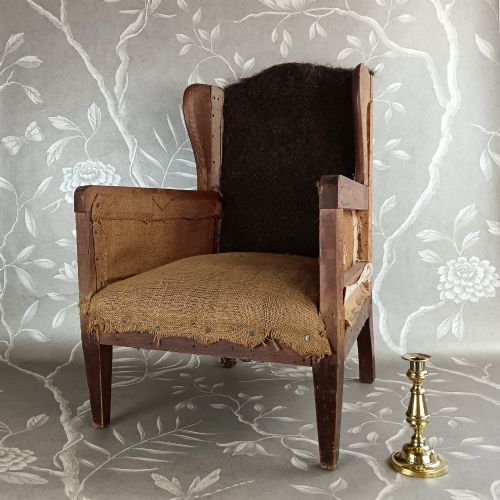
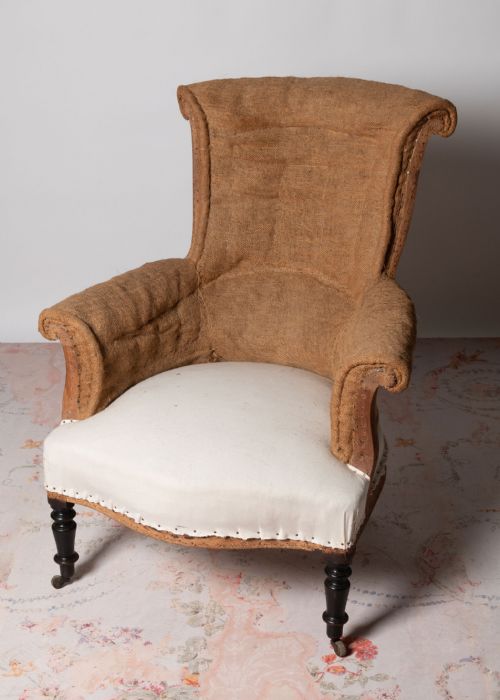
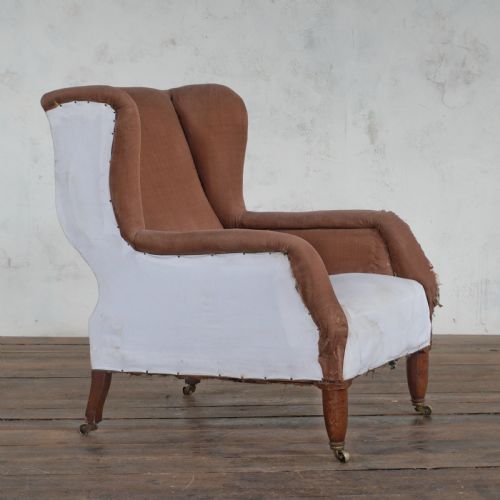
A deconstructed wingback chair strips away the outer fabric to reveal the inner webbings, springs, and frame construction. These pieces bring industrial texture and historic form into contemporary rooms.
Most examples found here date from the eighteenth century through to the early twentieth century, spanning Georgian, Victorian, and Edwardian eras. Buyers encounter child armchairs, French models, and English winged armchairs.
The search phrase deconstructed wingback chair covers seating forms designed with protective side wings originally meant to block draughts. Stripped versions expose the underlying craftsmanship instead of hiding it beneath final textiles.
How they were made
Frames rely on sturdy timbers such as mahogany and oak, joined to support the high back and deep seat. Brass tacks often secure the exposed edges of hessian, calico, and linen linings.
Craftsmen built these armchairs using traditional stuffing and webbing methods that remain visible in the stripped state. Wood frames show the hand-worked marks of their period origin.
Some stripped chairs still hide old maker stamps and forgotten upholstery tacks deep within their wooden frames.
What varies in quality
The integrity of the underlying timber frame dictates the enduring value of each piece. Original joinery and uncompromised wood structure separate superior examples from heavily altered ones.
The character of the exposed webbing and the neatness of the edge-stitching reveal the skill of the upholsterer. Balance in the proportions of the wings and arms defines the visual harmony of the armchair.
Thomas Sopwith
The Deconstructed Wingback Chair Glossary
- Wingback
- An armchair featuring protective side panels designed to shield the sitter from draughts. These wings form the defining silhouette of the seating type.
- Hessian
- A coarse woven fabric made from jute plant fibres, used extensively as the foundational layer for interior padding. It provides the characteristic neutral texture seen on stripped frames.
- Calico
- A plain-woven cotton textile employed beneath the outer upholstery to contain stuffing materials. It creates a smooth pale barrier across the inner components.
- Webbing
- Interlaced bands of strong material stretched across the chair seat and back to support springs and padding. This grid forms the structural skeleton beneath the fabric layers.
Deconstructed Wingback Chair: Frequently Asked Questions
What is a deconstructed wingback chair?
A deconstructed wingback chair is an antique seating form stripped of its final outer fabric to expose the hessian, webbing, and internal frame.
These pieces highlight the raw materials and structural joinery of past eras for modern display.
How do I date a wing chair?
Dating relies on examining the timber species, frame architecture, and style characteristics such as Early Georgian or Victorian.
Cabinet-making techniques and foot shapes also provide clear clues to the period of origin.
Are these armchairs comfortable to use?
The exposed inner stuffing and supportive webbed foundations provide a firm and upright sit.
Many retain their original ergonomic proportions designed for fireside warmth and support.
Why leave the upholstery unfinished?
Leaving the inner workings exposed reveals the historical craftsmanship and texture of the materials.
This aesthetic values the honest construction of the furniture over traditional decorative finishes.