


Dated Storage Trunk
A dated storage trunk brings tangible history to a room, offering robust utility anchored by inscribed dates.
Dated Storage Trunk
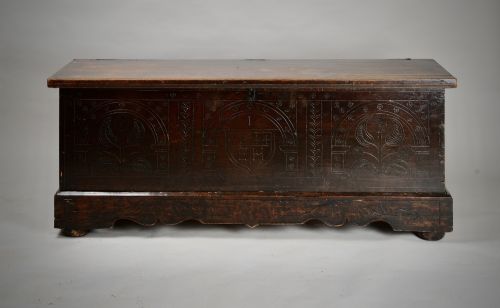
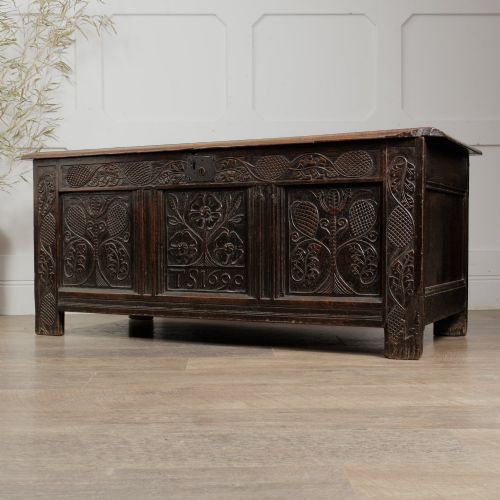
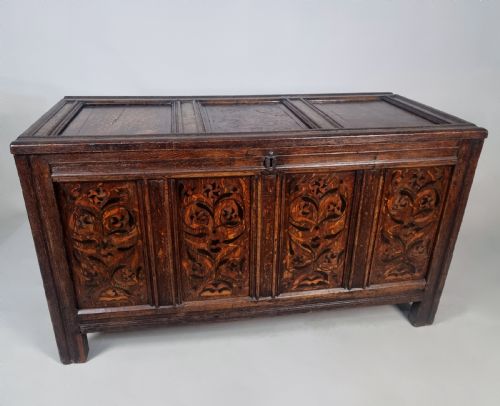
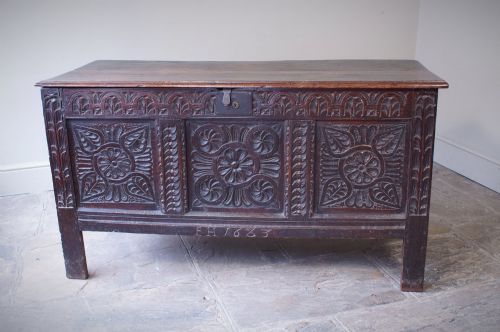
A dated storage trunk encompasses substantial timber boxes, coffers, and marriage chests built for domestic storage and inscribed with specific years, often marking familial alliances or construction milestones. These pieces range from seventeenth-century joined oak panels to nineteenth-century painted Scandinavian pine boxes.
Buyers seeking a dated storage trunk will frequently encounter regional British works alongside continental pieces, particularly Swedish painted coffers and Hungarian boxes. Forms vary from flat-topped blanket chests to dome-topped marriage chests fitted with iron or wrought iron hardware.
The selection bridges vernacular folk art traditions and formal period styles such as Jacobean, William and Mary, and Georgian. Each piece functions as both a capacious receptacle and a documented historical artefact.
Judging quality
Quality rests upon the preservation of the original surface, whether that is the deep patina of seventeenth-century oak or the integrity of early hand-painted folk art decoration on pine. Pieces retaining their original wrought iron hinges, locks, and feet carry greater authenticity.
The clarity and originality of the inscribed date and associated carving or painted motifs dictate the historical significance of the piece. Construction depth, such as heavy joined framing versus lighter board construction, separates utilitarian boxes from fine vernacular furniture.
Materials recorded across the selection include solid oak, pine, mixed inlay woods, iron, wrought iron, and brass.
The Dated Storage Trunk Glossary
- Coffer
- A large wooden chest traditionally used for storing valuables or household goods. Early examples feature heavy panelled construction.
- Marriage chest
- A box commissioned or decorated to mark a wedding, frequently inscribed with dates and initials. These often display folk art painting.
- Joined oak
- Furniture construction utilising mortise and tenon joints secured with wooden pegs. This method defined seventeenth-century cabinet making.
- Dome top
- A rounded lid profile found on storage chests, designed to shed water and increase internal capacity. It is common on nineteenth-century travel and marriage trunks.
- Folk art
- Decorative painting and carving executed within regional artisan traditions rather than formal academic styles. It dominates Scandinavian and Hungarian painted boxes.
Dated Storage Trunk: Frequently Asked Questions
What were dated storage trunks used for?
These pieces served as secure containers for household textiles, blankets, clothing, and valuable documents. In many households, they held dowry items accumulated for marriage.
The inclusion of a specific date often commemorated a wedding, a coming of age, or the completion of the piece's construction by a craftsman.
How do I identify seventeenth-century oak coffers?
Seventeenth-century coffers utilise heavy joined oak framework with panelled lids and fronts, held together by pegged mortise and tenon joints. They frequently exhibit restrained geometric carving or marquetry.
Surfaces show deep, oxidised patination acquired over centuries of handling, distinct from the lighter pine and painted finishes of later eras.
Are painted Scandinavian chests original?
Many nineteenth-century Scandinavian and Hungarian boxes retain their original hand-painted folk art decoration, often featuring floral motifs, initials, and commemorative dates. Examining the pigment integration helps determine whether the finish belongs to the period of manufacture.
Folk art pieces span Swedish marriage chests and Hungarian storage boxes, reflecting distinct regional palette preferences.
How do I care for antique timber chests?
Keep wooden storage chests away from direct heat sources and dramatic humidity shifts to prevent timber splitting or warping. Feed dry oak or pine surfaces sparingly with appropriate conservation wax.
Avoid placing damp items inside old fabric-lined or unlined timber interiors to protect the historical wood and any surviving painted finishes.