

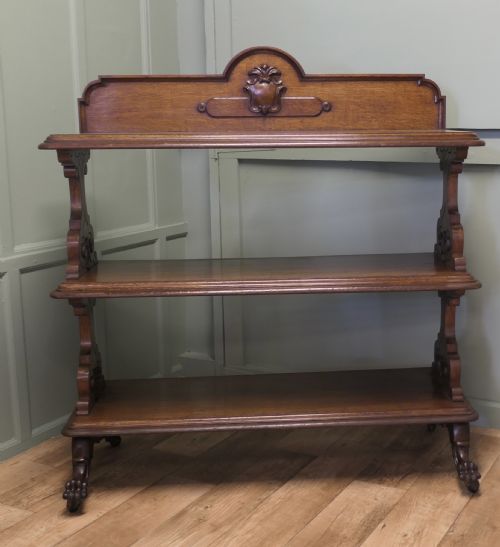
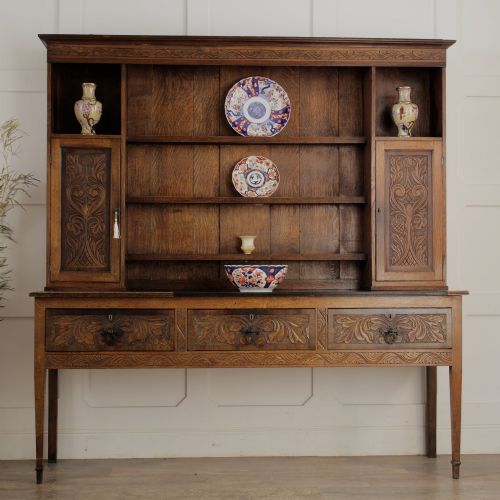
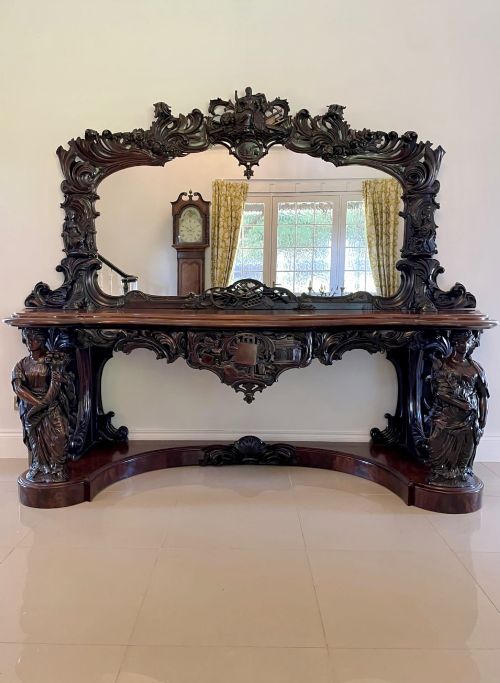
Dark Wooden Sideboard
A dark wooden sideboard grounds a dining room with substantial presence, bringing rich timber and generous storage into daily use.
Dark Wooden Sideboard
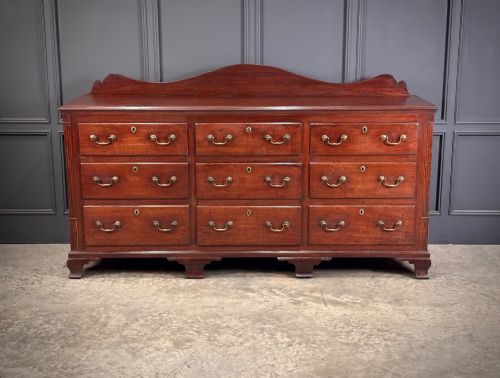
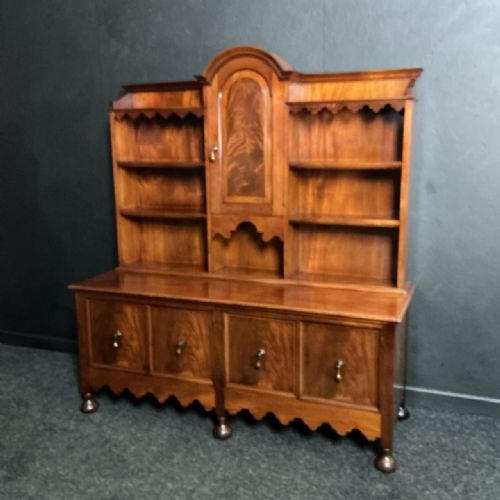
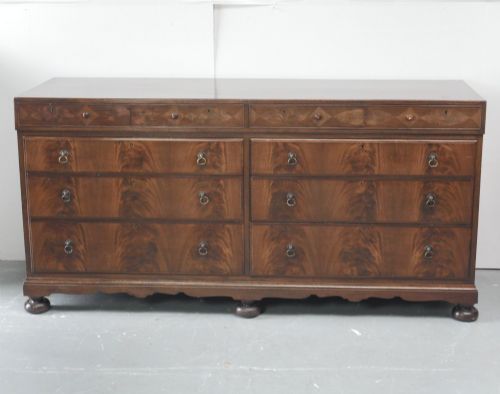
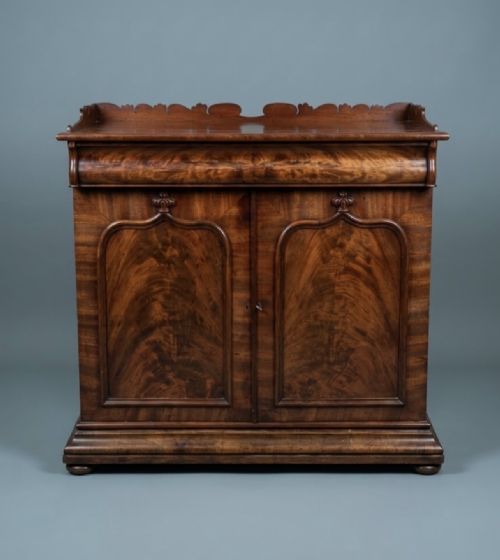
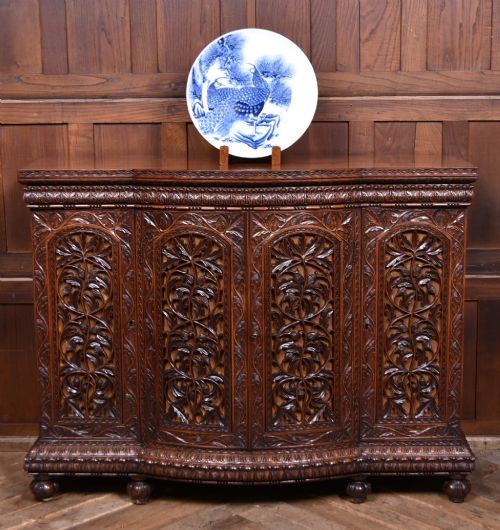
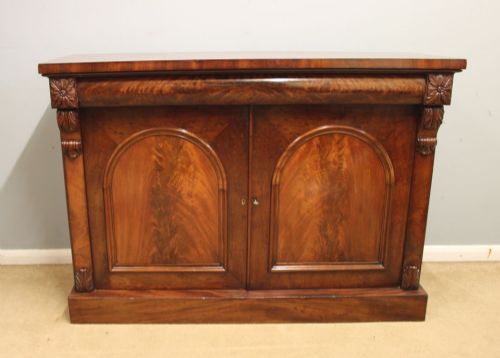
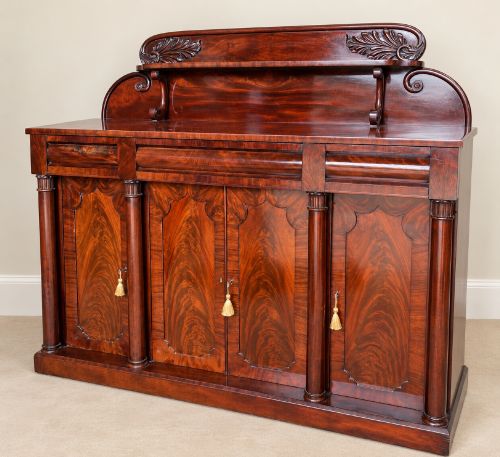
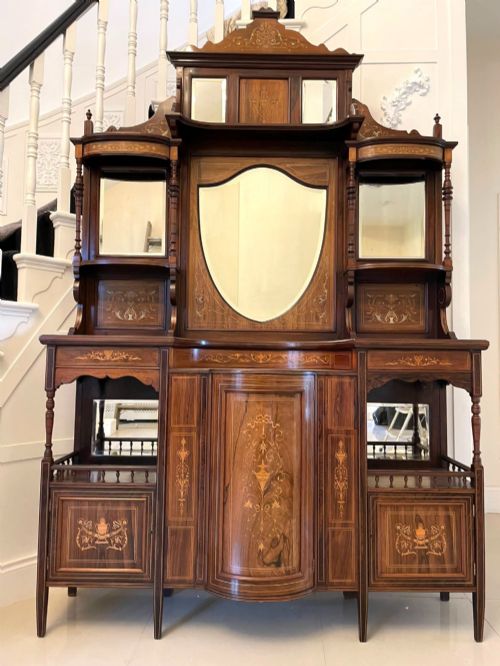
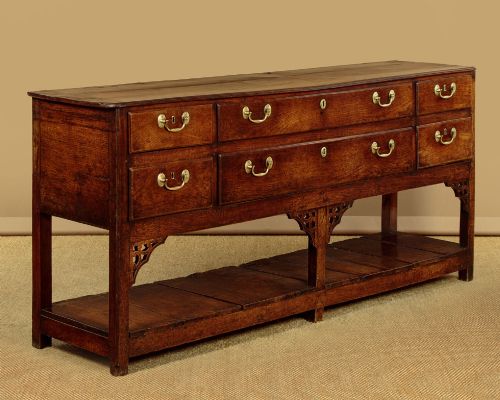
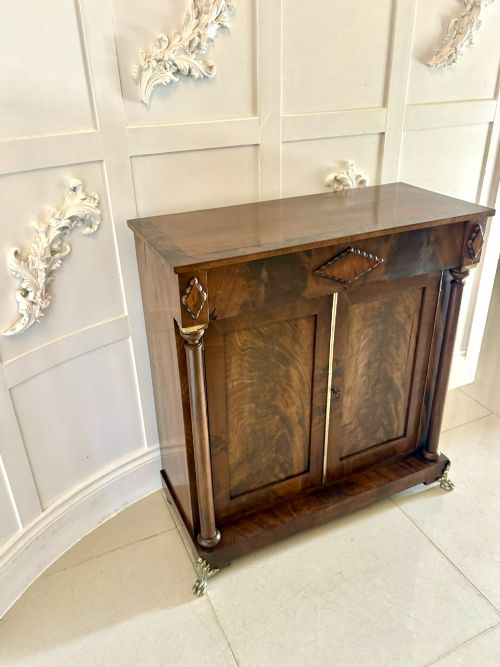
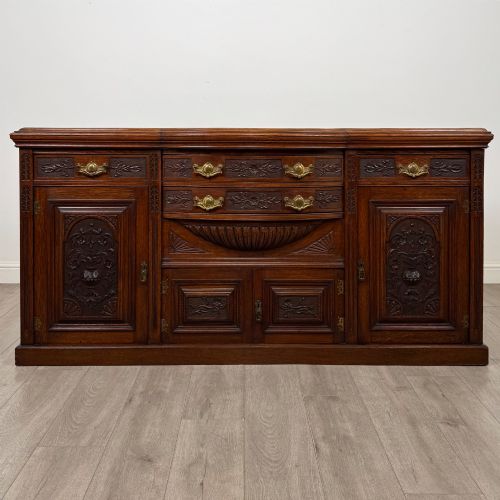
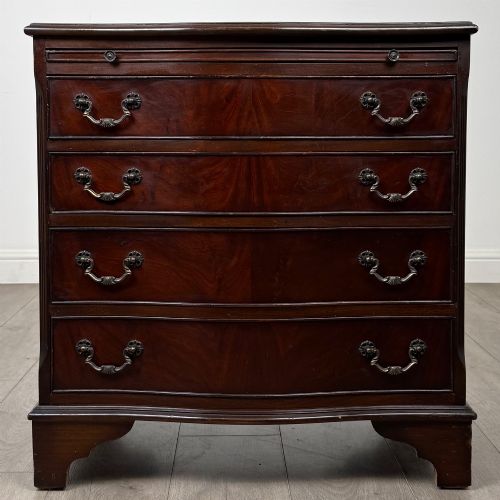
A dark wooden sideboard encompasses a variety of substantial storage furniture designed for dining spaces and living rooms, frequently encountered on this page in forms such as sideboards, dressers, chiffoniers, and side cabinets. These pieces span several centuries of British and European cabinet-making, reflecting the domestic requirements of their respective eras.
Buyers seeking a dark wooden sideboard will frequently find vernacular oak dresser bases alongside polished mahogany servers and heavily carved Victorian buffets. Each form serves the traditional function of displaying plate, storing linen, or concealing dining accessories.
Materials and construction
Cabinet-makers relied on native and imported timbers, notably solid oak for earlier country pieces and figured mahogany, rosewood, and padouk for formal later designs. Veneers such as flame mahogany were frequently applied to primary surfaces to create striking grain patterns.
Construction techniques evolved from pegged frame-and-panel assemblies in eighteenth-century oak pieces to sophisticated carcase building with dovetailed drawer boxes in nineteenth-century workshops. Brass hardware, including drop handles and key escutcheons, was commonly integrated to complement the dark wood tones.
Some Victorian dining servers concealed small cellarette drawers lined in lead to keep wine bottles cool.
Distinctions in craftsmanship
The distinction between standard and exceptional pieces rests upon the selection of timber and the precision of the joinery. Superior examples display carefully matched grain patterns across drawer fronts and doors, whereas lesser pieces utilise more uniform or hastily assembled planks.
Carved ornament also separates the ranges, with finely hand-chiselled details on Victorian oak or Georgian mahogany demonstrating superior artisan skill compared to mechanical or shallow moulding. The integrity of the internal carcase, including secondary timbers used for drawer linings, further indicates the standard of workshop production.
Whytock and Reid·Gillows
The Dark Wooden Sideboard Glossary
- Chiffonier
- A compact sideboard or low cabinet equipped with enclosed shelving below, popular during the nineteenth century for dining and drawing rooms.
- Dresser Base
- An open or closed table structure with drawers, originating from farmhouse kitchens and dining halls for storing culinary ware.
- Flame Mahogany
- A veneer cut from the branch junction of the mahogany tree, producing a distinctive flickering, flame-like pattern.
- Potboard
- An open slatted lower shelf incorporated into traditional oak dressers, originally intended for storing pots and pans.
- Serpentine
- A furniture front characterised by a gentle undulating curve, convex in the centre and concave towards the ends.
Dark Wooden Sideboard: Frequently Asked Questions
How do I date a sideboard?
Dating relies on observing the timber species, construction methods, and stylistic details such as brass hardware, carved ornamentation, and foot designs.
Earlier pieces from the eighteenth century typically utilise solid oak with pegged joinery, while nineteenth-century examples often feature polished mahogany, flame veneers, and applied mirror backs.
Where should I place my sideboard?
A sideboard traditionally sits against the dining room wall, providing a convenient surface for food service during meals and storage for formal dinnerware underneath.
In modern homes, these versatile cabinets also function effectively in hallways, living rooms, or large kitchens as statement storage furniture.
How do I care for antique wood?
Maintaining antique wood requires keeping the piece away from direct sunlight and extreme temperature fluctuations to prevent the timber and veneers from drying out or splitting.
Regular application of suitable natural waxes helps nourish the grain and preserve the deep polished finish characteristic of period furniture.