
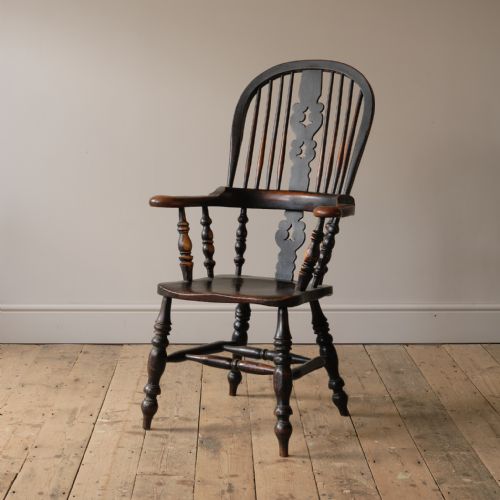
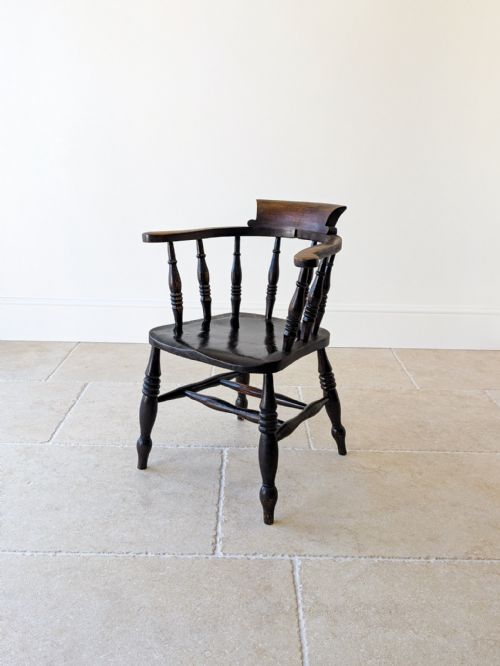

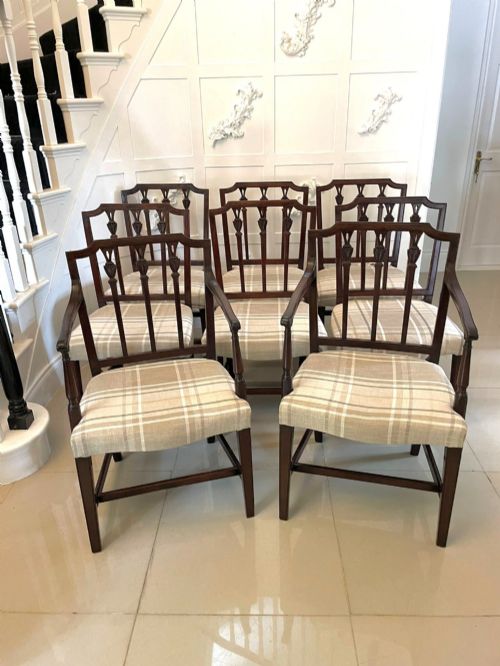
Dark Wooden Armchair
A dark wooden armchair offers solid domestic seating rooted in centuries of traditional British and continental cabinetmaking.
Dark Wooden Armchair
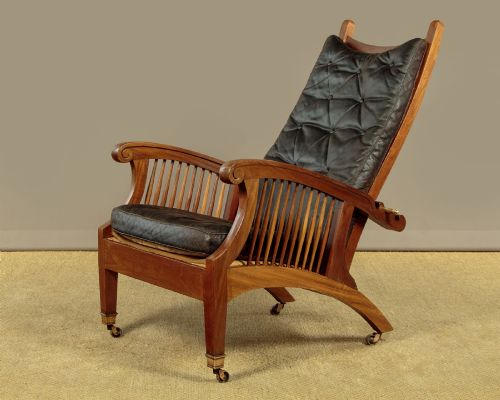
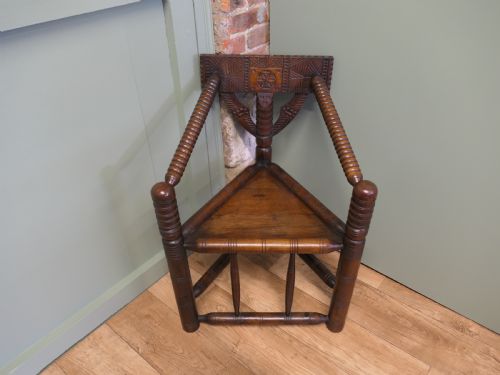
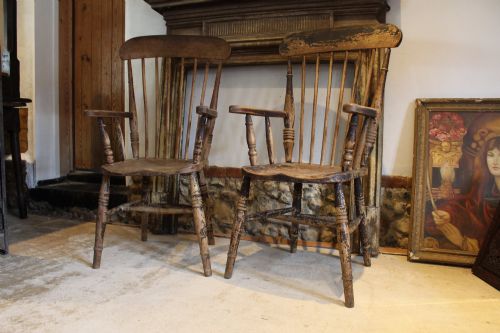
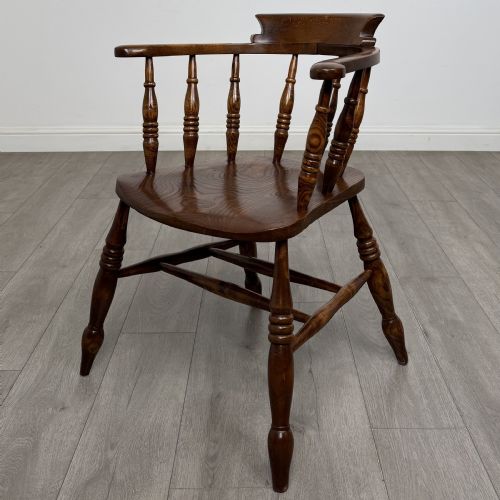
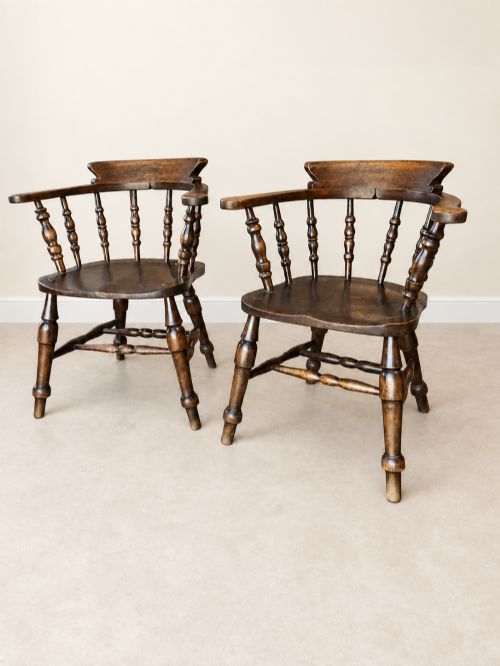
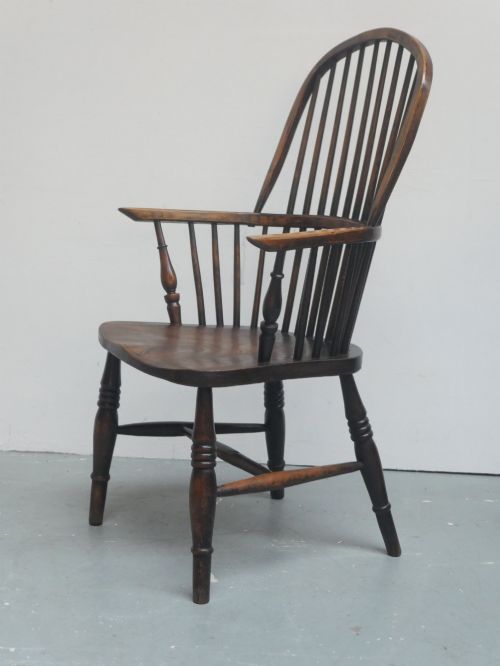
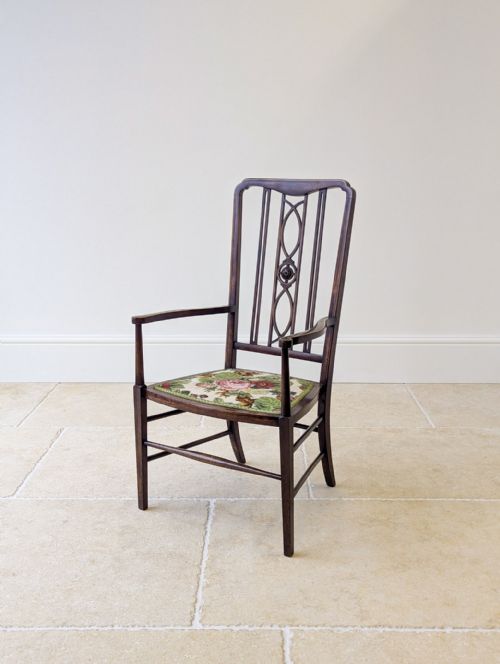
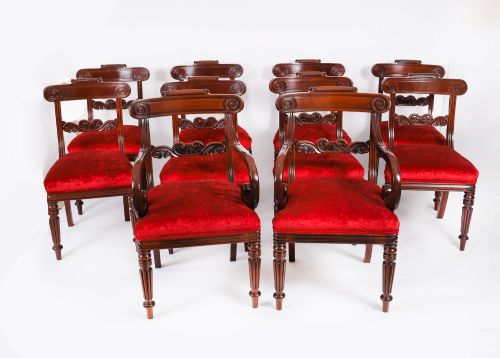
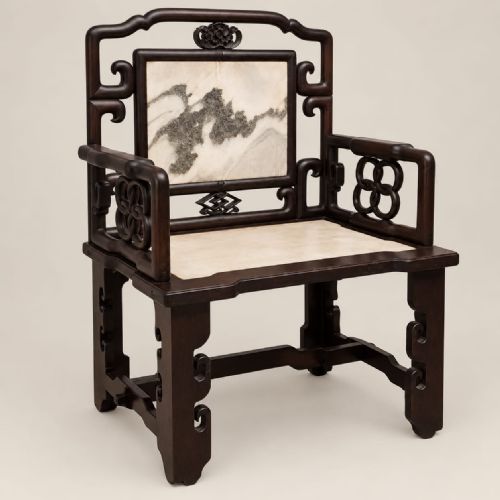
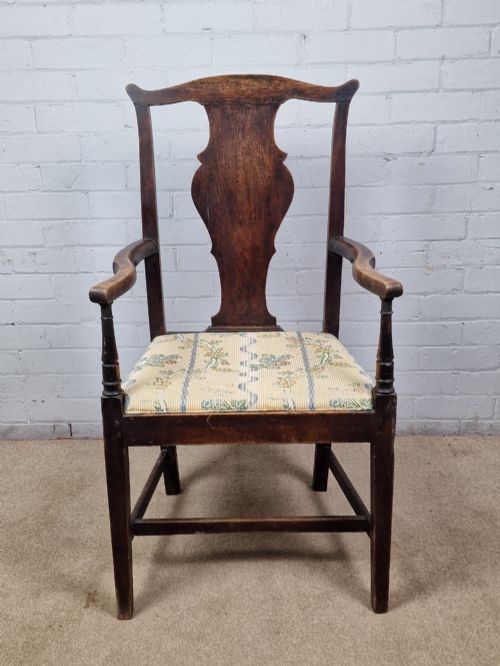
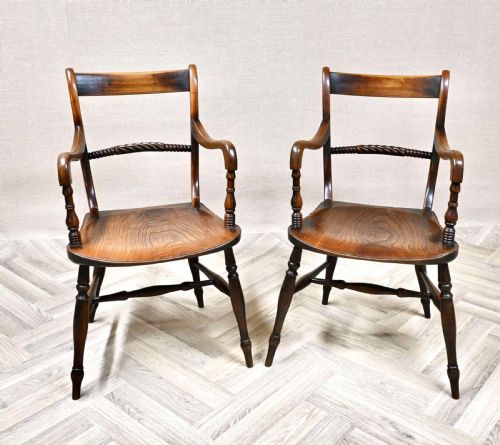
A dark wooden armchair encompasses everything from sturdy country Windsors in elm and ash to formal mahogany and walnut dining and reception seats. Buyers searching for a dark wooden armchair encounter sturdy spindle backs, heavy wainscot forms, and upholstered Victorian models.
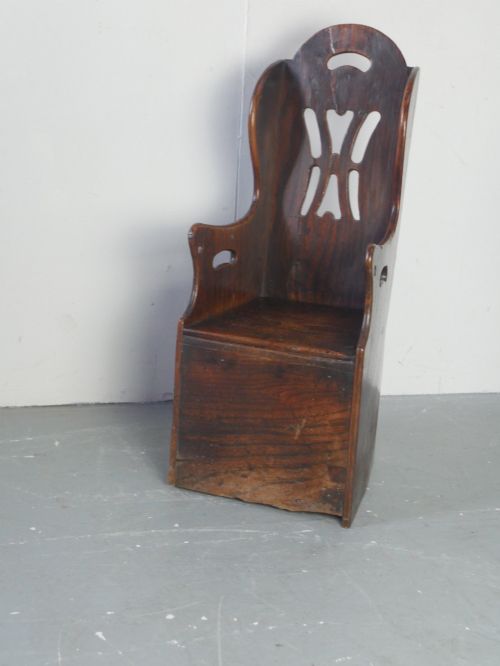
The pieces span multiple centuries, ranging from seventeenth-century walnut chairs to nineteenth-century farmhouse seating and Arts and Crafts oak designs. Regional variations such as Thames Valley stick backs and West Country child variants appear frequently alongside formal Georgian carvers.
Materials and Construction
Cabinetmakers and rural bodgers utilised native timbers including oak, elm, ash, beech, and mahogany, often finishing them with dark stains or developing a deep natural patina over generations. Turnery, pegged joints, and steam-bent components provide the structural integrity for heavy daily use.
Surface treatments range from waxed mahogany to original polish on nineteenth-century ash and elm, occasionally complemented by applied elements like mother of pearl inlay or carved walnut.
Listings feature regional variations from the Thames Valley and West Country alongside seventeenth-century wainscot chairs and Victorian Arts and Crafts seating.
Judging Quality and Execution
Quality rests upon timber selection and the retention of original surface finishes rather than subsequent alterations. The integration of traditional joinery, such as wedged through-tenons in Windsor seats or crisp hand-carving on walnut frames, distinguishes superior examples from standard production.
Proportion and structural balance dictate the success of a piece, with finer examples maintaining original timbers throughout without extensive replacement of spindles, crest rails, or arms.
Howard and Sons·Jacob and Josef Kohn·Philip Clissett
The Dark Wooden Armchair Glossary
- Carver
- An armchair designed to match a set of dining chairs, typically featuring open arms and a slightly wider seat.
- Windsor
- A traditional wooden chair built with a solid wooden seat into which the legs, back sticks, and bow are separately bored and wedged.
- Wainscot
- An early heavy wooden armchair constructed from panelled oak, prevalent in seventeenth-century domestic interiors.
- Stick back
- A chair construction method where turned wooden spindles form the back rest, secured directly into the seat.
- Glastonbury
- A specific nineteenth-century revival form of folding X-framed chair inspired by medieval ecclesiastical seating.
Dark Wooden Armchair: Frequently Asked Questions
How do I date an old wooden armchair?
Dating relies upon examining the timber species, joinery methods, and tool marks visible on the underside and internal frame components. Changes in furniture fashion from heavy seventeenth-century oak panel construction to lighter eighteenth-century mahogany and nineteenth-century vernacular ash provide clear chronological markers.
Secondary indicators include the presence of original finish, wear patterns on the seat and arms, and construction details like handmade screws or pegged tenons.
Where should I place a dark wooden armchair?
These chairs anchor corners of living rooms, provide reading seating in studies, or serve as occasional chairs in bedrooms and hallways. Their rich timber tones complement both traditional interiors and contemporary spaces seeking textural contrast.
Keep them away from direct heat sources and strong sunlight to prevent the timber and any original polish from drying out or cracking.
How do I maintain the finish on antique wood?
Regular dusting with a dry, soft cloth prevents the accumulation of particulate matter that can abrade aged surfaces over time. Feeding the timber periodically with appropriate specialist wax preserves the moisture content and enhances the natural patina without building up heavy residue.
Avoid silicone-based sprays and excessive moisture, which can permanently damage fragile nineteenth-century polishes and historic patinas.