

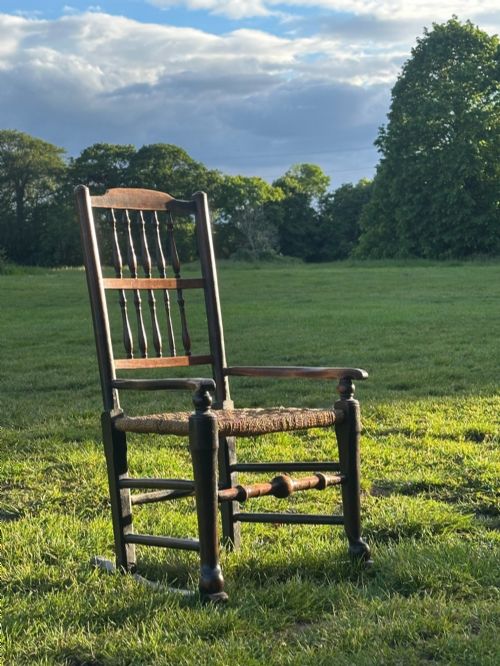
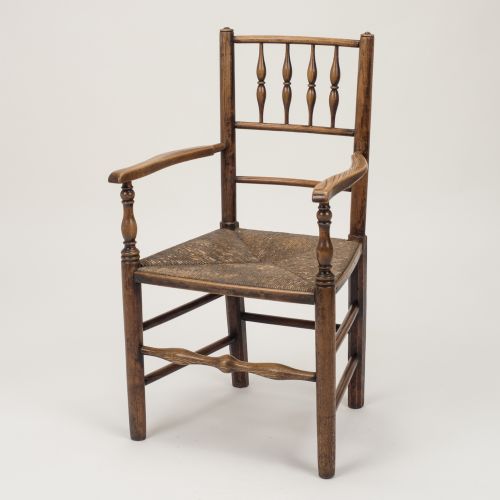
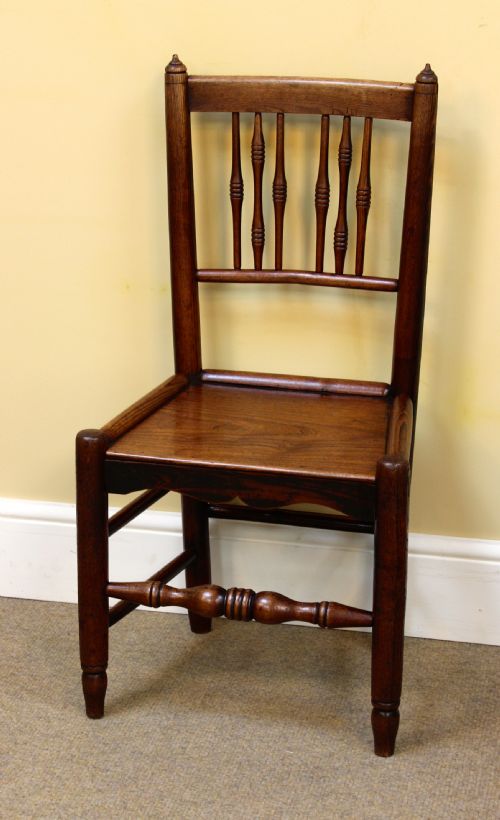

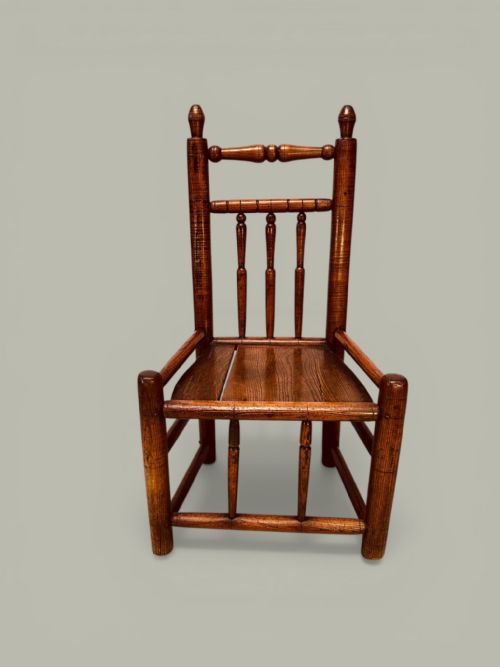


Ash Spindle Back Chair
When searching for an ash spindle back chair, a buyer uncovers utilitarian English country seating shaped by centuries of regional vernacular woodwork.
Ash Spindle Back Chair
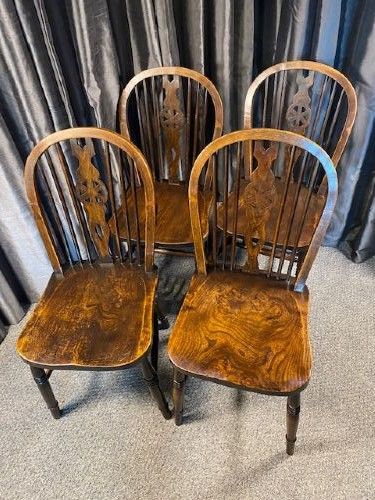
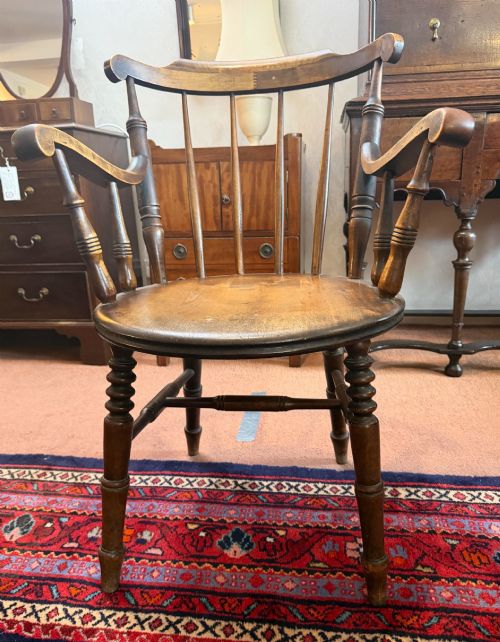
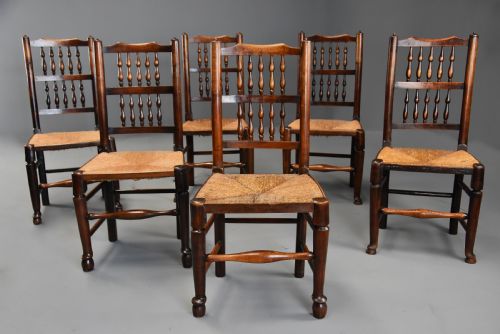
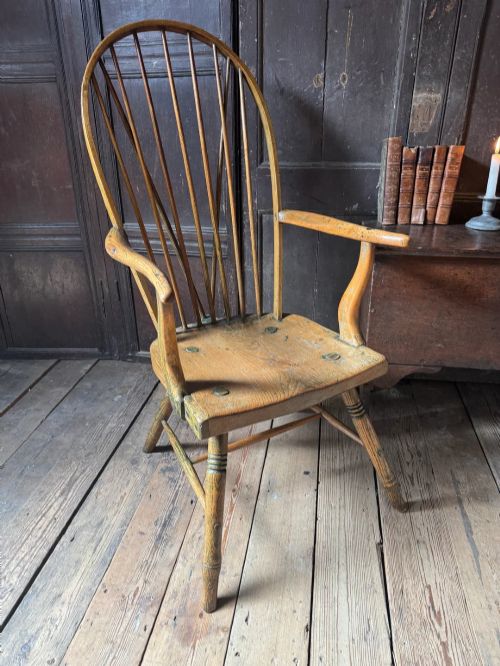
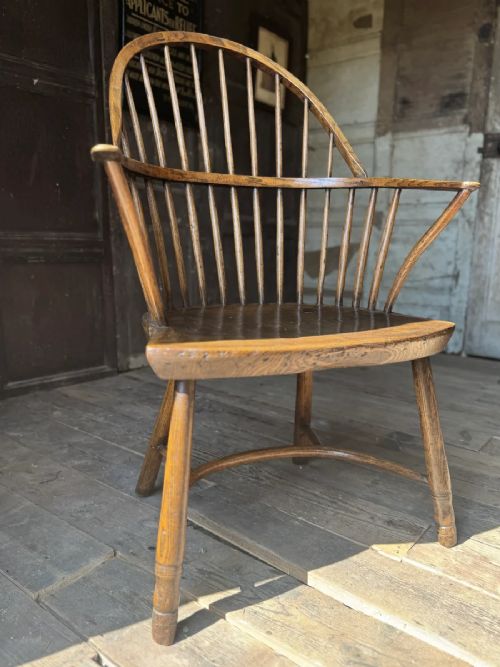
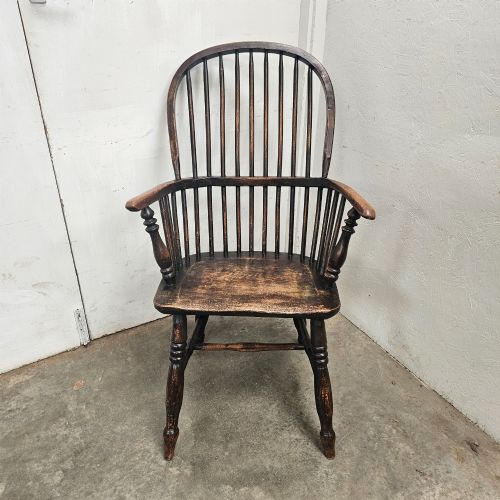
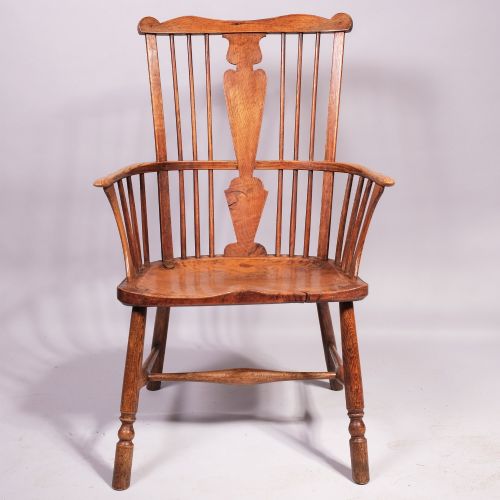
An ash spindle back chair represents traditional English country seating, designed for domestic and farmhouse utility from the seventeenth century through the Victorian era. These pieces appear as single armchairs, desk chairs, rocking chairs, and matched dining sets originating from regional workshops in Lancashire, Cheshire, Suffolk, and the West Country.
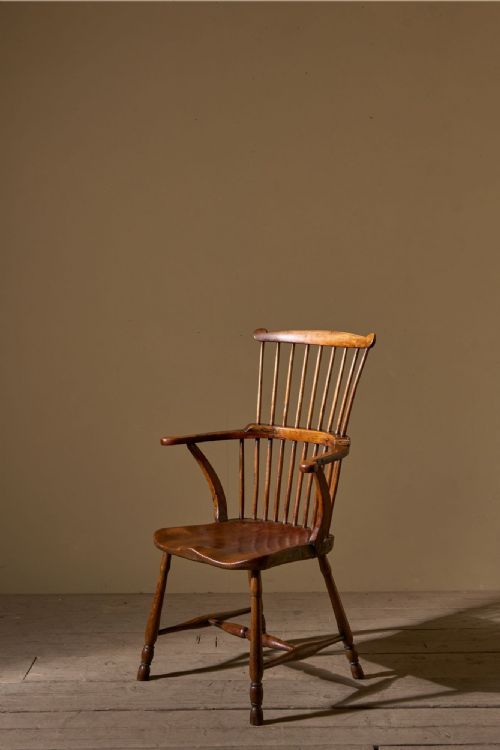
The most common examples on this page are nineteenth-century kitchen chairs and Windsor forms combining turned ash framing with elm seats. Buyers also encounter children's high chairs, potty chairs, and smoker's bows sharing the same vernacular construction.
How they were made
Makers utilised ash for its strength and flexibility, turning spindles and legs on a lathe while bending wood for bows and hoops. Elm provided a stable, tough material for solid saddle-shaped seats that resisted splitting under heavy use.
Additional timbers such as beech, oak, alder, and rush appear in frames and woven seating areas. Joinery relied on traditional pegging and wedged tenons, binding the turned components together without metal fixings.
What varies in quality
The distinction between ordinary utility seating and superior examples rests in the crispness of the turning and the harmony of the timber grain. Better chairs display slender, well-proportioned spindles and deeply sculpted elm seats showing age and wear rather than mechanical sanding.
Matched sets and original surfaces with developed patination command greater attention than heavily restored or mismatched assemblies. The integrity of the original construction and regional quirks of the maker dictate the standing of each piece.
Duncan McKellar of Fenwick
The Ash Spindle Back Chair Glossary
- Spindle back
- A chair back constructed from vertical turned wooden rods fitted between a top rail and seat. These members provide light yet rigid support.
- Windsor chair
- A vernacular seating form featuring a solid wooden saddle seat into which the legs, back spindles, and bow are separately bored and wedged. This technique creates a durable, skeletal frame.
- Crinoline stretcher
- A bent-wood or turned box stretcher connecting the legs of a chair near the base, often curved outward to resemble a crinoline petticoat. It adds structural rigidity to the underframe.
- Comb back
- A Windsor chair variation where the top rail resembles the spine of a comb, holding short vertical spindles extending upward from a flat arm rail. This style emerged during the eighteenth century.
- Turner's chair
- An early heavy armchair constructed entirely from turned posts and rails joined in geometric patterns. These pieces date to the seventeenth century and reflect specialised pole-lathe work.
- Rush seat
- A seating platform woven from dried marsh rushes twisted into cords and threaded tightly across an open frame. This traditional method yields a resilient surface common in regional country chairs.
Ash Spindle Back Chair: Frequently Asked Questions
What is an ash spindle back chair?
An ash spindle back chair is a traditional wooden seat featuring turned vertical spindles supporting the backrest, framed primarily in ash wood.
These pieces emerged from English country workshops and farmhouses to serve everyday domestic functions.
How do I identify a Georgian ash chair?
Georgian ash chairs display characteristic eighteenth-century regional turning, saddle-shaped elm seats, and sturdy underframe stretchers.
Experts look for pegged joinery and hand-carved details that reflect eighteenth-century vernacular production methods.
Were these chairs used in kitchens?
These chairs served extensively in farmhouse kitchens, dining rooms, and parlours as durable everyday seating for families.
Their robust construction of ash and elm handled heavy daily wear across generations of domestic life.
How should I care for an antique ash chair?
Antique ash chairs require stable indoor humidity away from direct heat sources to prevent timber shrinkage and cracking.
Applying occasional traditional wax preserves the dry, aged surface patina without sealing the historic wood.