





Dark Wood Whatnot Stand
A dark wood whatnot stand offers tiered display space for books and ornaments, bringing practical elegance and rich timber tones to any interior.
Dark Wood Whatnot Stand
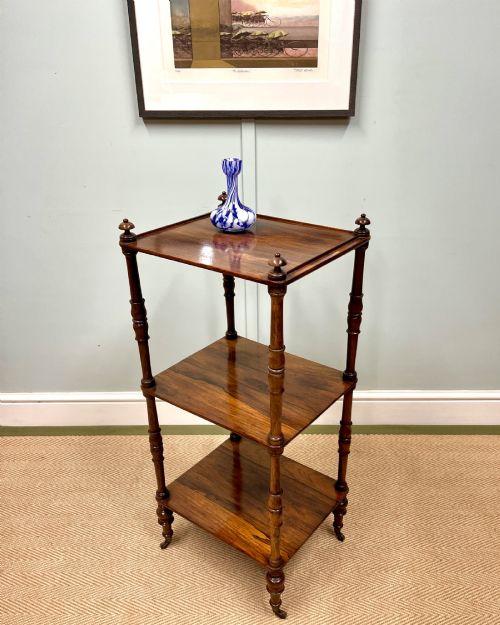
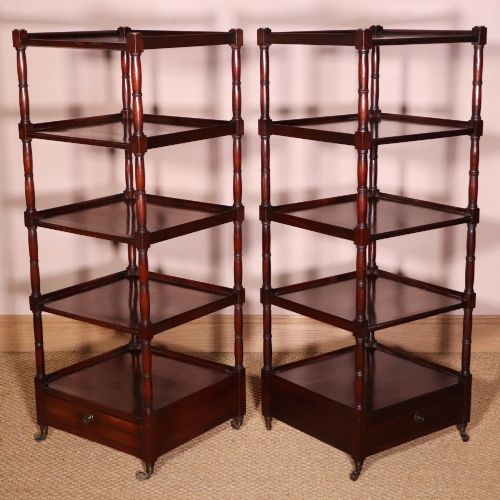
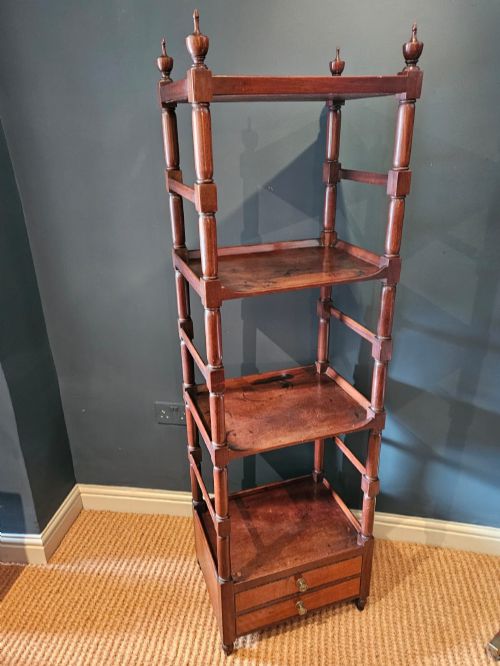
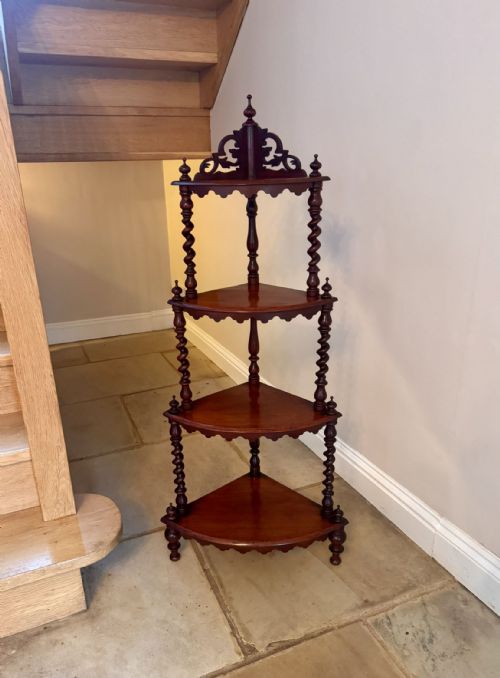
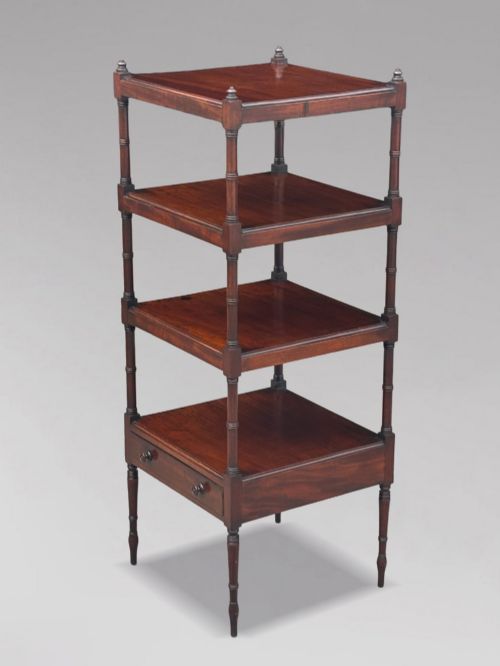
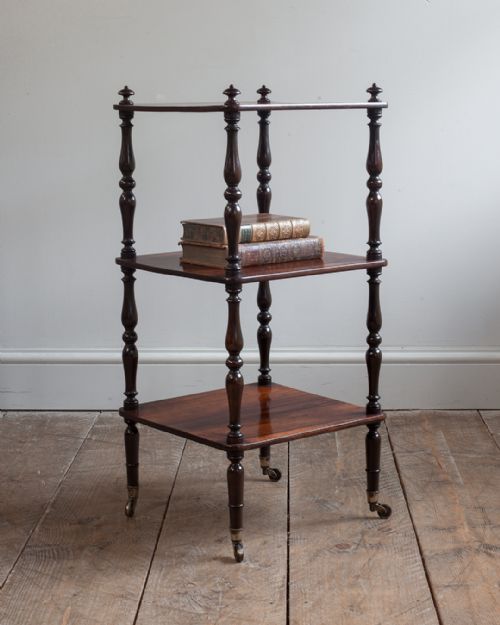
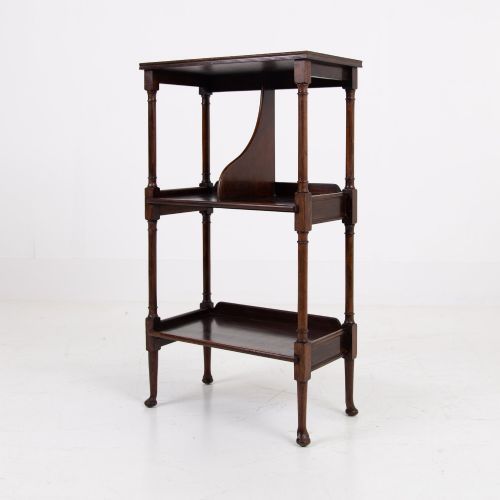
A dark wood whatnot stand is a tiered shelving unit designed for displaying books, ceramics, and ornaments in nineteenth-century interiors. These pieces appear across Georgian, Regency, and Victorian periods, often taking the form of upright multi-tier stands or specialised corner units.
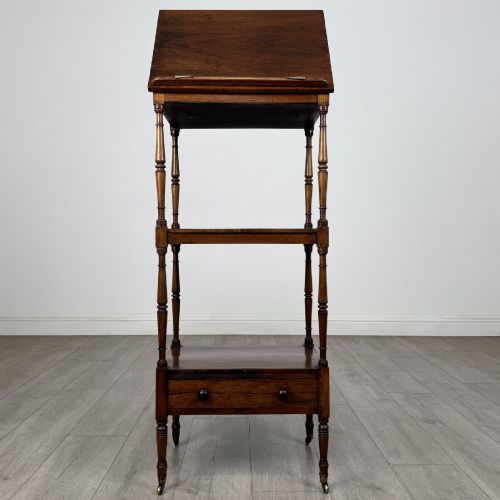
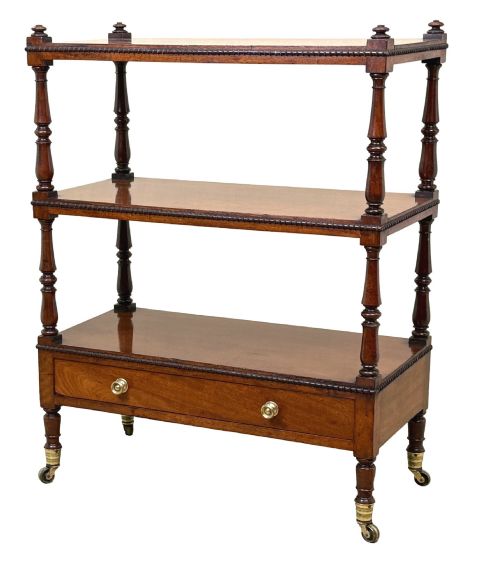
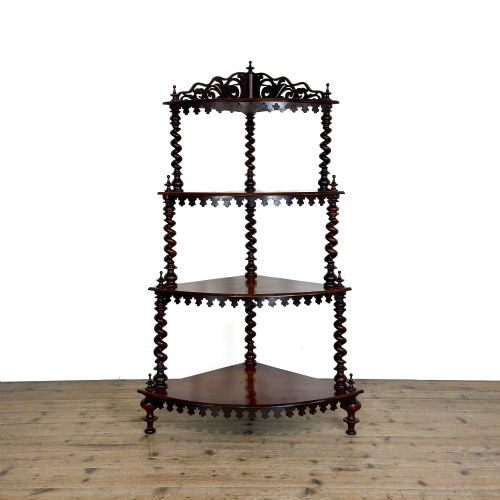
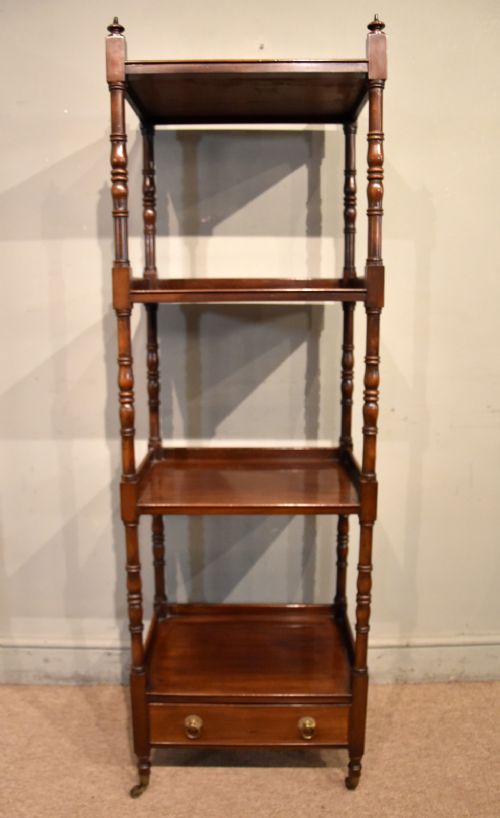
The version most commonly encountered on this page is the mahogany or rosewood whatnot, spanning three to six tiers supported by turned or barley twist columns. Many incorporate lower drawers or open bookcase sections, reflecting the versatile domestic uses developed during the 1800s.
Makers and craftsmen utilised rich timbers such as padauk, walnut, and teak, alongside indigenous hardwoods, creating both freestanding items and fitted corner shelves. Their functional design suits modern living spaces just as effectively as the period drawing rooms they originally inhabited.
Materials and construction
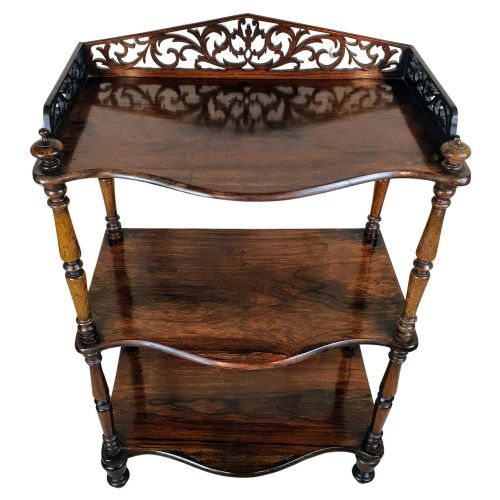
Cabinetmakers constructed these stands predominantly from dense tropical hardwoods, choosing mahogany, rosewood, and padauk for their durability and deep natural grain. Selected pieces feature turned uprights, brass castors, and pierced fretwork galleries that demonstrate skilled timber manipulation.
Structural integrity relied on pegged joints and finely fitted shelves, allowing tall multi-tier frames to support heavy volumes and decorative objects safely. Workshops also incorporated glass panels and brass details where the design called for a lighter display aesthetic.
Dark Wood Whatnot Stand Retail Price Guide 2026
Typical asking prices for dark wood whatnot stand among the pieces listed under this phrase on Sellingantiques today, from the lower quarter to the upper quarter. They describe what is for sale here now, not the wider market.
At least one nineteenth-century maker packed their whatnot onto a ship, proving that even decorative shelving needed to travel the globe.
Distinctions in quality
Quality reveals itself in the selection of timber figures, the sharpness of turned supports, and the restraint or elaboration of fretwork panels. Superior examples display dense, well-matched grains across every tier and solid brass fittings rather than plated base metals.
Proportion and stability separate standard utility pieces from exceptional items commissioned by prominent makers. The crispness of carved details on barley twist columns or corner brackets indicates the level of care invested in the initial manufacture.
Samson and Son London
The Dark Wood Whatnot Stand Glossary
- Whatnot
- A piece of furniture consisting of a set of open shelves for displaying small objects. They became popular in the early nineteenth century and served various domestic functions.
- Étagère
- A piece of furniture with a set of open shelves for displaying ornaments. The term is frequently used interchangeably with whatnot in period listings.
- Barley twist
- A carved wooden column resembling a twisted rope. This decorative turning style appears frequently on Victorian supports.
- Fretwork
- Ornamental perforated woodwork created by cutting patterns through a thin board. It often decorates the galleries of better-quality tiers.
- Canterbury
- A low stand with partitioned sections for holding sheet music or books, sometimes incorporated into the lower tier of a whatnot.
Dark Wood Whatnot Stand: Frequently Asked Questions
What is a dark wood whatnot stand used for?
These tiered shelving units provide practical display space for books, ceramics, and decorative objects in sitting rooms or hallways. Their open design allows ornaments to be viewed from multiple angles.
Historically, they functioned as versatile storage furniture for drawing rooms, libraries, and bedrooms. Today, they suit contemporary interiors as display surfaces or bedside stands.
How do I date a mahogany whatnot?
Dating relies on stylistic markers such as turned column profiles, timber choices, and structural assembly methods. Georgian and Regency pieces typically show simpler architectural lines, while Victorian examples often feature barley twist supports or elaborate fretwork.
Examining the underside and joint construction provides further clues to the manufacturing decade. Cabinetmakers altered their hardware choices and timber preferences across the nineteenth century.
Are corner whatnots sturdy?
Corner units are inherently stable because their design utilises ninety-degree wall angles for support. They distribute weight effectively down through the graduated tiers.
Properly assembled antique examples easily hold collections of books or heavy porcelain. Placing them securely against a flat corner ensures balanced daily use.
What is the difference between a whatnot and an étagère?
The terms describe very similar tiered display furniture and historical listings often use them interchangeably. Étagère carries a slightly more decorative French connotation, while whatnot is the traditional English name.
Both types serve the same primary purpose of holding books and ornaments across multiple open shelves. Construction methods and materials overlap significantly between the two terms.