




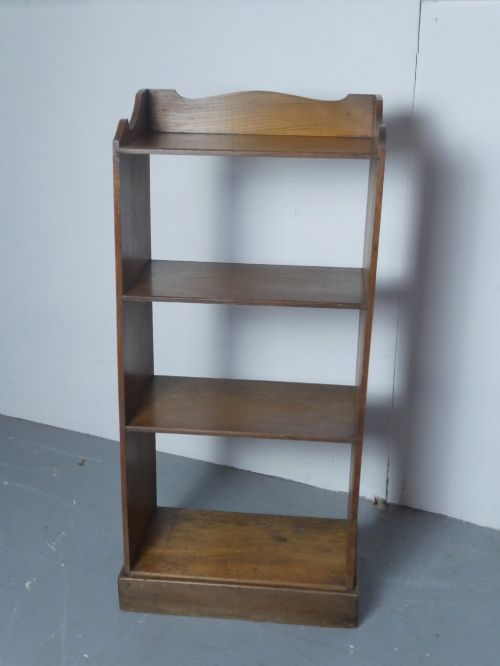

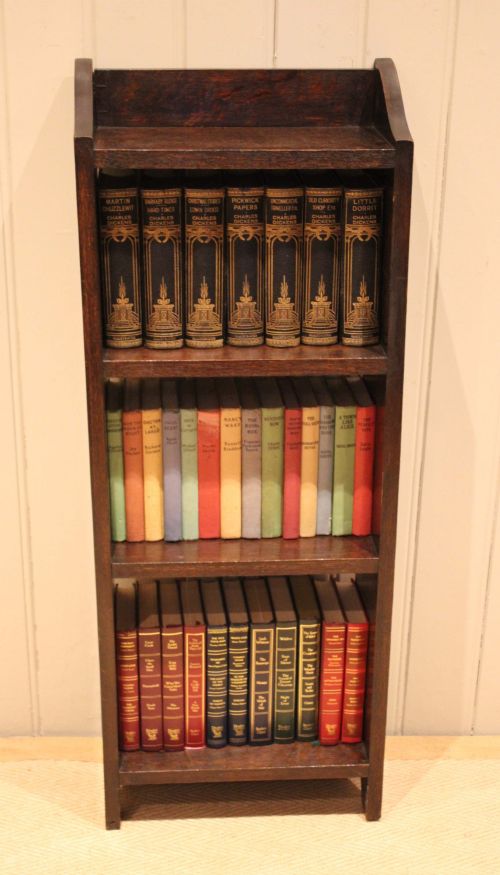


Wooden Open Tier Bookcase
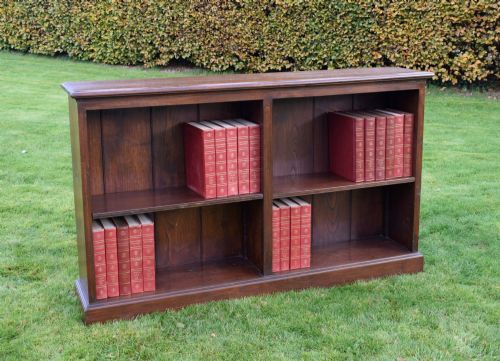
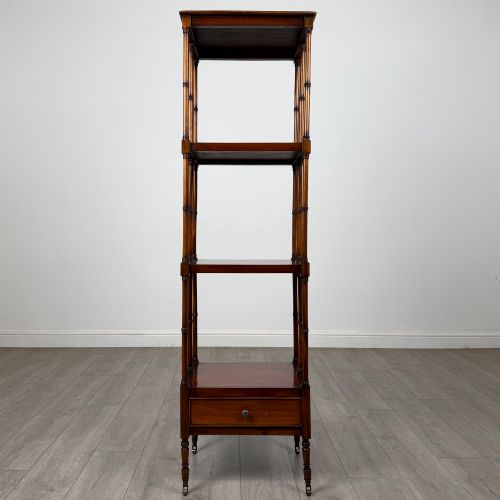
A wooden open tier bookcase brings functional display and accessible shelving together, spanning modest wall brackets to towering multi-shelf etageres.
Wooden Open Tier Bookcase
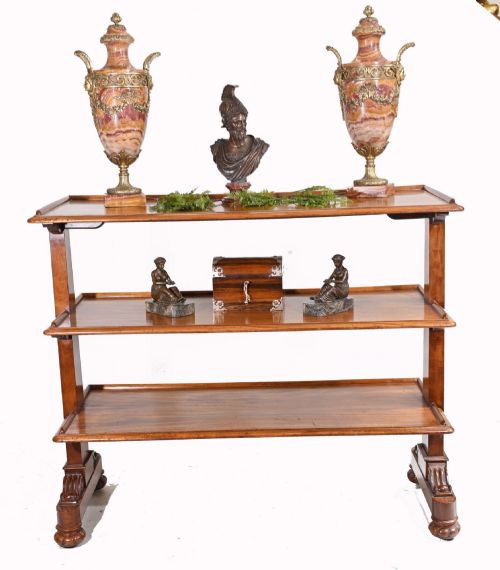
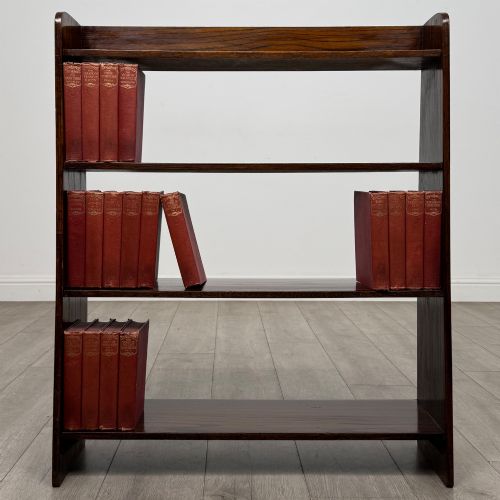
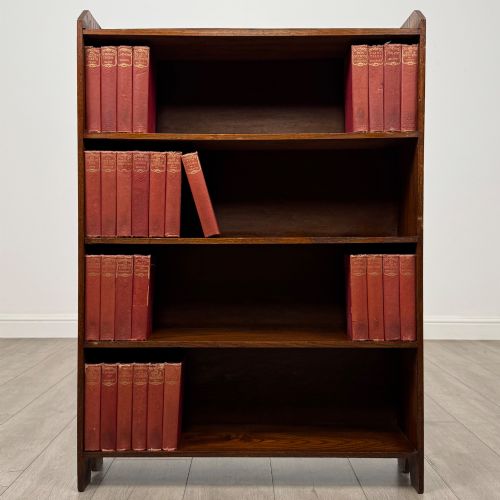
A wooden open tier bookcase encompasses freestanding shelving units, wall-hanging shelves, and tiered whatnots originating from the eighteenth century up through the early twentieth century. These pieces serve to display books and decorative objects openly rather than concealing them behind glazed cabinet doors.
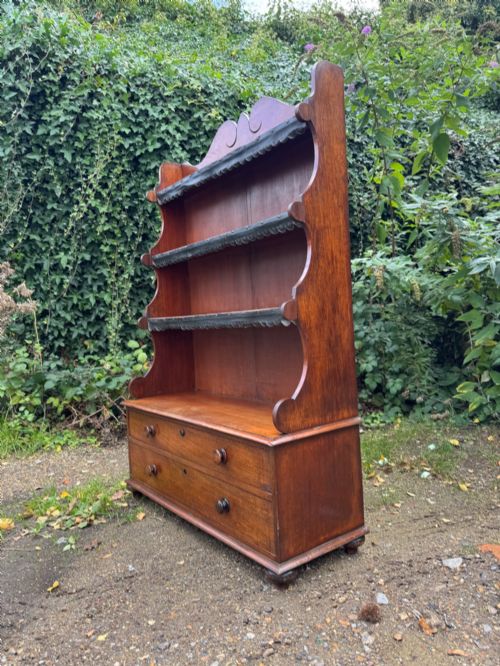
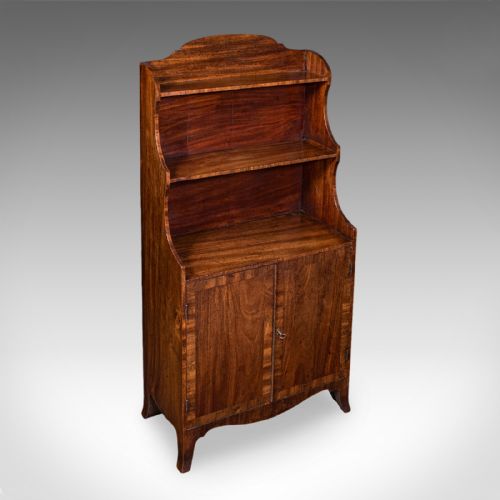
The versions most commonly met on this page include Edwardian oak and mahogany open bookcases alongside nineteenth-century waterfall variants and multi-tiered etageres. Makers from Georgian and Victorian periods onwards constructed these tiered formats for libraries, parlours, and informal living spaces.
Materials and Construction
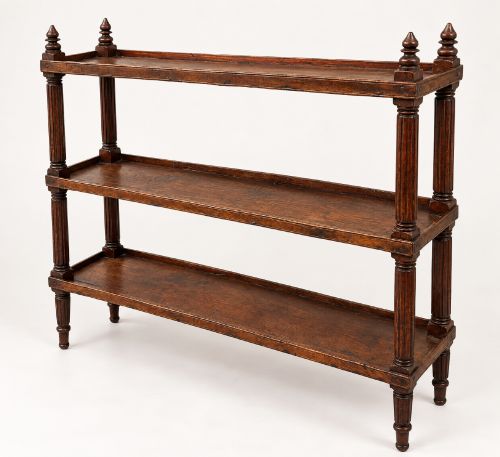
Cabinet makers utilised dense hardwoods such as mahogany, oak, walnut, and rosewood, frequently employing satin birch, yew, cherry, and painted wood for specific commissions. Finer pieces incorporate decorative techniques like cross-banding, boxwood stringing, and turned structural pillars or slender uprights.
Construction methods range from sturdy mortise and tenon joints in early oak libraries to lighter bracketed wall shelves and delicate freestanding etagere frames with multiple open tiers.
Wooden Open Tier Bookcase Retail Price Guide 2026
Typical asking prices for wooden open tier bookcase among the pieces listed under this phrase on Sellingantiques today, from the lower quarter to the upper quarter. They describe what is for sale here now, not the wider market.
Some nineteenth-century makers could not resist adding a tiny single drawer beneath the shelves just to hide away stray bookmarks.
Distinctions in Standard
The calibre of a wooden open tier bookcase rests upon the selection of timber grain, the precision of joinery, and the restraint or elegance of decorative enrichment like gallery rails and turned supports. Master workshops achieved lasting structural integrity through careful timber seasoning and balanced proportions across multiple open tiers.
Lesser examples display utilitarian construction with plain secondary woods and heavier, less harmonious shelf spacing. The presence of integrated drawers, brass fittings, and refined cross-banding distinguishes ambitious cabinet work from standard domestic shelving.
Gillows and Co
The Wooden Open Tier Bookcase Glossary
- Whatnot
- A moveable set of open shelves, typically with three or more tiers, used for displaying ornaments and books. It originated in the eighteenth century and remained popular through the Victorian era.
- Étagère
- A piece of furniture consisting of a set of open shelves for displaying small objects. French in origin, it functions similarly to the English whatnot.
- Waterfall bookcase
- A graduated shelving unit where each successive tier is set back from the one below, creating a stepped profile resembling cascading water. These often feature curved side panels.
- Cross-banding
- A strip of veneer applied to the border of a panel or shelf, laid with the grain running perpendicular to the centre piece. It provides a neat contrasting frame.
- Gallery
- A low decorative rail or pierced border fitted along the top edge of a shelf or bookcase. It prevents items from sliding off the surface.
Wooden Open Tier Bookcase: Frequently Asked Questions
How do I use an etagere?
An etagere provides open shelving intended for the display of ornaments, collections, and accessible books. These multi-tiered units suit corners or walls where closed cabinetry would appear too heavy.
Placing items across the various open levels allows light to pass through the structure, keeping the surrounding room feeling airy and spacious.
Are these bookcases freestanding?
Many examples on this page are freestanding floor units, including multi-tiered whatnots and heavy oak libraries. These rest securely on their own bases or feet.
Other listed items are designed specifically as wall-hanging shelves requiring secure fixing to wall studs or masonry to support the weight of books.
How do I date a wooden bookcase?
Dating relies on observing timber choices, construction techniques, and stylistic markers such as Arts and Crafts brackets or Georgian stringing. Earlier pieces often display hand-cut joinery and native hardwoods.
Later Edwardian and early twentieth-century examples frequently employ standardised machine fixings, lighter pine secondary woods, and simpler Edwardian moulding profiles.