




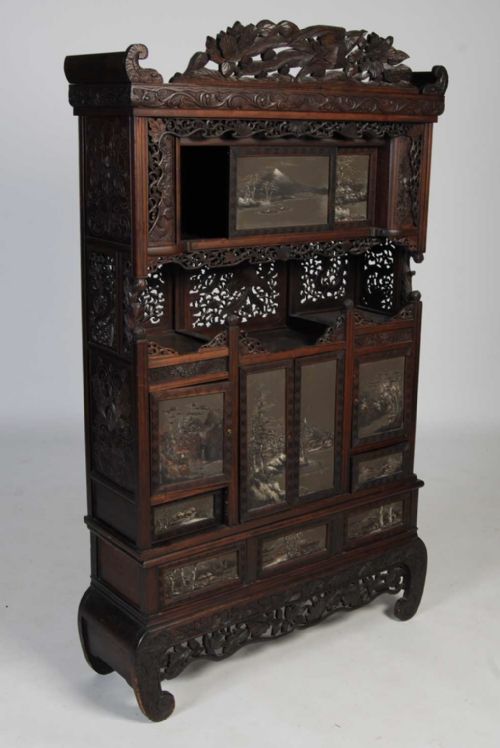


Antique Hardwood Shelving
Antique hardwood shelving brings intricate carving and rich timber tones into a room, offering display space for treasured objects.
Antique Hardwood Shelving
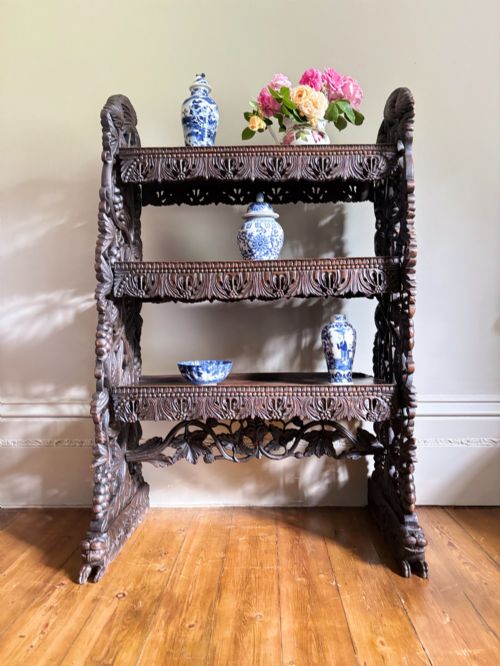
When you search for antique hardwood shelving, you find an international mix of nineteenth-century display furniture, from Chinese open cabinets to Japanese shodona and Indian etageres. These pieces range from compact dwarf side-cabinets to tall display cabinets, designed specifically to showcase smaller ornaments and curiosities.
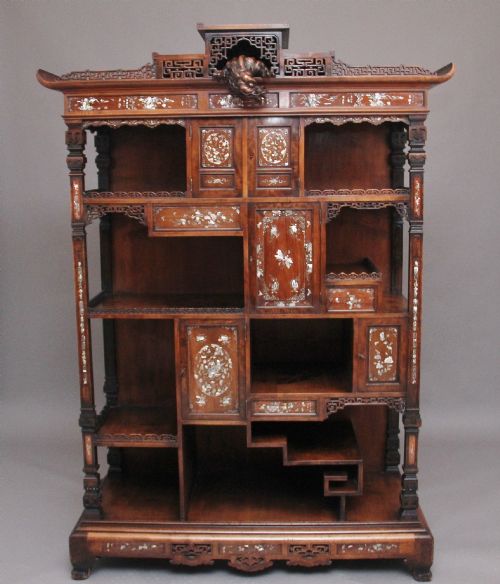
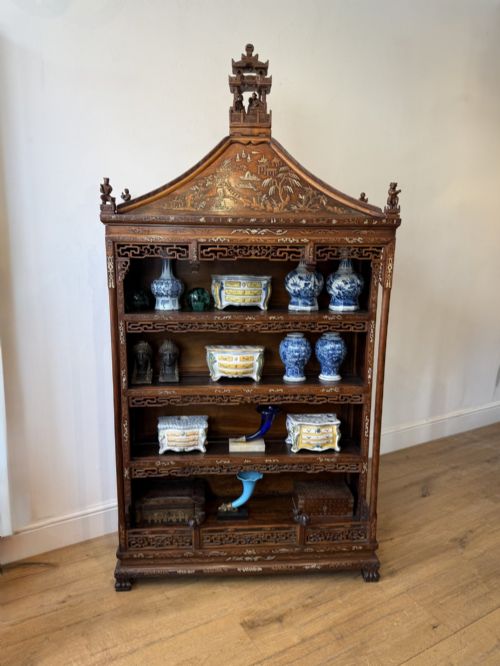
The versions most commonly met on this page originate from Chinese export workshops and the Japanese Meiji period, reflecting nineteenth-century tastes for exotic woodwork. You will encounter open tier systems, pagoda-topped display cabinets, and multi-shelf whatnots constructed from dense timbers.
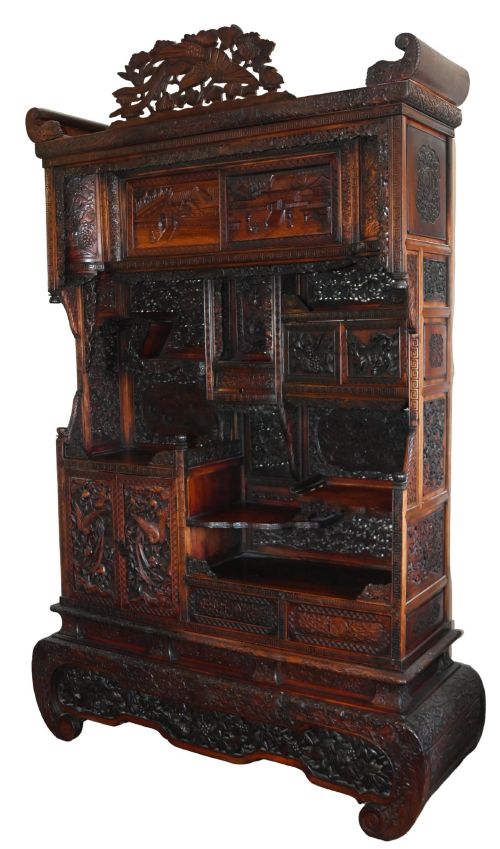
Makers utilised dark, heavy woods to support complex, pierced carving and asymmetric shelving arrangements suited to interior display. Each piece balances functional storage with decorative presence, drawing the eye through tiered platforms and enclosed compartments.
Materials and construction methods
Construction relies heavily on dense hardwoods and rosewood, which provide the structural strength needed for slender uprights and multiple tiers. Workshops employed traditional joinery to frame open shelves and support heavy carved elements without visible fixings.
Decoration often includes intricate surface carving, bone inlay, mother of pearl, and brass details set directly into the timber. Lacquer finishes and contrasting metalwork appear on Japanese and Chinese items, adding textural depth to the dark wood backgrounds.
Antique Hardwood Shelving Retail Price Guide 2026
Typical asking prices for hardwood shelving among the pieces listed under this phrase on Sellingantiques today, from the lower quarter to the upper quarter. They describe what is for sale here now, not the wider market.
The listings feature nineteenth-century items spanning the 1870s to the early 1900s, incorporating materials such as brass, bone inlay, and mother of pearl.
What separates the fine from the ordinary
Quality rests in the depth and precision of the carving, particularly where panels feature pierced work or complex figural scenes. Pieces with crisp, deep-relief carving display a level of handwork that separates standard production from superior workshop output.
The choice of timber and the integration of decorative elements like bone inlay or brass fittings also dictate the standard of the piece. Well-balanced proportions and harmonious tier arrangements show the maker's architectural control over dense materials.
The Antique Hardwood Shelving Glossary
- Shodana
- A Japanese tabletop or freestanding display cabinet featuring staggered shelves, sliding doors, and small drawers. These cabinets were designed to display small objects of art.
- Etagere
- A piece of furniture consisting of a set of open shelves for displaying small ornaments. The term comes from the French for a set of shelves.
- Meiji Period
- The era in Japanese history lasting from 1868 to 1912, characterised by the opening of trade with the West and distinctive decorative arts. Pieces from this time often show exceptional carved detail.
- Qing Dynasty
- The last imperial dynasty of China, ruling from 1644 to 1912. Furniture from this period frequently utilises dense hardwoods and elaborate carving.
- Hongmu
- A Chinese term meaning red wood, used to describe various dense, dark hardwoods prized for furniture making. It provides a heavy, durable frame for intricate display pieces.
Antique Hardwood Shelving: Frequently Asked Questions
What were antique hardwood shelves used for?
These pieces served primarily to display porcelain, jade carvings, and other decorative objects in wealthy homes. The tiered shelving allowed owners to arrange collections of small curiosities in an orderly, visible manner.
In both European and Asian interiors, they functioned as focal points for conversation, highlighting the collector's taste and worldly interests through carefully framed displays.
How do I care for antique hardwood furniture?
Keep these items away from direct sunlight and heat sources to prevent the dense timber from drying out and cracking. Gentle dusting with a dry cloth is usually sufficient for maintenance.
Avoid using silicone-based polishes or harsh chemical sprays, as these can damage historical lacquer work and delicate bone or mother of pearl inlay.
How can I tell a Japanese shodona from a Chinese cabinet?
Japanese shodona cabinets typically feature asymmetric shelving arrangements, sliding doors, and distinct aesthetic influences from the Meiji period. They often incorporate subtle brass hardware and refined, nature-inspired carving.
Chinese display cabinets tend toward more symmetrical framing, sometimes including pagoda roofs or heavily carved panels depicting traditional figures and landscapes in deep relief.
Where should I place hardwood shelving in a modern home?
Place these cabinets against interior walls where temperature fluctuations are minimal, ensuring the heavy hardwood structure remains stable. Their compact footprint makes them suitable for studies, living rooms, or hallways.
Ensure the surrounding lighting highlights the open tiers and carved details, allowing the dark timber tones to ground the lighter objects placed upon them.