






Vintage Open Etagere
A vintage open etagere offers tiered display space for books and decorative objects, combining practical storage with light-reflecting elegance.
Vintage Open Etagere
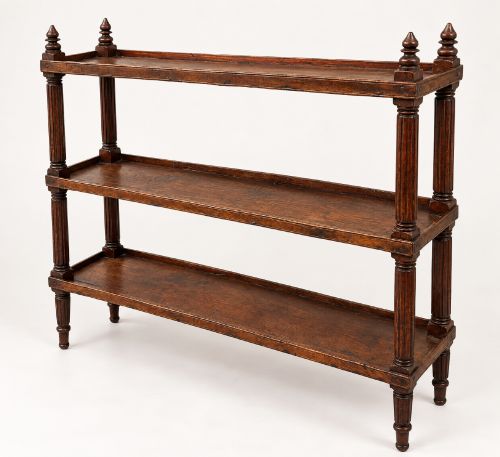
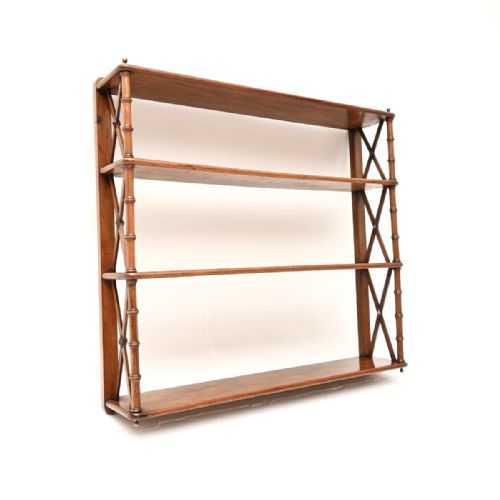
A vintage open etagere functions primarily as a multi-tiered freestanding or wall-mounted shelving unit designed to display ornaments, books, and collections without obstructing the room. The selection here spans the 19th century, Victorian, Edwardian, and Georgian periods, drawing on styles such as Regency, Rococo Revival, and Anglo-Indian Colonial.
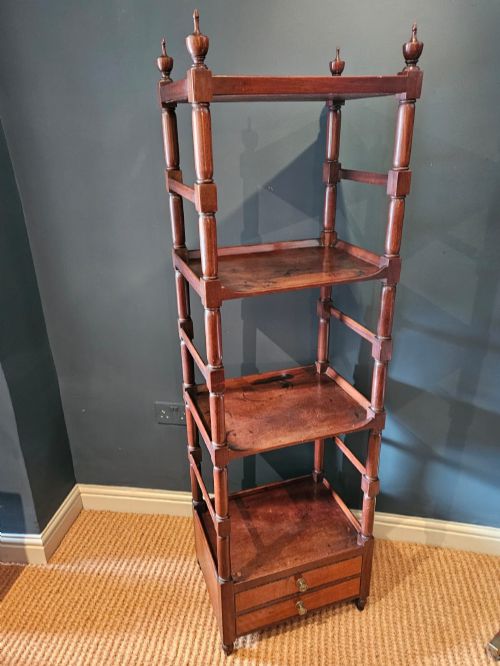
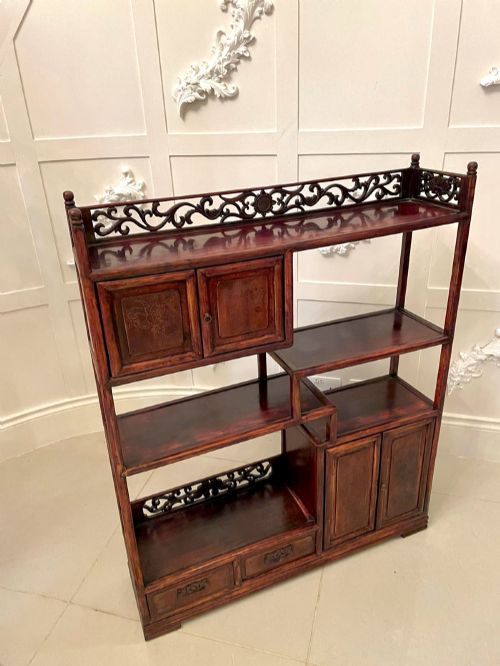
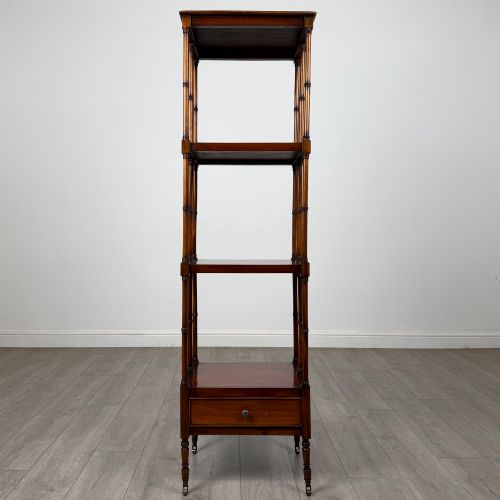
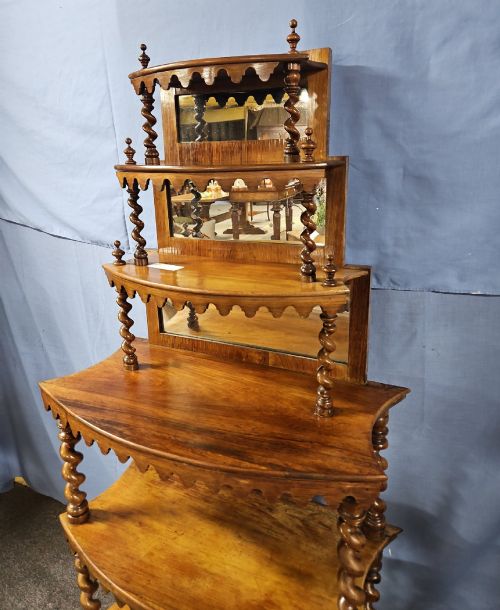
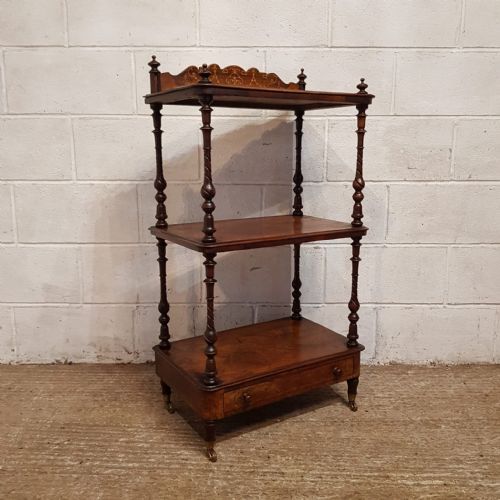
Buyers looking for a vintage open etagere encounter various forms, including traditional multi-tier whatnots, corner units, waterfall shelves, and display stands. Mahogany, walnut, rosewood, and hardwood dominate the construction, often enhanced by turned legs, slender pillars, pierced fretwork, or inlaid details.
Originating in France as a piece for displaying small knick-knacks and porcelain, the etagere evolved in Britain into the whatnot and similar open shelving formats. The pieces on this page reflect this lineage through tiered wooden platforms supported by upright columns or turned supports.
How they were made
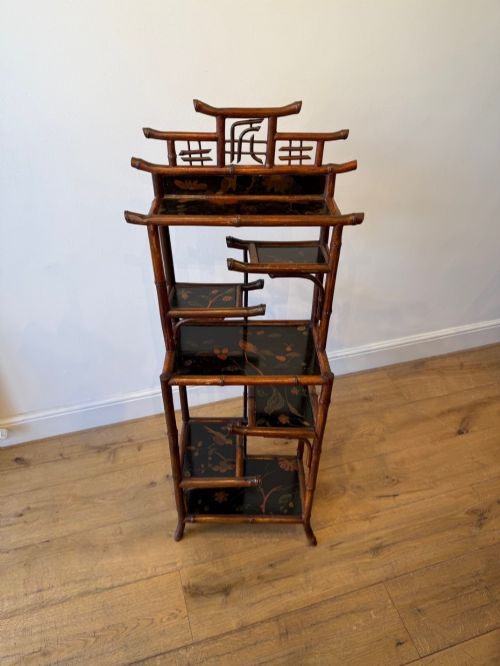
Cabinetmakers constructed these tiered units primarily using dense timbers such as mahogany, walnut, burr walnut, and rosewood, alongside exotic varieties like Indian hardwood and bamboo. Sections were joined using traditional cabinet-making methods, ensuring stability across multiple tiers without heavy side panels.
Decorative embellishments relied on hand-carved fretwork, giltwood accents, applied lacquer, and turned wooden pillars or columns. Surfaces were finished with oils, polishes, or wax to highlight the natural grain patterns of the wood.
Vintage Open Etagere Retail Price Guide 2026
Typical asking prices for vintage open etagere among the pieces listed under this phrase on Sellingantiques today, from the lower quarter to the upper quarter. They describe what is for sale here now, not the wider market.
The listings feature diverse timbers including mahogany, walnut, rosewood, oak, and Indian hardwood across Victorian, Georgian, and Edwardian periods.
What varies in quality
Structural integrity across multiple tiers determines the baseline quality of an etagere, particularly how firmly the upright pillars support each shelf without swaying. Superior examples maintain rigid joinery and straight lines even when laden with heavy volumes or objects.
Timber selection and decorative execution separate standard production from finer pieces, evident in the choice of figured burr walnut, rich rosewood, or crisply carved fretwork. The crispness of hand-turned legs and the subtlety of inlaid details reveal the maker's proficiency.
The Vintage Open Etagere Glossary
- Etagere
- A piece of furniture consisting of a set of open shelves for displaying small objects or ornaments. It originated in France and shares similarities with the English whatnot.
- Whatnot
- A freestanding piece of furniture with multiple shelves for books or ornaments, popular during the 19th century. These units often feature three to five tiers supported by slender columns.
- Fretwork
- Ornamental design worked in wood with a fretsaw, frequently seen in pierced patterns on the galleries of Victorian and Edwardian shelves. This technique adds visual lightness to the structure.
- Burr walnut
- A veneer taken from the knotted growth of a walnut tree, prized for its swirling, highly figured grain patterns. It appears frequently on high-status Victorian etageres.
- Waterfall shelf
- A style of shelving where each successive tier steps back from the one below it, creating a cascading profile. This form gained popularity for displaying books and small items against a wall.
Vintage Open Etagere: Frequently Asked Questions
What is an etagere used for?
An etagere serves as an open shelving unit designed for displaying books, ceramics, and decorative ornaments. Its multiple tiers maximise vertical storage while maintaining an open, airy feel in a room.
Historically, these pieces held porcelain and small collectibles in drawing rooms or parlours. Today, they function equally well in living spaces, studies, and bedrooms for organised display.
How do I date a vintage etagere?
Dating relies on observing the timber, joinery techniques, and stylistic markers associated with specific periods like the Georgian, Regency, or Victorian eras. Regency pieces often feature clean mahogany lines and brass details, while Victorian versions frequently incorporate burr walnut, turned legs, and pierced fretwork.
Examining the construction methods underneath the shelves and the type of finish applied also helps narrow down the decade of manufacture. Comparing the decorative motifs to known period styles provides further confirmation.
Are open etageres stable enough for books?
Most sturdy multi-tier wooden etageres handle books comfortably, provided the weight is distributed evenly across the shelves. Taller units with slender pillars benefit from being placed against a wall or secured if subject to heavy loads.
Heavier hardwood and mahogany models offer greater inherent stability than delicate bamboo or lacquer versions. Checking the tightness of the upright supports ensures safe everyday use.
Where should I place an etagere at home?
An open etagere suits corners, alcoves, or flat wall spaces where vertical display is needed without blocking natural light. Corner whatnots fit neatly into unused angles, while freestanding rectangular units anchor larger living room walls.
Keeping the piece away from direct heat sources and strong sunlight preserves the polished wood surface and prevents timber warping. Their open structure allows them to integrate smoothly into both traditional and contemporary interiors.