




Brown Timber Open Shelves
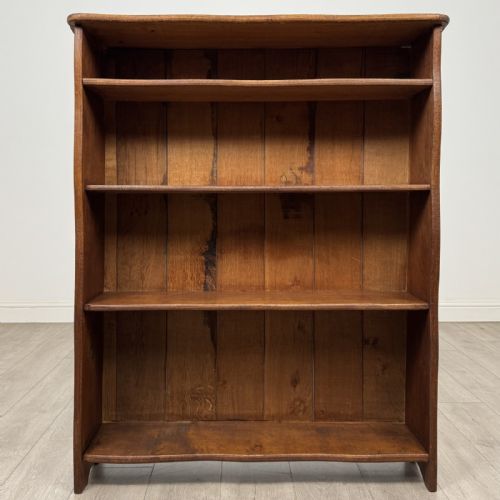
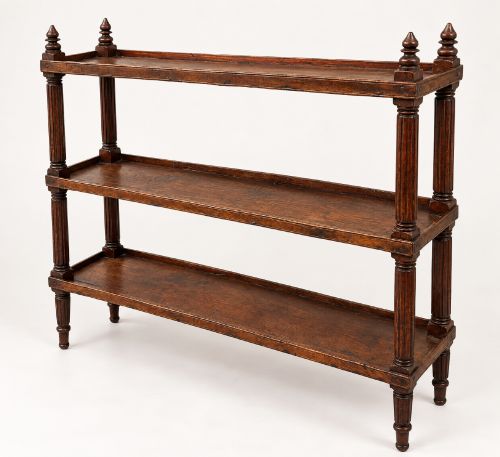
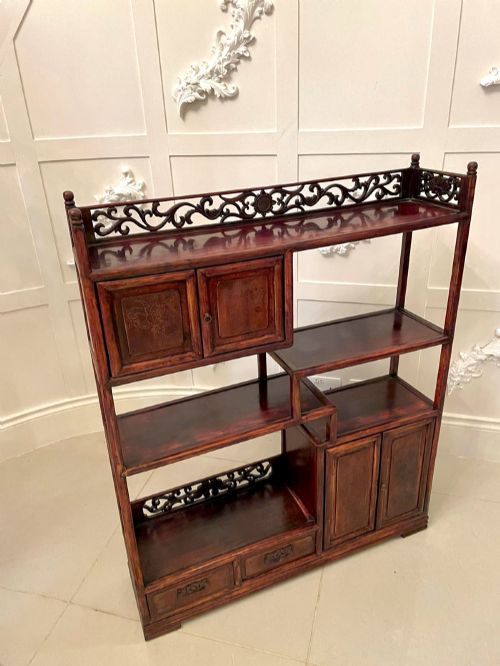
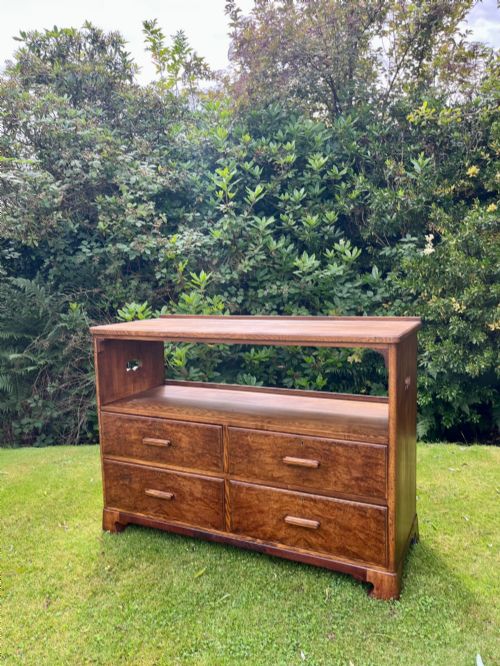
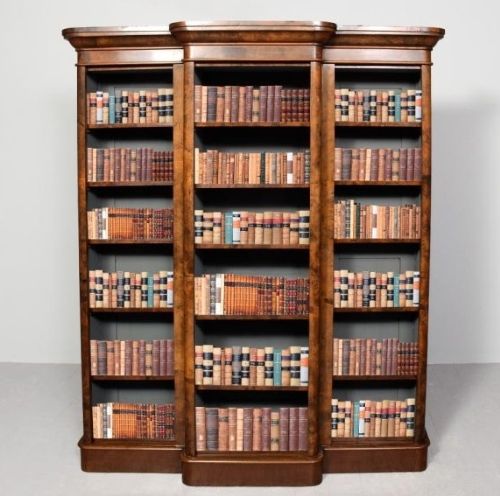
Brown timber open shelves bring practical display space to a room, appearing in forms from early nineteenth-century Indian hardwood étagères to Edwardian mahogany breakfront bookcases.
Brown Timber Open Shelves
When you search for brown timber open shelves, you encounter a varied selection of open bookcases, whatnots, étagères, and display cabinets spanning the nineteenth and twentieth centuries. These pieces function primarily as open storage and display furniture, constructed from timeworn woods suited to domestic interiors.
Origins range widely across British regional workshops, French ateliers, and Anglo-Indian production, alongside pieces reflecting Georgian or Chinese styles. This diversity means a buyer might select a compact dwarf bookcase, a tall breakfront unit, or a multi-tiered whatnot depending on spatial needs.
Distinctions in quality and execution
Quality separates through the selection and figure of the timber, such as burr walnut veneers or dense Indian hardwoods, paired with the precision of the joinery. Pieces featuring architectural details like dentil cornices or carefully shaped sides demonstrate greater ambition from the maker.
Proportion and scale dictate the success of a design, with diminutive dwarf bookcases and small-proportion oak shelves showing balanced lines compared to utilitarian storage. The integration of adjustable shelving mechanisms also reflects the practical thought invested in the piece.
Brown Timber Open Shelves Retail Price Guide 2026
Typical asking prices for brown timber open shelves among the pieces listed under this phrase on Sellingantiques today, from the lower quarter to the upper quarter. They describe what is for sale here now, not the wider market.
Listings feature oak, mahogany, walnut, elm, pine, and exotic hardwoods across Victorian, Edwardian, and twentieth-century periods.
Whytock and Reid
The Brown Timber Open Shelves Glossary
- Whatnot
- A moveable set of open shelves used for displaying ornaments or books, developed in the nineteenth century. These tier upwards and often feature slender supports.
- Breakfront
- A piece of furniture where the central section projects forward from the flanking wings. This architectural arrangement creates depth and shadow on larger bookcases.
- Dentil
- A series of small, rectangular blocks spaced evenly along a cornice to resemble teeth. It draws on classical architectural decoration.
- Padouk
- A heavy, durable tropical hardwood with a distinctive reddish-brown tone used in Anglo-Indian furniture. It takes a fine finish and resists warping.
- Waterfall bookcase
- A set of open shelves where each tier is narrower than the one below, following a stepped profile down the front. The sides often curve outward toward the base.
Brown Timber Open Shelves: Frequently Asked Questions
How do I choose the right size bookcase?
Consider the available wall space and ceiling height in your room, noting whether a diminutive dwarf bookcase or a tall breakfront unit suits your layout. Measure the depth of the shelves to ensure they accommodate your specific books or display items.
Take note of adjustable shelving options if you plan to store volumes of varying heights. Compact models work well in restricted spaces, while multi-tier étagères provide vertical display without dominating a floor plan.
What is an étagère?
An étagère is a piece of furniture consisting of a set of open shelves for displaying small objects, ornaments, or books. Originating in France, these pieces use tiered platforms supported by slender uprights.
They often appear in woods like mahogany or exotic hardwoods, serving as decorative focal points in sitting rooms. Their open structure allows light to pass through freely.
Where should I place open shelving?
Open shelves suit living rooms, studies, and hallways where quick access to books and decorative items is desirable. Keep them away from direct heat sources and strong sunlight to protect the timber grain.
Ensure the floor surface is level so tall bookcases remain stable against the wall. Freestanding open units benefit from adequate clearance around them to highlight their proportions.
How do I care for antique timber?
Dust the wood regularly with a soft, dry cloth to prevent dirt accumulation in the grain and carvings. Avoid using silicone-based sprays, opting instead for traditional beeswax applied sparingly.
Maintain stable room humidity levels to prevent the timber from drying out or splitting over time. Lift rather than drag these pieces when repositioning them in your home.