

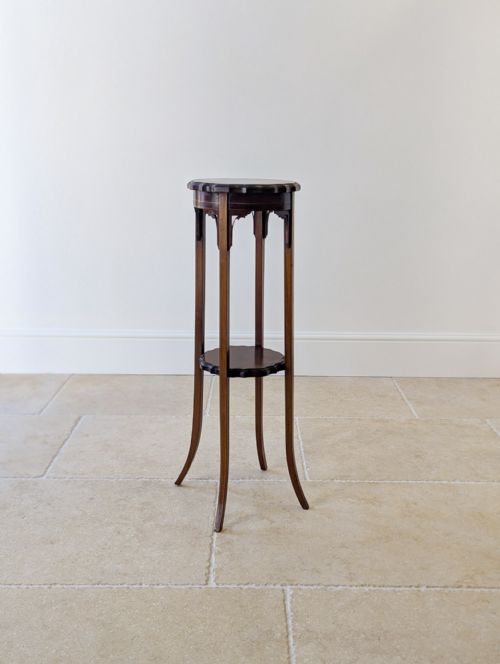
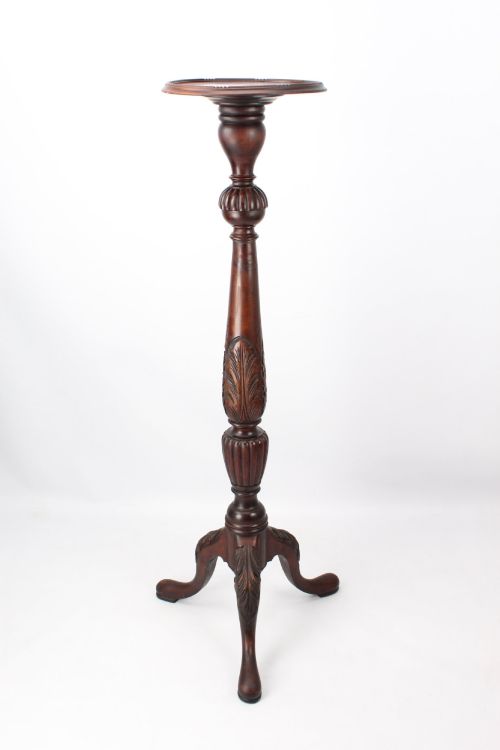
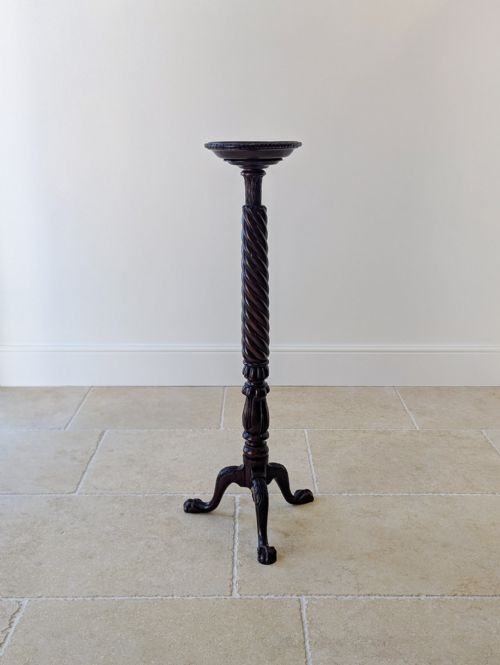

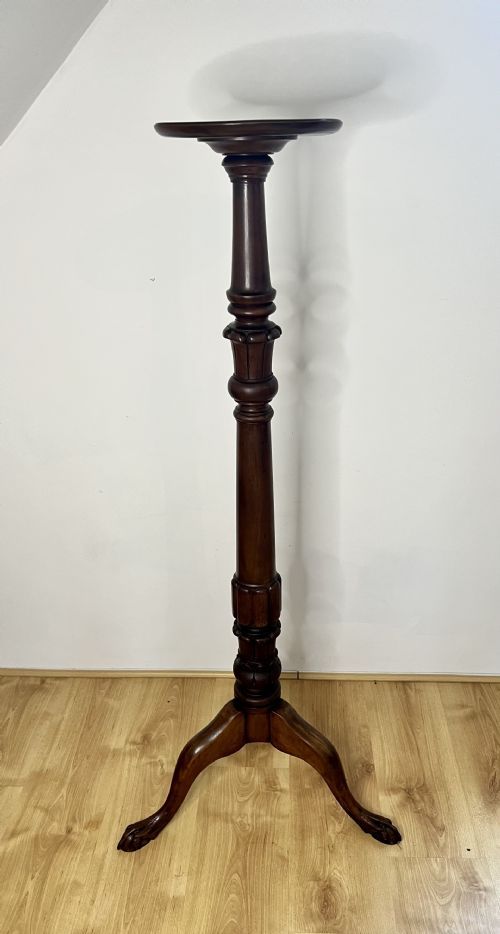
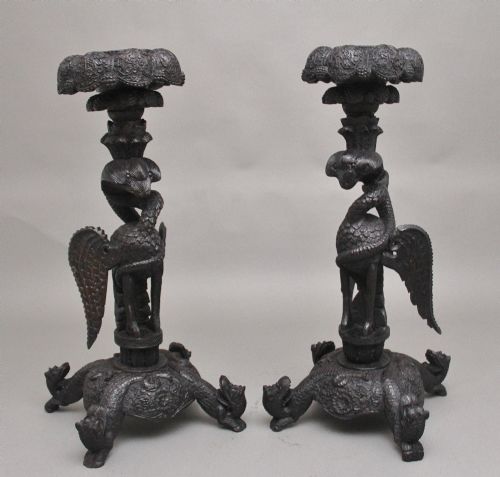

Dark Wood Torchere Stand
A dark wood torchere stand elevates a lamp or plant, bringing vertical proportion to a room through centuries of timber craftsmanship.
Dark Wood Torchere Stand
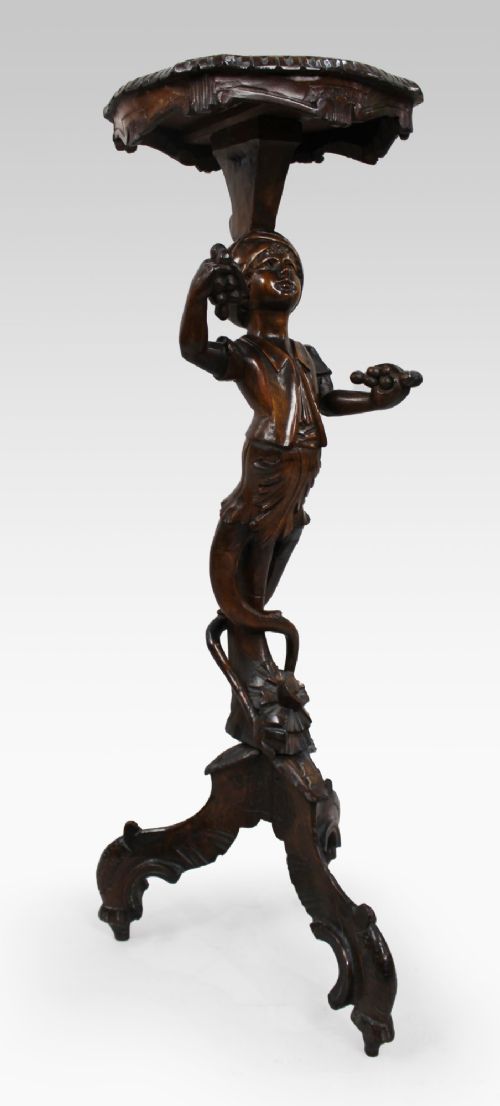
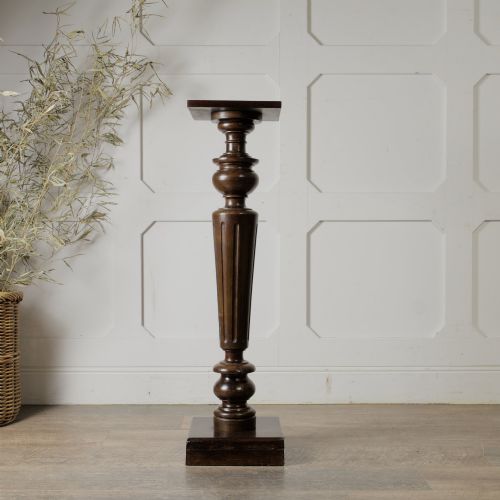
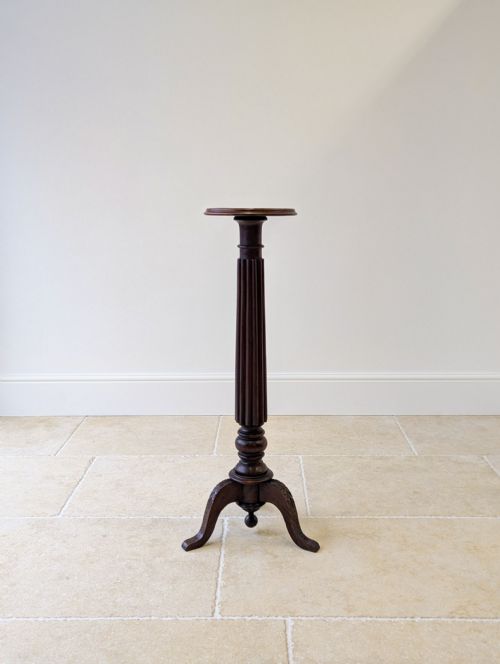
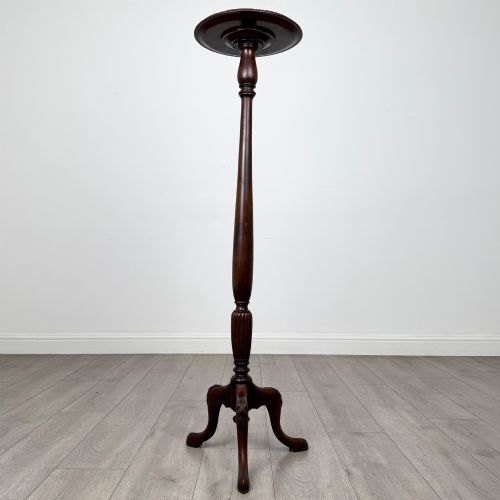
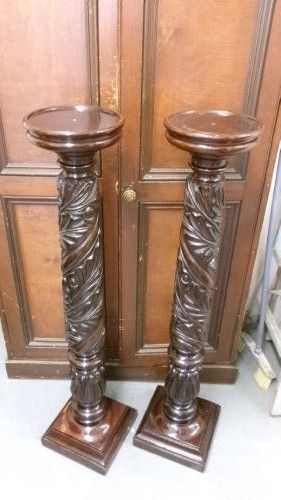
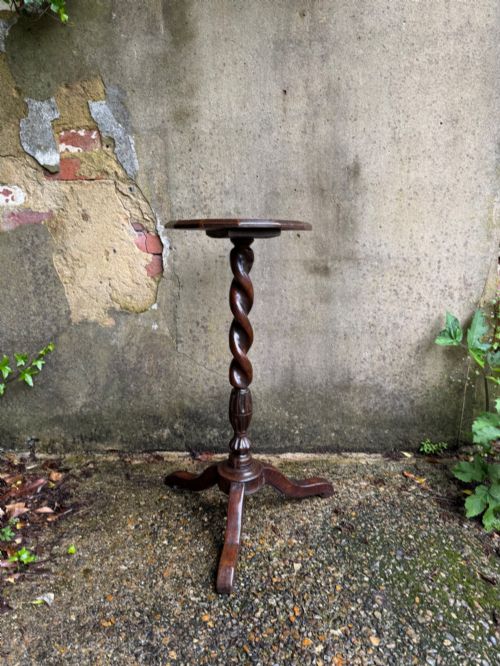
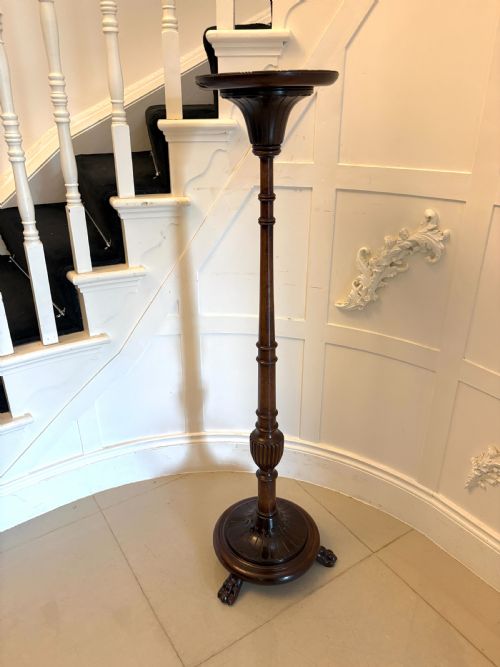
A dark wood torchere stand is a tall, slender column designed to support a candle, lamp, or plant pot in a domestic interior. These pieces appear in forms ranging from simple turned columns to elaborate figural carvings and classical revival pillars.
The selections available here span from the eighteenth century through the Edwardian period, with Victorian mahogany examples dominating the inventory. Buyers encounter variations including square tops, circular plates, and adjustable mechanisms intended for utilitarian or decorative display.
Origin styles include Georgian, Victorian Gothic, and Traditional Chinese, reflecting global influences on British and European cabinet making. Each piece serves primarily as a display surface while introducing architectural height to corners and reception rooms.
What varies in quality
Quality rests in the crispness of the hand carving and the selection of the timber grain, where high-grade mahogany displays deep chatoyancy and uniform colour. Secondary woods and plain turned pine indicate more utilitarian workshop production rather than bespoke cabinet work.
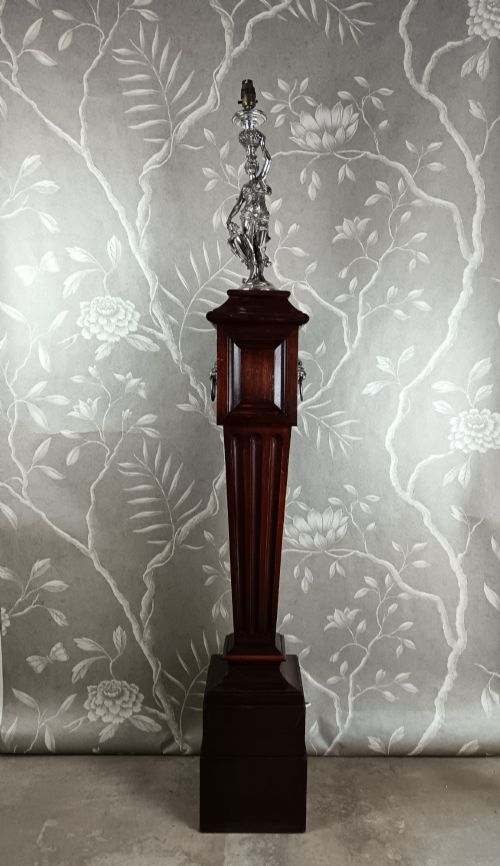
Proportion and structural integrity dictate value, as slender shafts must remain plumb without significant warping over time. The presence of original mounts, such as brass adjusters or silver-plated figural elements, separates standard production stands from superior examples.
Current selections feature mahogany, oak, and walnut timbers spanning the eighteenth to early twentieth centuries.
WMF
The Dark Wood Torchere Stand Glossary
- Torchere
- A tall stand originally intended to carry a torch or candle, later adapted for lamps and floral displays. The form developed in seventeenth-century France before spreading through British domestic interiors.
- Plinth
- The lowest member of a base supporting a column or pedestal. It provides the weighted footprint necessary to keep tall, narrow stands upright.
- Jardiniere
- An ornamental pot or stand for holding plants and flowers. These frequently share the tall, columnar proportions of standard torchere stands.
- Ormolu
- Gilded bronze applications used as decorative mounts on furniture frames. The technique involves mercury amalgamation to bond gold leaf to a bronze base.
- Reeded
- A decorative moulding consisting of parallel convex strips resembling parallel reeds. Cabinet makers carved these directly into the shafts of columns and legs.
Dark Wood Torchere Stand: Frequently Asked Questions
What is a torchere stand used for?
These tall stands support lamps, candles, or potted plants, lifting decorative objects to eye level in a room. They occupy minimal floor space while adding vertical line and architectural interest to corners.
Historically, they provided illumination where wall sconces or table lamps could not reach. Today, they function primarily as display pedestals for art objects or floral arrangements.
How do I date a wooden torchere?
Dating relies on timber choice, turning style, and carving motifs that align with specific design periods like Georgian or Victorian. Mahogany was favoured in the eighteenth and nineteenth centuries, while earlier pieces often utilised oak.
Tool marks left by hand saws or lathes provide physical clues to manufacturing age. Secondary woods used in hidden structural areas also help establish the approximate decade of production.
Are torchere stands stable enough for lamps?
Most stands are engineered with heavy bases or weighted feet to counterbalance their height and prevent tipping. Solid hardwood construction provides the mass required for supporting standard table lamps or floor fixtures.
Placement matters for stability, especially on thick carpet where narrow feet might sink unevenly. Placing the stand against a solid wall or in a low-traffic corner ensures secure daily use.
How do I care for antique dark wood?
Maintenance requires keeping timber away from direct sunlight and heat sources that cause the wood to dry and split. Regular dusting with a soft, dry cloth prevents particulate accumulation on intricate carvings.
Occasional application of appropriate wax nourishes the grain without building up heavy chemical residues. Avoid silicone-based polishes that penetrate the pores and damage historic finishes.