

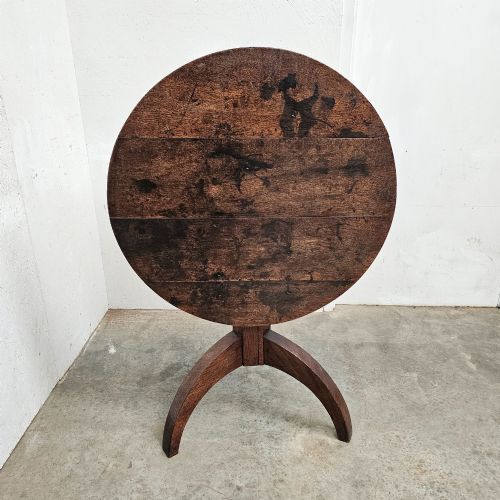
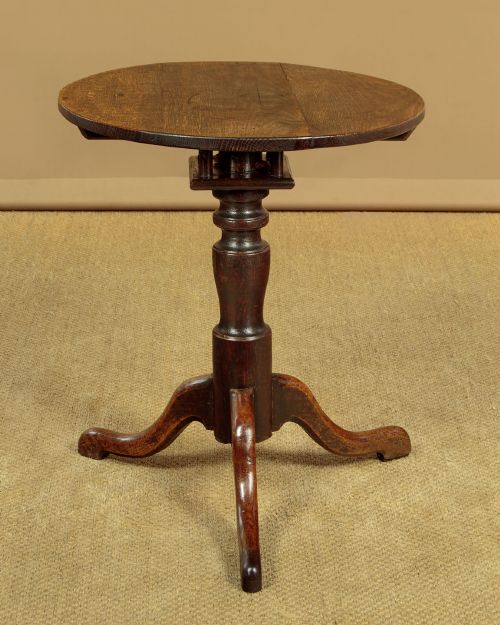


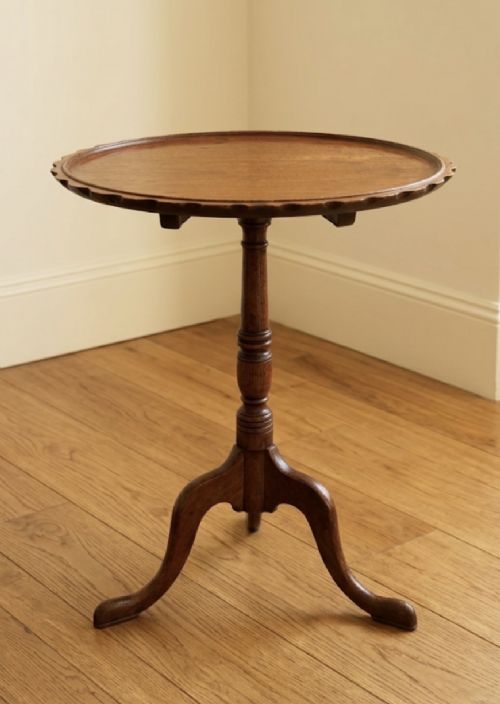


Dark Oak Candle Stand
A dark oak candle stand brings sturdy timber and centuries of utilitarian design into a room, serving as a compact table or holder.
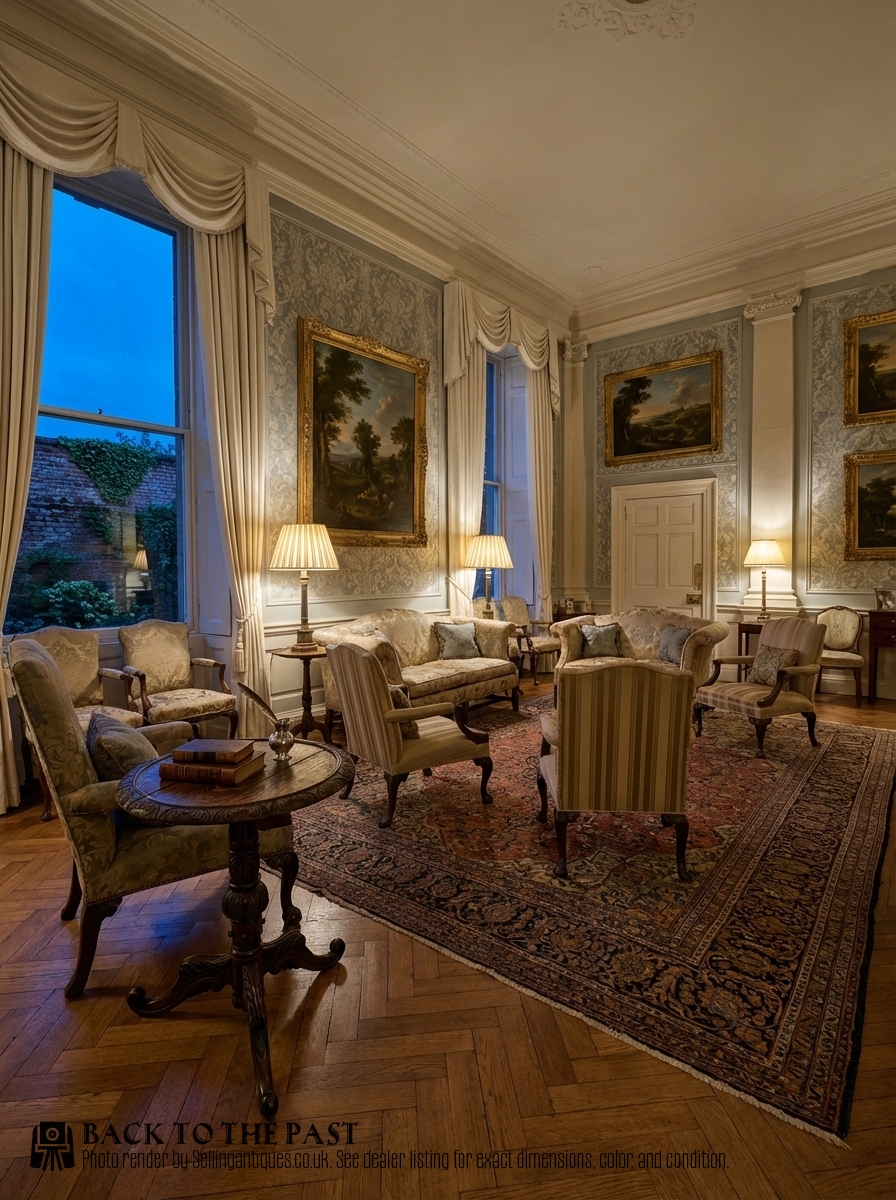
Dark Oak Candle Stand
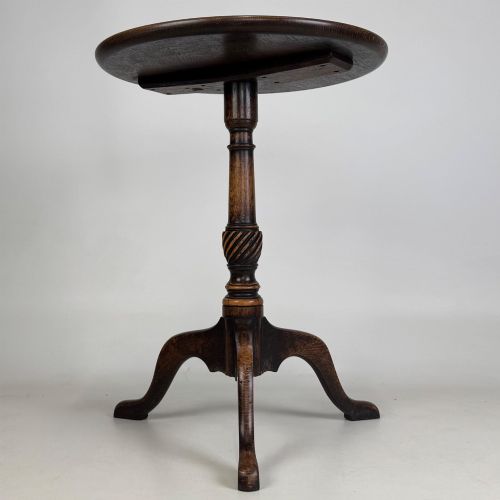
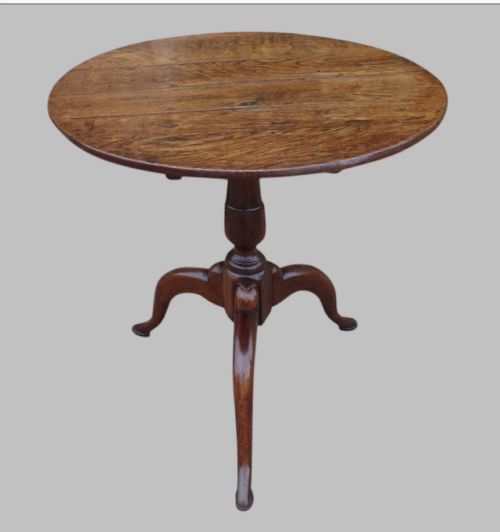
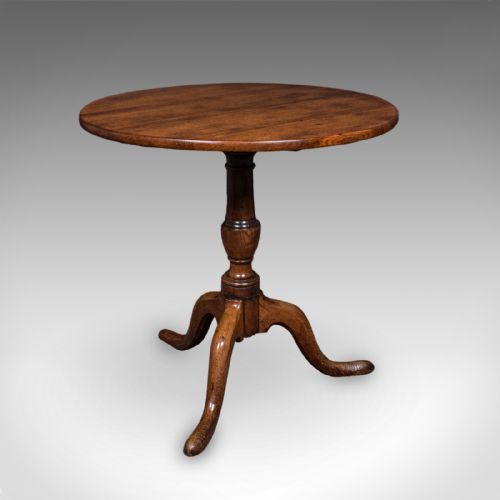
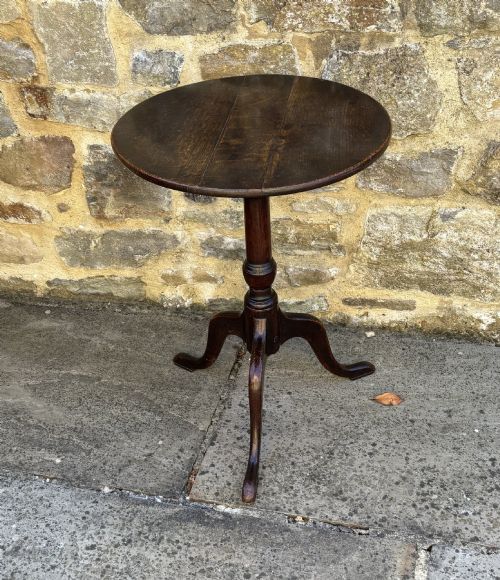
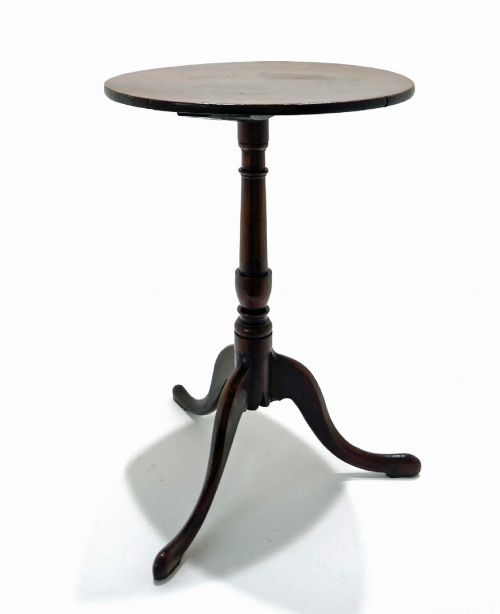
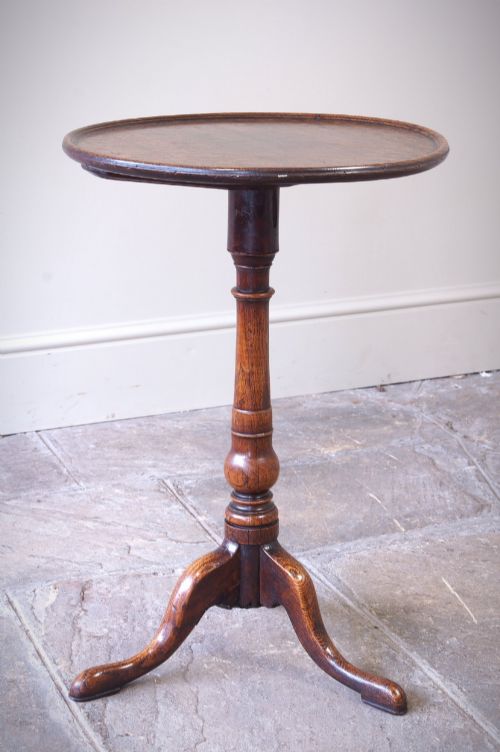
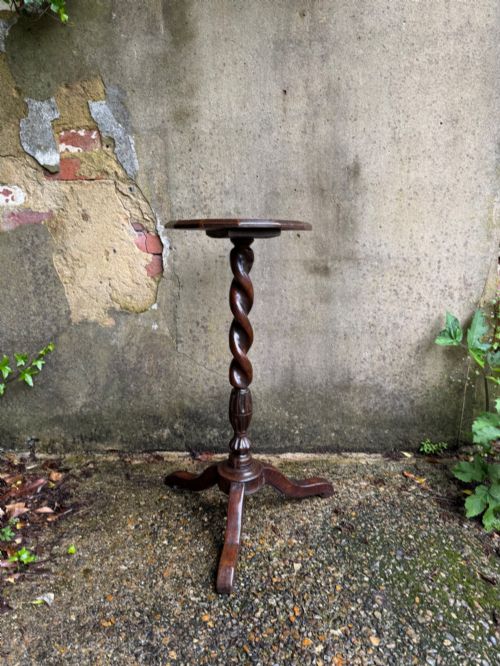
A dark oak candle stand encompasses small tripod tables, pedestal torcheres, and turned candlesticks originating mainly from the eighteenth and nineteenth centuries. Buyers searching for a dark oak candle stand will encounter vernacular country pieces alongside formal Georgian tripod tables designed to hold illumination or small objects.
The form typically involves a circular top supported by a slender central column and three shaped legs, or stands upright as a carved wooden candlestick fitted with brass details. Regional pieces from this selection demonstrate practical domestic utility fashioned by local cabinet makers using available hardwoods.
How they were made
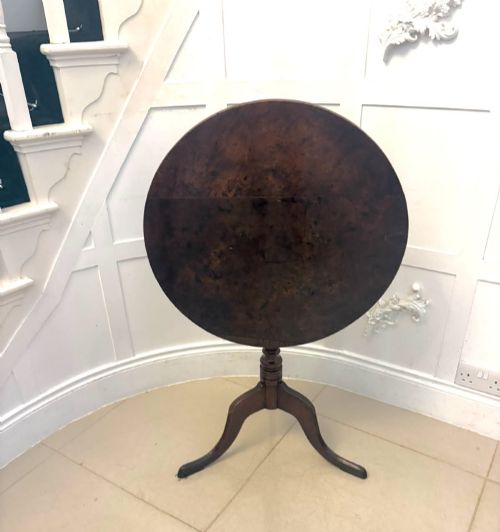
Cabinet makers utilised solid oak, burr oak, fruitwood, and beech, often turning columns on a lathe and shaping tripod legs by hand. Tops were frequently fashioned with tilt mechanisms, allowing the table to rest flat against a wall when not in use.
Metal components such as brass sockets and fastenings were integrated into candlesticks and table mechanisms, whilst surfaces received traditional wax finishes to protect the timber and develop deep patination over time.
Dark Oak Candle Stand Retail Price Guide 2026
Typical asking prices for dark oak candle stand among the pieces listed under this phrase on Sellingantiques today, from the lower quarter to the upper quarter. They describe what is for sale here now, not the wider market.
Listings include eighteenth-century vernacular items alongside nineteenth-century interpretations, featuring secondary timbers like beech and fruitwood alongside primary oak.
What varies in quality
Quality rests in the proportional balance of the turned column against the span of the tripod base, along with the natural figure and colour of the oak timber. Pieces displaying burr grain or exceptional surface patination sit at the upper end of the range.
Construction detail also separates standard examples from finer works, notably the neatness of dovetails, the snugness of tilt-top catches, and the crispness of any hand-carved ornamentation on the legs and top edge.
The Dark Oak Candle Stand Glossary
- Tripod table
- A small occasional table supported by three legs radiating from a central pillar. This construction ensured stability on uneven farmhouse floors.
- Tilt-top
- A hinged table top that pivots to a vertical position for storage. It is typically secured in the horizontal position by a brass catch or wooden peg.
- Torchere
- A tall stand designed to support a light source or decorative object. Examples range from slender wooden pedestals to turned columns.
- Patina
- The surface sheen and deep colour acquired by wood through age, handling, and waxing. Good patination reflects decades of domestic care.
- Vernacular
- Everyday furniture made by regional carpenters for local use rather than following strict metropolitan design rules. These pieces often incorporate fruitwood alongside primary oak.
Dark Oak Candle Stand: Frequently Asked Questions
What was a candle stand used for?
These stands provided a stable elevated surface for holding rushlights, candles, or small lamps close to seating areas during evening hours. In country homes, their portability allowed them to be moved near a fireplace or desk as needed.
Over time, many of these small tables transitioned into general use as lamp tables, wine stands, or decorative supports for porcelain and plants.
How do I date an oak candle stand?
Dating relies on observing construction methods, joinery types, and timber characteristics. Eighteenth-century examples often feature pegged tenons, hand-turned posts with subtle irregularities, and wide boards showing distinct grain shrinkage.
Nineteenth-century pieces frequently display more uniform machine sawing and standardised fixings. Comparing the turned profile and leg shape to known Georgian and Victorian design books helps narrow the decade of manufacture.
Are tilt top tables stable?
A well-made tilt-top table remains stable when resting horizontally on its birdcage or block mechanism. The three legs of a tripod design ensure firm contact on uneven floors without rocking.
When the top is tilted upright, the catch should hold the surface securely against the pillar. Wobbly joints usually indicate historical wear to the central pivot rather than a structural fault.
How do I care for antique oak?
Antique oak requires minimal maintenance beyond occasional dusting with a dry lint-free cloth. Applying a quality beeswax feed helps preserve the moisture in older timbers and maintains the surface sheen.
Keep these stands away from direct heat sources and strong sunlight to prevent the wood from drying out or splitting. Maintaining stable room humidity protects both the solid timber and any brass fittings.