

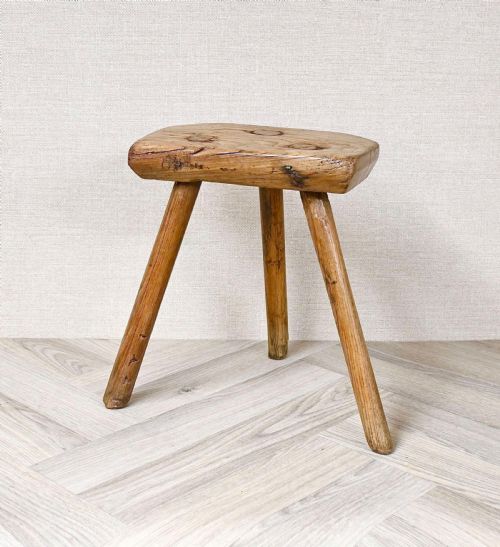
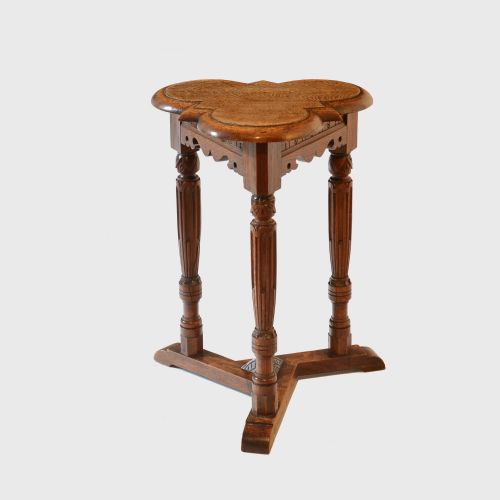


Three Legged Plant Stand
A three legged plant stand provides a stable circular or triangulated surface for elevated greenery, favoured for fitting neatly into awkward room corners.
Three Legged Plant Stand
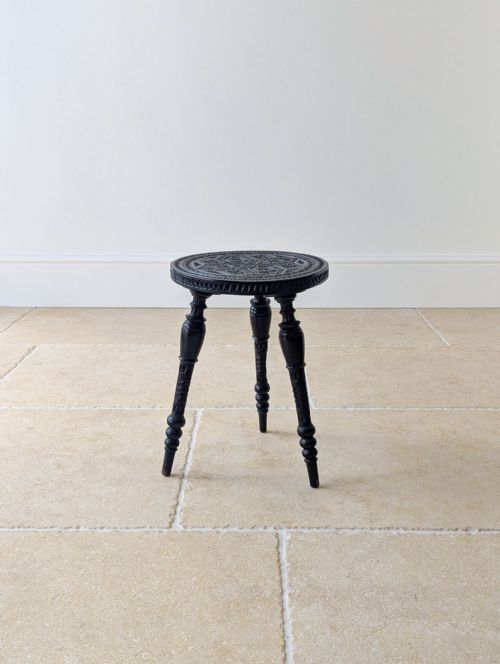
A three legged plant stand is typically encountered as a small occasional table, tripod cricket table, or low stool dating from the nineteenth and early twentieth centuries. These pieces appear across various regional styles, including Arts and Crafts, Gothic Revival, and rustic vernacular country forms.
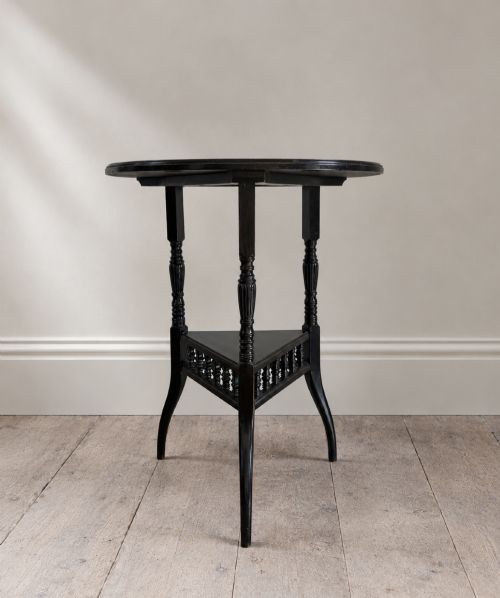
Makers utilised native and exotic timbers such as oak, mahogany, walnut, and fruitwood to construct tops supported by three uprights or turned legs. Forms range from simple solid elm slices and milking stools to carved mahogany lamp tables and ebonised occasional tables.
Originating to serve functional domestic roles in Victorian and Edwardian interiors, these stands adapt readily to modern spaces for displaying plants or small objects. The three-legged construction ensures natural stability on uneven historical flooring.
Materials and construction methods
Cabinet makers and vernacular craftsmen relied upon hardwoods like oak, walnut, and mahogany, alongside softer fruitwoods and elm. Timber selection dictated whether the piece received a refined French polish, ebonised finish, or remained as a rustic live edge.
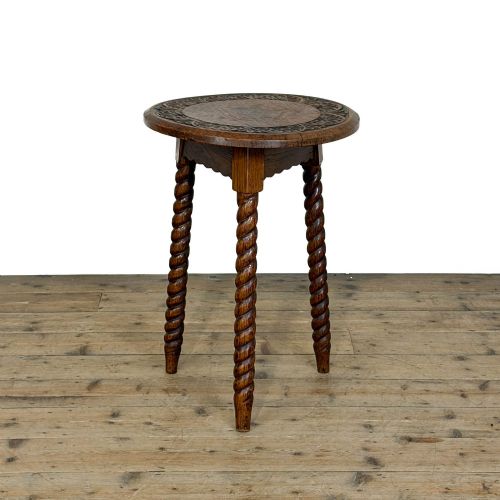
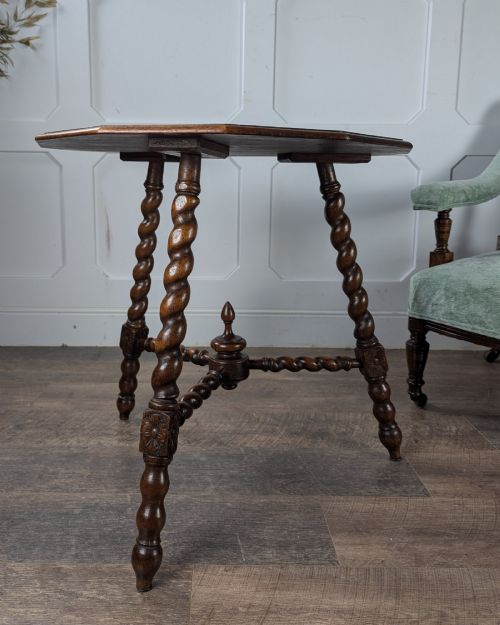
Joining techniques combined traditional mortise and tenon joints with simpler pegged construction for rustic stools and chopping blocks. Turned legs, bobbin turning, and barley twists display the lathe work typical of nineteenth-century workshop production.
Listings feature woods spanning oak, mahogany, walnut, fruitwood, and live-edge elm across Victorian and Edwardian periods.
Judging quality and execution
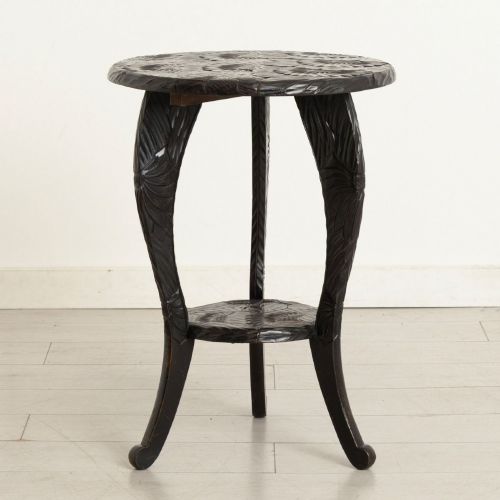
Quality reveals itself in the selection of timber grain and the precision of structural joinery where the three legs meet the underside of the top. Superior examples demonstrate thoughtful proportion and integrated carving, such as chip-carved detailing or pokerwork, rather than rushed assembly.
The distinction between standard utility items, such as milking stools or primitive cutting blocks, and high-style pieces from firms like Liberty of London lies in the refinement of surface finish and decorative ambition. Finer items exhibit balanced turnings and cohesive stylistic execution across every component.
Liberty of London·EW Godwin
The Three Legged Plant Stand Glossary
- Tripod table
- A small occasional table supported by three legs, offering natural stability on uneven floors. These forms were widely produced in mahogany, oak, and walnut throughout the Victorian and Edwardian periods.
- Cricket table
- A small, lightweight English table featuring three splayed legs and a round wooden top. The design originates from vernacular domestic traditions.
- Bobbin turned
- A method of lathe-turning timber to create a series of rounded spherical shapes resembling spools or bobbins. This decorative technique appears frequently on nineteenth-century oak furniture.
- Ebonised
- Timber treated with a chemical stain or black finish to imitate expensive ebony. Victorian workshops applied this finish extensively to occasional tables and decorative stands.
- Trefoil
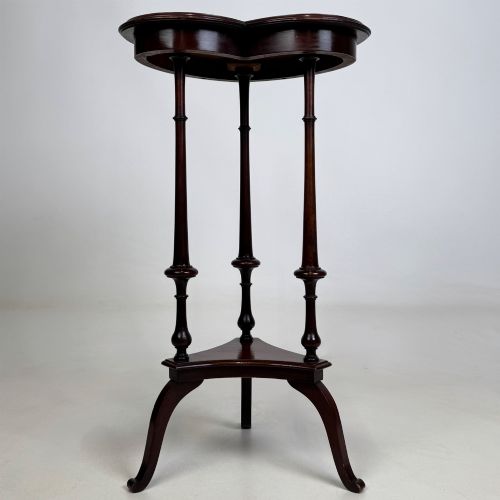
- A graphic ornamental shape composed of three overlapping circles or leaf-like lobes. This motif occurs frequently in Gothic Revival and Arts and Crafts table tops.
Three Legged Plant Stand: Frequently Asked Questions
What distinguishes a plant stand from a wine table?
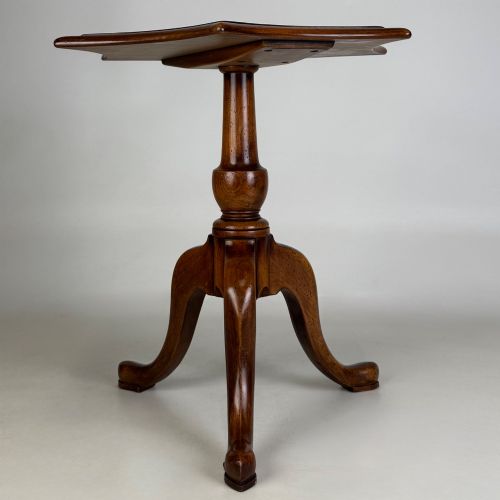
Plant stands and wine tables share similar tripod proportions and circular tops, making them visually interchangeable in many interior settings. However, wine tables traditionally featured slightly taller, more refined pedestals designed for holding glassware near seating.
Plant stands frequently emphasise robust timber construction or specific surface carving to support the weight of heavy ceramic pots and damp soil.
How do I date a three legged wooden stand?
Dating relies on observing the combination of timber species, fastening methods, and decorative styles present on the piece. Nineteenth-century examples often display hand-turned elements like barley twists or ebonised surfaces characteristic of the Victorian era.
Edwardian and later pieces frequently incorporate Arts and Crafts movement motifs or simpler vernacular construction using native oak and elm.
Where should I place a small tripod table?
These compact stands excel in awkward room corners, beside armchairs, or in narrow hallways where a standard four-legged rectangular table would obstruct movement. Their modest footprint allows them to function as lamp tables or display surfaces without dominating a small floor plan.
In living areas, they work effectively grouped at varying heights to display trailing houseplants.