


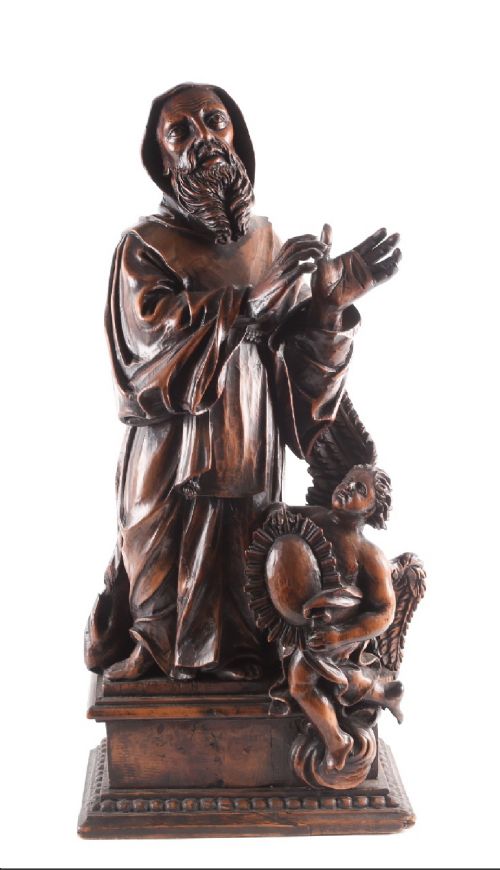


Dark Wood Saint Figure
These dark wood saint figure carvings bring centuries of devotional craft and deep timber tones straight into a modern interior.
Dark Wood Saint Figure
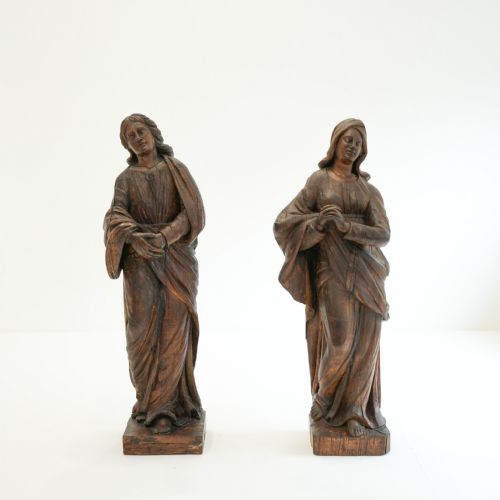
A dark wood saint figure represents carved religious sculpture spanning from the sixteenth century through to the nineteenth century. These pieces appear as single statues, panels and pairs carved from oak, limewood and various hardwoods.
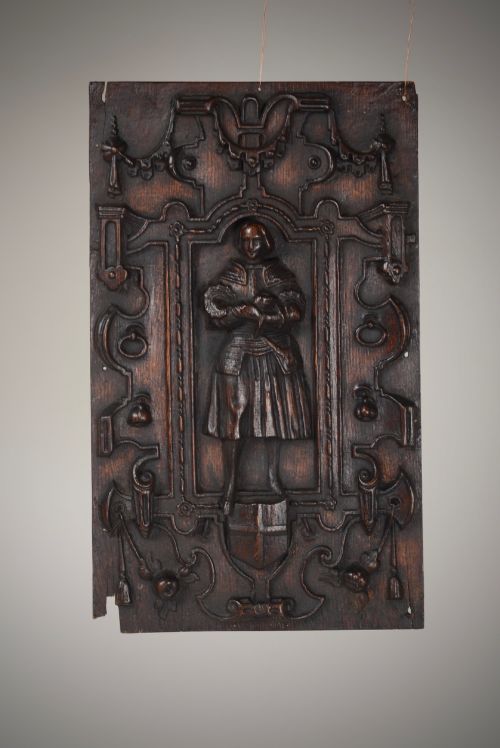
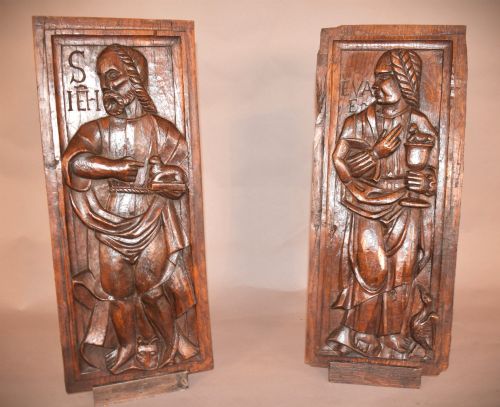
The selection on this page centres heavily on seventeenth and eighteenth century examples, alongside sixteenth century pieces and nineteenth century interpretations. Subjects range from Saint Nicholas and Saint John to donor figures and carved panels depicting Joan of Arc.
Most items originate from ecclesiastical contexts, reflecting Baroque, Renaissance and Late Gothic styles. Buyers encounter both full standing statues and architectural wood carvings bearing traces of historical surface treatments such as gesso and gilding.
Materials and construction
Carvers shaped these statues primarily from dense timbers like oak, limewood and general hardwood using traditional chisels and gouges. The choice of wood dictated the fineness of the detail, with limewood allowing for intricate drapery and facial expressions.
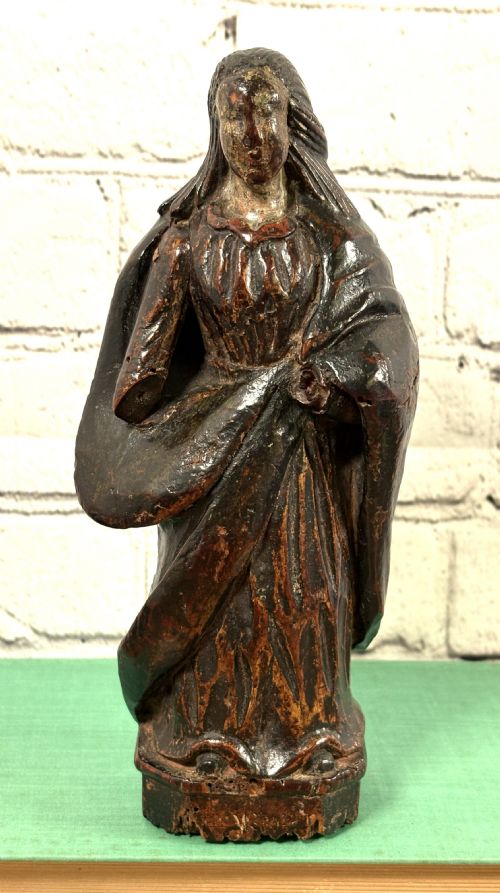
Many surfaces received preparatory layers of gesso before painters applied polychrome pigments or gold leaf. Over centuries, these layered finishes have worn down to reveal the dark grain of the timber beneath.
Look closely at the feet of the eighteenth century figures to spot tiny carved cherubs hiding beneath the saint's robes.
Factors of quality
The integrity of the original timber surface and the survival of early polychrome or gilded elements influence the character of each piece. Minimal intervention over the centuries preserves the authentic texture of the carved wood.
The Dark Wood Saint Figure Glossary
- Limewood
- A fine-grained timber favoured by European carvers for its lack of prominent grain and ease of delicate manipulation. It takes detail exceptionally well without splintering.
- Polychrome
- A painted surface decoration applied in multiple colours to wooden sculpture. This finish often ages and chips to reveal the bare wood underneath.
- Gesso
- A plaster mixture applied to wood as a smooth base for gilding or painting. It provides a bright foundation for surface decoration.
- Donor figure
- A sculpture representing the person who commissioned a religious artwork, typically depicted kneeling or in prayer. These figures often accompanied larger altarpieces.
- Baroque
- An artistic style characterised by dramatic movement, rich detail and emotional intensity. Figures from this period display dynamic poses and deep folds in their drapery.
Dark Wood Saint Figure: Frequently Asked Questions
Where were these figures displayed?
These carvings originated in churches, private chapels and religious institutions across Europe. They stood on altars, adorned walls or formed parts of larger architectural tabernacles.
Today, collectors place them on mantels, brackets or dedicated display tables where the dark wood contrasts with neutral walls.
How should I care for antique wood?
Keep wooden figures away from direct heat sources and strong sunlight to prevent the timber from drying out and splitting. Stable indoor humidity protects both the wood and any surviving gesso.
Dust the surface gently with a dry, soft brush rather than using polishes or damp cloths that might harm historic finishes.
What is a polychrome finish?
Polychrome refers to the application of multiple paint colours directly onto the carved wood surface. This technique brought realism and vibrancy to religious statuary in earlier centuries.
Much of the original pigment often wears away over time, leaving a subtle aged appearance where the dark timber shows through.