




Dark Wood Rush Armchair
A dark wood rush armchair brings solid vernacular style into a room, offering practical seating built from honest local materials.
Dark Wood Rush Armchair
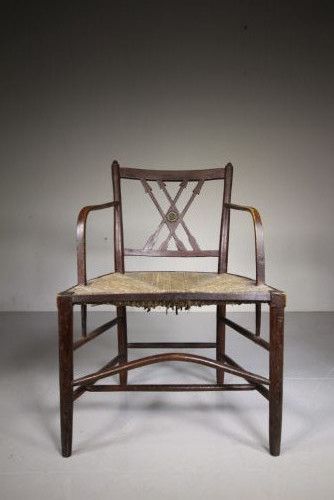
A dark wood rush armchair encompasses vernacular and country seating forms built across the eighteenth, nineteenth, and early twentieth centuries. These chairs frequently emerge from regional traditions, spanning Lancashire, Cheshire, and broader English farmhouse aesthetics.
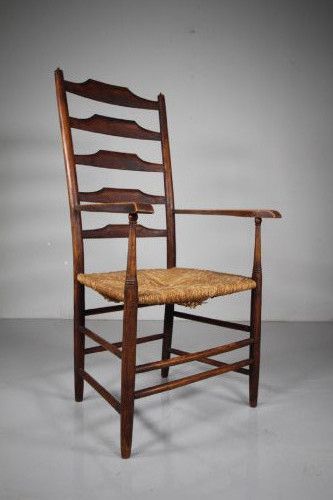
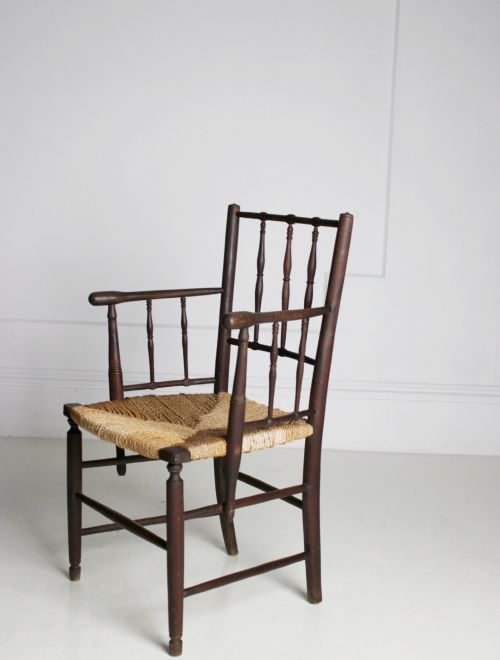
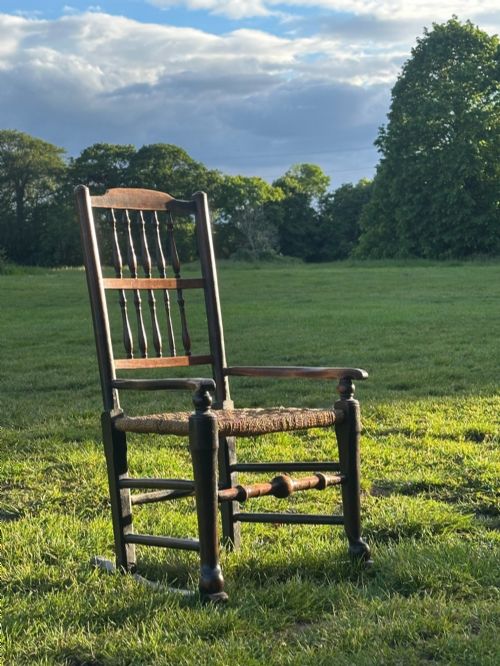
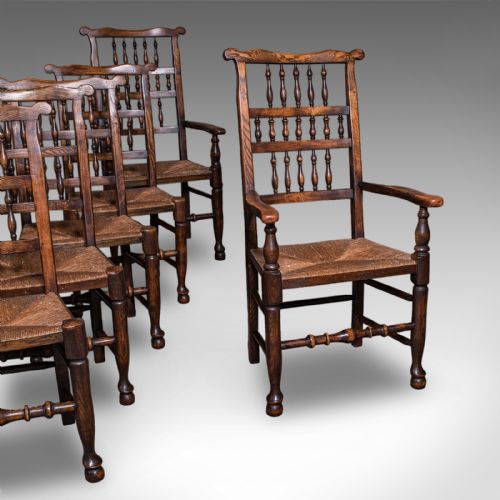
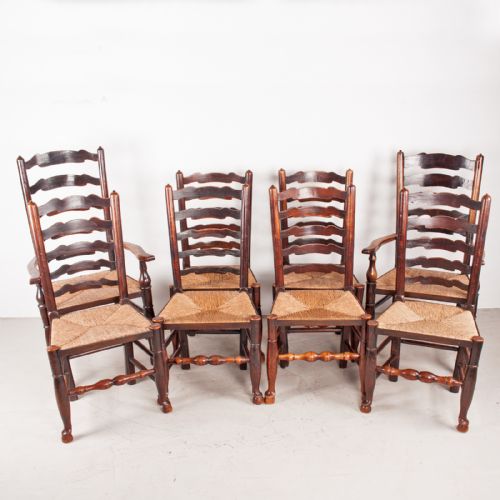
The most common iterations on this page combine timber frames in oak, beech, elm, or ash with woven rush seats. Makers often shaped these pieces as ladderbacks, spindlebacks, or country armchairs designed for daily utility.
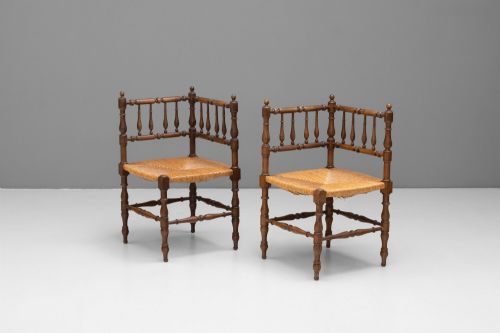
Makers also produced specific variants like rocking chairs, low ladderbacks associated with Arts and Crafts designers, and corner configurations. The styles range from rustic country and Victorian country to refined Regency and Arts and Crafts interpretations.
Materials and construction
Frames rely on indigenous British hardwoods such as elm, ash, beech, and oak, occasionally rendered in mahogany or painted wood. Joinery typically involves turned spindles, ladder backs, and pegged joints suited to sturdy vernacular furniture.
Seats are woven from natural rush, providing a resilient and flexible surface across the chair rails. Makers utilised steam-bending techniques to curve backrests and arm supports, ensuring structural integrity alongside everyday comfort.
Listings feature periods spanning from the eighteenth century through the Edwardian era, predominantly utilising ash, elm, beech, and rush.
Judging quality in rush seating
Quality rests in the harmony of the timber frame and the tightness of the rush weaving. Well-preserved original surfaces, whether polished dark wood or early paint, separate exceptional examples from heavily restored ones.
Proportion and regional character dictate desirability, with balanced spindle arrangements and crisp turnings marking superior workshop output. Maker attributions and documented regional origins add historical weight to individual chairs.
Philip Clissett·E W Godwin·Liberty & Co
The Dark Wood Rush Armchair Glossary
- Rush seat
- A seating surface woven from dried marsh rush over a wooden frame. This technique yields a durable, slightly springy pad common in country chairs.
- Ladderback
- A chair back featuring horizontal wooden slats between the upright posts. The slats are often graduated in width to support the sitter's spine.
- Spindleback
- A chair construction utilising numerous thin turned wooden rods in the backrest. This method provides lightweight strength.
- Vernacular furniture
- Domestic objects made by local tradesmen following regional traditions rather than high-style metropolitan fashions. These pieces prioritise utility and local materials.
Dark Wood Rush Armchair: Frequently Asked Questions
How do I care for a rush seat?
Keep rush seats in stable humidity away from direct heat sources to prevent the natural fibres from becoming brittle.
Clean gently with a dry brush and avoid soaking the woven material with water.
Are these chairs comfortable for daily use?
Most country armchairs offer supportive upright seating designed for long hours at a table or by a hearth.
The woven rush yields slightly to the body, providing natural give without needing upholstered cushions.
How can I tell a regional style?
Regional attribution relies on specific turning patterns, wood combinations, and framing proportions characteristic of areas like Lancashire or Cheshire.
Local timber choices, such as elm combined with ash, often point to specific maker networks.
What does original paint signify?
Original painted surfaces indicate that the chair has escaped heavy stripping and retains its historical decorative finish.
This patination adds significant character and helps confirm the age of the piece.