


19th Century Country Armchair
When you search for a 19th century country armchair, you meet robust Windsor forms and deep-seated upholstered pieces shaped by regional vernacular traditions.
19th Century Country Armchair
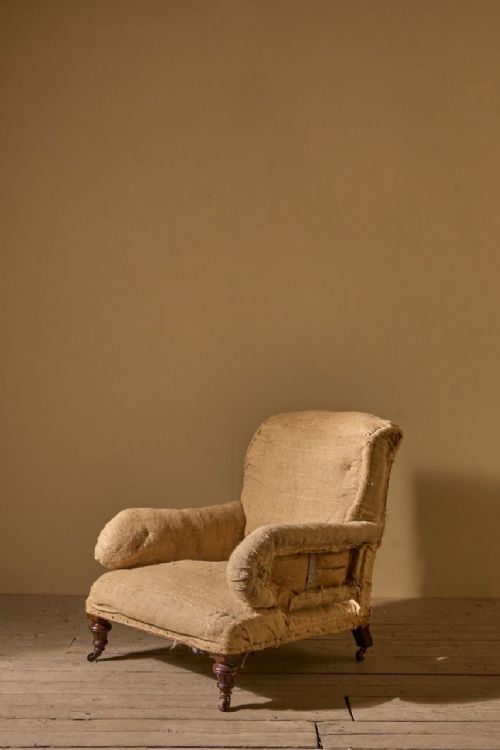
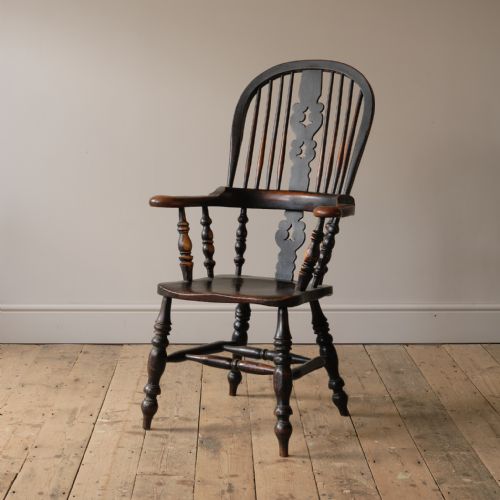
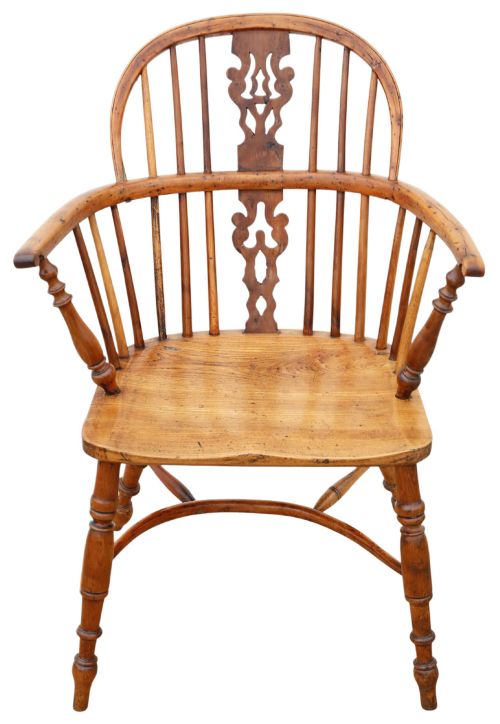
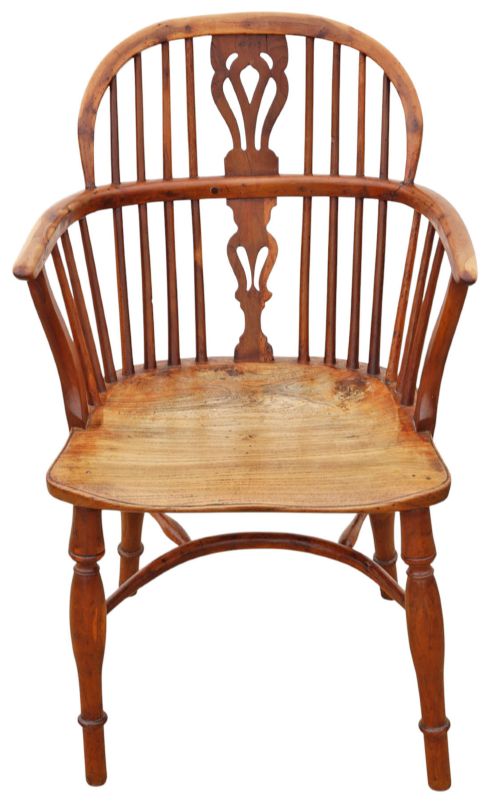
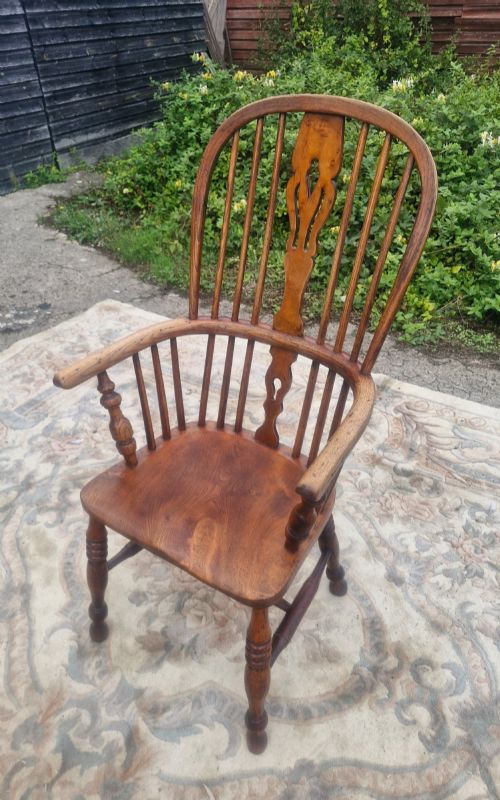
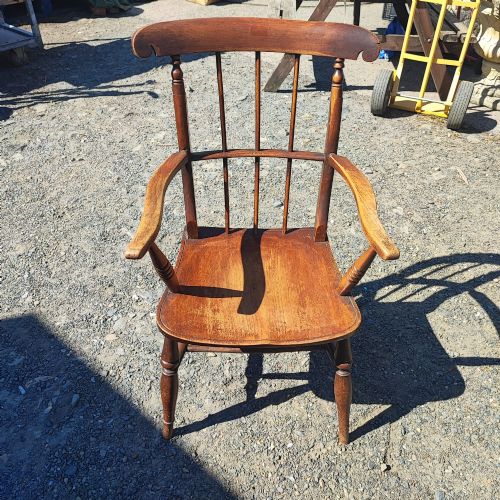
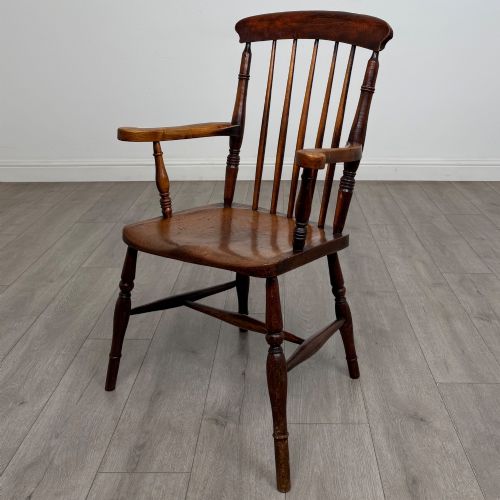
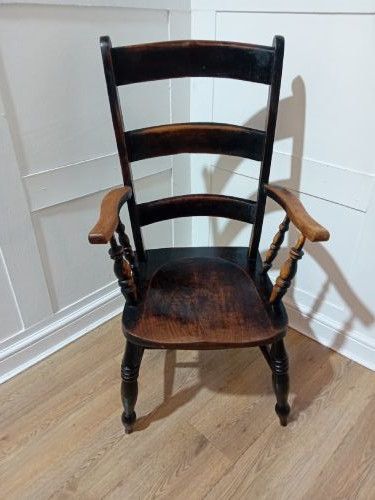
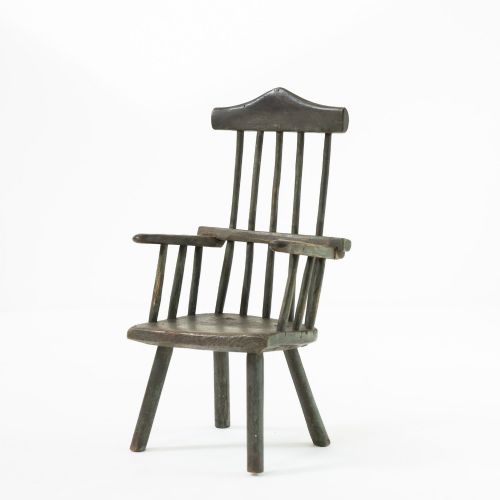
A 19th century country armchair encompasses diverse seating forms made for everyday use in provincial homes, farmhouses, and rural retreats. The selection on this page ranges from stick-back and high-back Windsor chairs to low smokers' bows and upholstered country house open armchairs.
The most common iterations unite vernacular woodwork with regional timber choices like elm, ash, and yew. Alongside these wooden bow-backs and kitchen chairs, you encounter upholstered armchairs covered in calico, leather, or needlework, reflecting both humble utility and comfortable domestic retreat.
Makers and regional workshops across England, Wales, and Scotland shaped these chairs using local timber and time-honoured turning methods. Whether finding a Thames Valley Oxford chair or a West Country child's stick-back, each object carries the functional design priorities of its district.
How They Were Made
Makers constructed wooden Windsor and stick-back models using a combination of turned underframes, bentwood bows, and solid carved seats. Artisans typically turned ash or beech for legs and spindles, while shaping elm or yew into substantial saddle seats that accommodated the sitter comfortably.
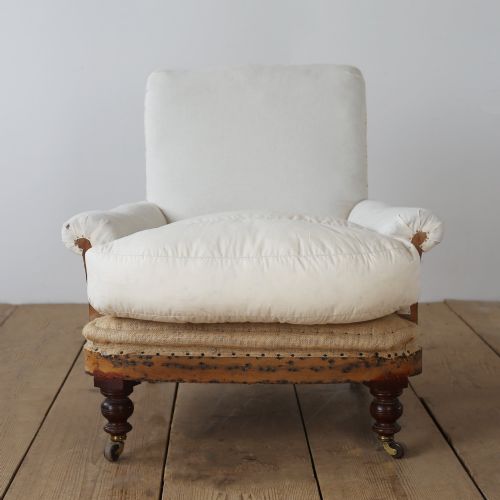
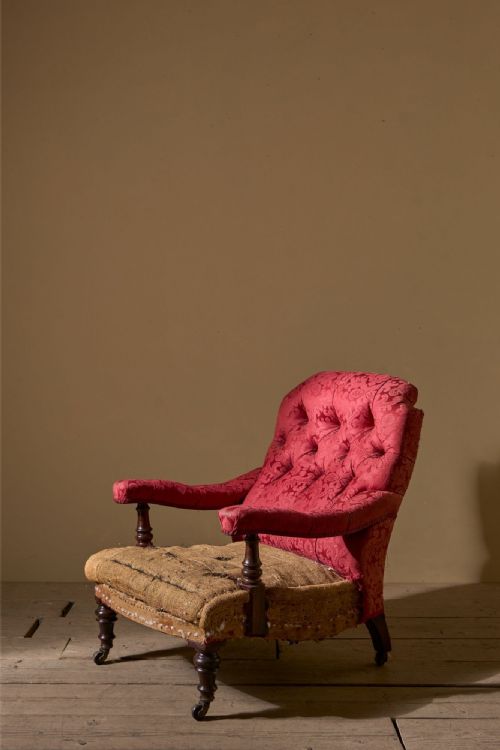
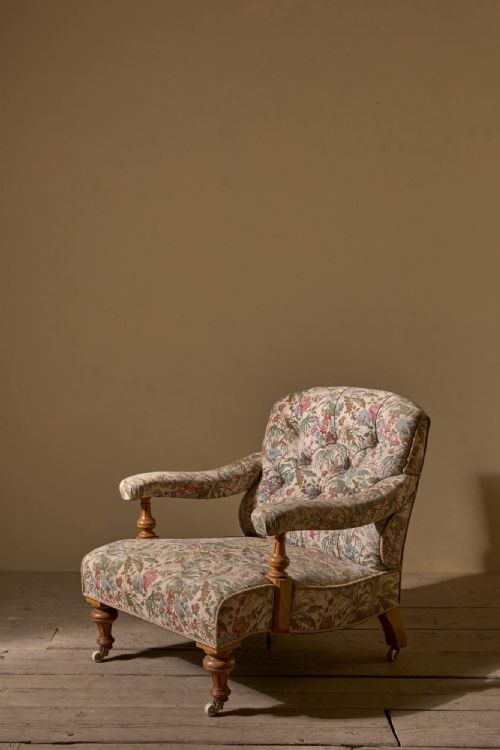
Upholstered country house armchairs relied on robust hardwood frames of oak or mahogany, often supported by brass castors and webbed foundations. Makers finished these deep-seated frames with heavy padding, needlework, or buttoned coverings designed for domestic lounging.
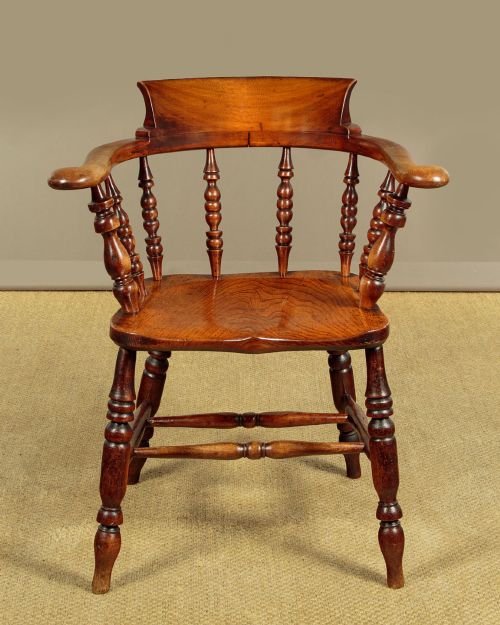
Forms span high-back Windsor armchairs, smokers' bows, child's stick-backs, and deep-seated country house upholstery.
What Varies in Quality
The distinction between ordinary and exceptional examples rests upon the selection and figuring of the timber, particularly the grain of the yew wood or the sweep of the elm seat. Superior Windsor chairs exhibit balanced proportions in their stick backs, crisp turnings on the spindles, and a rich, undisturbed patina.
Upholstered pieces reveal their calibre through the weight of the frame, the integrity of the joinery, and the retention of original finishes or early upholstery details. Examples bearing stamps from recognised workshops demonstrate a higher level of documented craftsmanship than unrecorded provincial equivalents.
Philip Clissett·J Spencer·Gillows·Howard and Sons·James Shoolbred·Waring and Gillow
The 19th Century Country Armchair Glossary
- Windsor chair
- A wooden chair built with a thick solid timber seat into which the legs and back spindles are separately dowelled. This construction method creates a sturdy, enduring seat common throughout rural workshops.
- Smoker's bow
- A low-backed Windsor arm chair featuring a continuous curved arm rail supported by turned spindles. These chairs were widely utilised in domestic smoking rooms and rural kitchen settings.
- Carver elbow-chair
- An armchair designed to match a set of dining chairs, typically featuring open arms and a raised back. They served as principal seats at the ends of dining tables.
- Rush seat
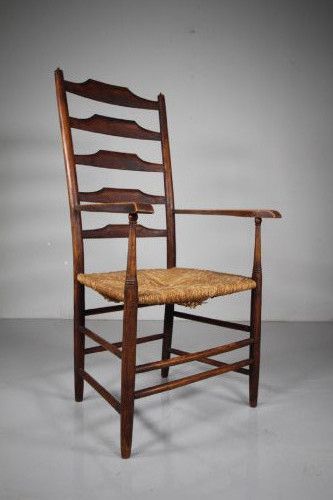
- A woven seating surface made from dried marsh rushes twisted into cords and hand-plaited across the chair frame. This technique provides a resilient and traditional foundation for Lancashire country elbow chairs.
- Vernacular
- Describing objects built according to local traditions, regional material availability, and practical utility rather than strict adherence to metropolitan academic design.
19th Century Country Armchair: Frequently Asked Questions
How do I identify a Windsor chair?
A Windsor chair is characterised by a solid wooden seat that holds the legs below and the back spindles above without relying on a traditional framed carcass. The distinct grain of the elm seat combined with a bentwood bow defines the classic silhouette.
Many examples feature ash or yew spindles and armbows, showcasing contrasting timber tones that developed through regional provincial production.
Where were these armchairs used?
These armchairs served in diverse domestic spaces, from farmhouses and country house libraries to modest rural cottages and kitchens. Wooden stick-backs suited utilitarian rooms, while upholstered versions furnished drawing rooms.
Regional variations reflect local preferences across the Thames Valley, West Country, Wales, and Scotland during the nineteenth century.
How should I care for wooden country chairs?
Wooden country armchairs require stable indoor humidity and protection from direct sunlight to preserve the natural timber and original finish. Regular dusting with a dry cloth maintains the surface without stripping the patina.
Avoid placing antique rush or wood seating near direct heat sources to prevent the timber from splitting or the natural cordage from drying out.