




Arts and Crafts Rush Chair
An arts and crafts rush chair brings honest regional design and woven comfort into a room through simple timber and natural seating.
Arts and Crafts Rush Chair
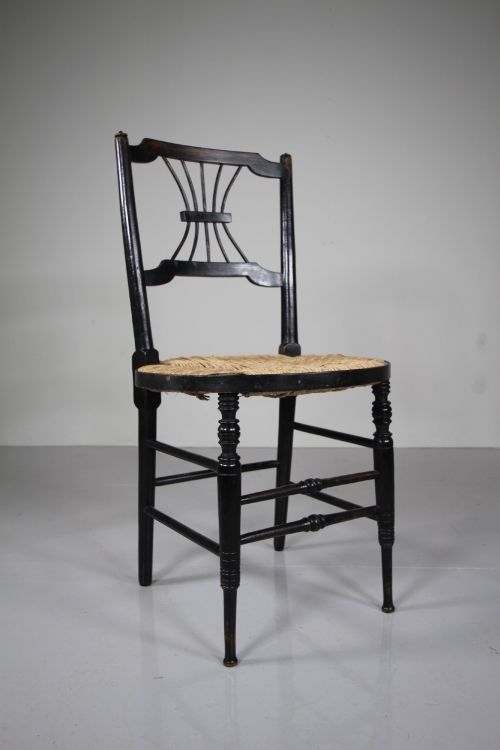
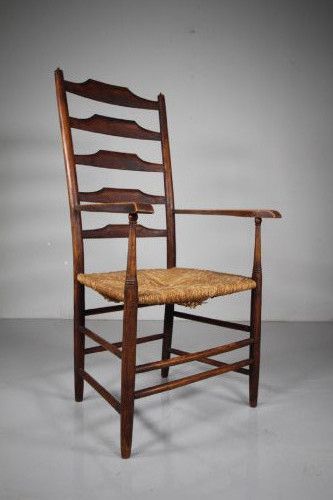
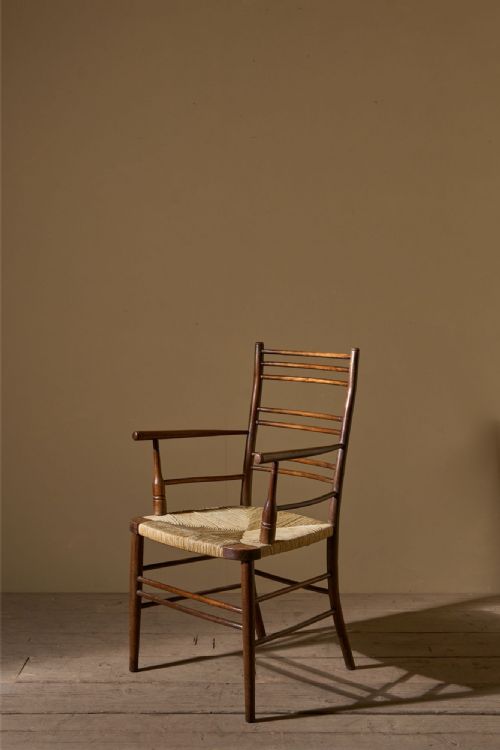
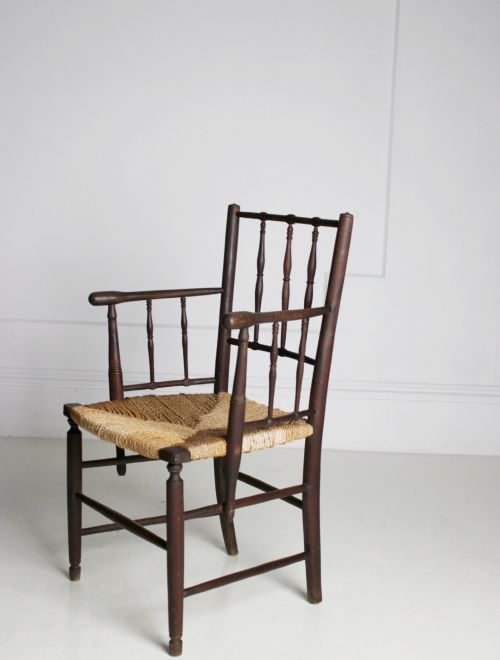
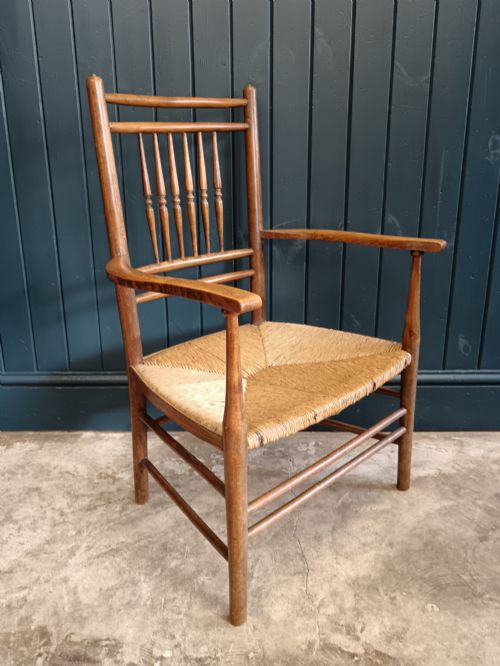
When you search for an arts and crafts rush chair, you find seating rooted in vernacular traditions and reform movements. These chairs range from simple ladder-back country styles to refined pieces associated with major retail houses and workshops.
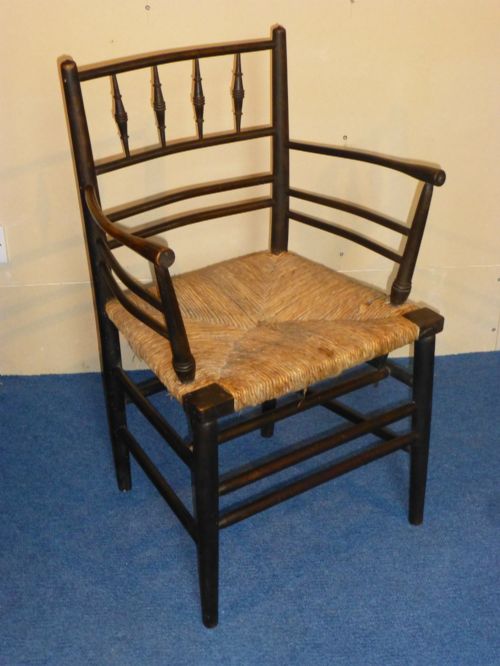
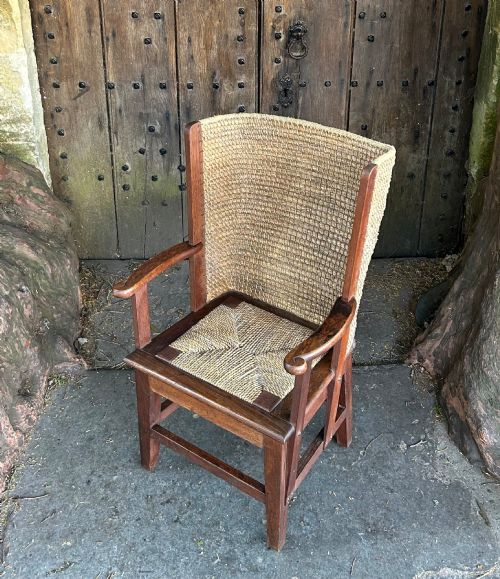
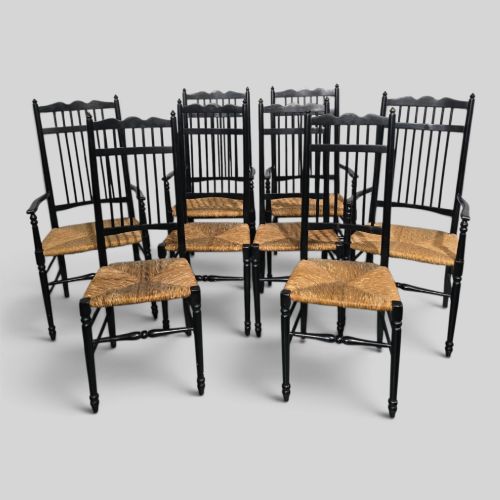
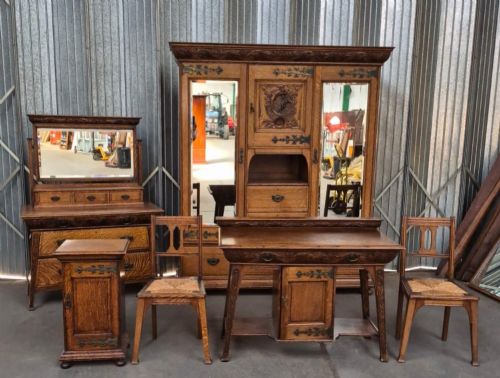
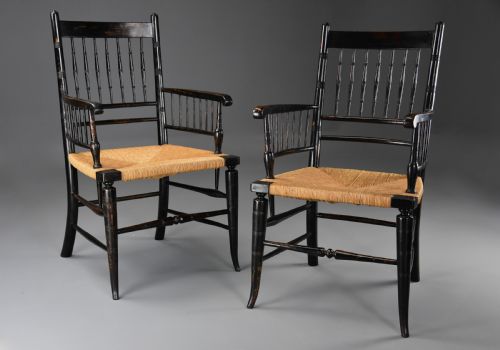
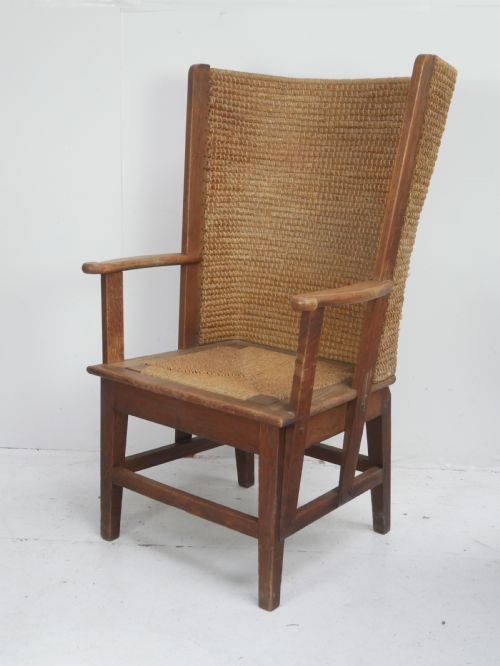
The selections here span standard dining chairs, low armchairs, and fireside companions produced across the nineteenth and twentieth centuries. Oak, beech, and ash appear alongside ebonised finishes, all paired with woven natural rush seats.
How They Were Made
Maker workshops utilised native timbers like oak, beech, and ash, often turning members on a lathe for spindles and uprights. Some pieces received an ebonised or stained finish to mimic more costly materials, while others retained natural grain.
Seats were hand-woven using natural rush or straw, wound tightly around the wooden frame to create a durable and resilient surface. Joinery relied on traditional peg and dowel construction rather than metal fixings, keeping the structural approach honest.
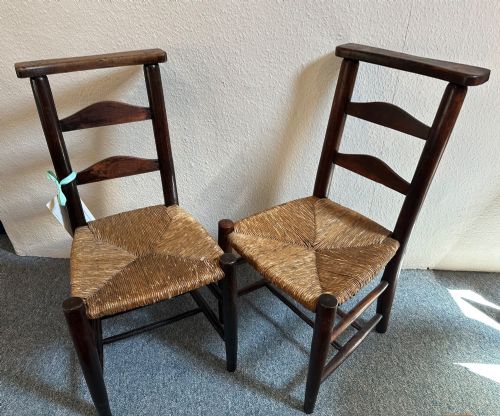
A few chairs carry church stamps from St Paul's Cathedral, proving that even holy spaces required sturdy seating.
What Varies in Quality
Quality rests in the crispness of the turning, the tightness of the rush weave, and the integrity of the frame joints. Better pieces show careful selection of timber and precise hand-shaping that survives heavy daily use without looseness.
The distinction between workshop production and mass output lies in the weight and balance of the frame. Superior examples maintain original woven rush seats that remain taut, while lesser items often show slack weaving or replaced components.
Morris And Co·Philip Webb·Liberty And Co·Philip Clissett·Heals·Lawrence Neal·Edward Gardener
The Arts and Crafts Rush Chair Glossary
- Rush
- Dried marsh grass used for hand-weaving chair seats. It provides a flexible yet hard-wearing surface that polishes with age.
- Ebonised
- Wood treated with stain or pigment to imitate ebony. This dark finish was popular in aesthetic movement and Sussex designs.
- Vernacular
- Local building and making traditions using regional materials. These chairs draw heavily on country and vernacular joinery methods.
- Ladder-back
- A chair back featuring horizontal slats between the upright posts. This form supports the back while remaining straightforward to construct.
- Spindle
- A slender turned wooden rod used as a decorative and structural back support. These components often appear in rows on fireside models.
Arts and Crafts Rush Chair: Frequently Asked Questions
How do I clean a rush seat?
Dust the woven surface gently with a soft brush and avoid excess moisture. Wet cleaning can cause natural fibres to swell and break.
Keep the room at a stable humidity level to prevent the dry straw from becoming brittle over decades of use.
Are these chairs comfortable for daily sitting?
Most examples were designed for dining or fireside use with upright posture in mind. The woven rush yields slightly to the body, offering natural spring.
Low armchairs and rocking variants provide a more relaxed seating angle compared to upright ladder-back dining versions.
Can a broken rush seat be repaired?
Skilled craftspeople can re-weave damaged sections using matching natural rush material. The entire seat must often be renewed if the core framing fails.
Retaining the original weave whenever possible preserves the historical integrity and character of the piece.
How do I date an arts and crafts chair?
Examine the turning style, timber species, and any workshop stamps or retailer labels on the frame. Construction marks often point to specific decades.
Compare the joinery techniques against documented pieces from known makers working between the late nineteenth and early twentieth centuries.