




Natural Rush Seated Chair
These natural rush seated chair examples span from eighteenth-century country spindlebacks to Arts and Crafts designs, offering tactile woven seats and traditional timber frames.
Natural Rush Seated Chair
A natural rush seated chair brings organic texture and traditional craftsmanship into domestic spaces through woven seating supported by sturdy timber frames. Buyers exploring this category encounter varied forms ranging from early Georgian country spindlebacks to twentieth-century Arts and Crafts dining chairs.
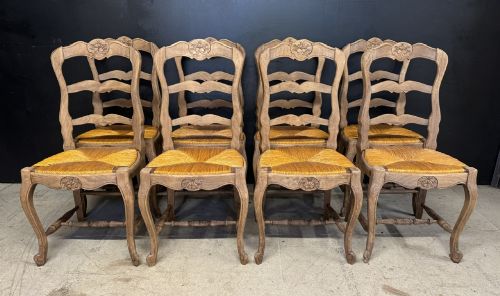
The selection encompasses diverse regional traditions including French provincial kitchen seating, Scandinavian nursing chairs, and English farmhouse styles. Dining chairs, armchairs, and side chairs dominate the forms currently available for daily use.
Materials and construction
Makers constructed these frames using solid hardwoods such as oak, elm, ash, and pine, sometimes applying paint or faux bamboo finishes for decorative effect. The primary construction relies on traditional joinery techniques suited to supporting woven seating.
Seats are tightly woven from natural rush, a traditional wetland material known for its pliable strength when twisted and plaited around the chair rails. This technique creates a durable, supportive surface that ages gracefully with regular use.
Natural Rush Seated Chair Retail Price Guide 2026
Typical asking prices for natural rush seated chair among the pieces listed under this phrase on Sellingantiques today, from the lower quarter to the upper quarter. They describe what is for sale here now, not the wider market.
Current listings feature oak, elm, ash, pine, and painted wood, spanning periods from the eighteenth century to the 1930s.
Assessing quality and character
Quality in these pieces rests upon the integrity of the timber frame, the tightness of the rush weaving, and the harmony of the overall proportions. Finer examples often reflect specific regional design traditions or the documented work of notable Arts and Crafts makers.
The distinction between standard kitchen seating and higher-tier examples lies in the refinement of the spindle turnings, the weight of the native woods utilised, and the preservation of original painted surfaces or patination.
E W Godwin·Lawrence Neal·Edward Gardener
The Natural Rush Seated Chair Glossary
- Rush
- A wetland plant material harvested and twisted into cordage for traditional chair seat weaving. It provides a durable and flexible surface that develops a rich golden tone over time.
- Spindleback
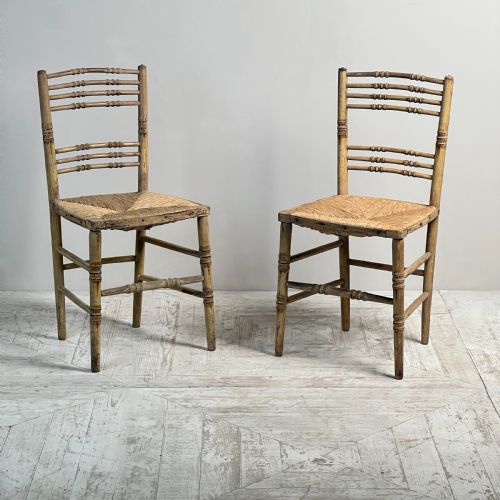
- A chair design featuring vertical turned wooden spindles in the back support. This lighter framing style gained popularity in eighteenth-century country furniture.
- Arts and Crafts
- A design movement spanning the late nineteenth and early twentieth centuries that prioritised honest construction and traditional handcraft methods. Pieces from this era often highlight exposed materials like oak and natural cord.
- Ladder back
- A chair back construction utilising horizontal arched slats between two upright posts. This traditional form appears frequently in French provincial and English country seating.
- Faux bamboo
- A decorative paint technique or carved wood finish imitating the segmented joints of natural bamboo. This style gained popularity during the Regency period.
Natural Rush Seated Chair: Frequently Asked Questions
How do I care for a rush seat?
Keep natural rush seats away from excessive moisture and direct heat sources to prevent the dried plant fibres from becoming brittle.
Cleaning should be limited to gentle dusting with a dry brush or a very slightly damp cloth when necessary.
Can I use these chairs daily?
Solid timber frames and tightly plaited rush seating are built for practical everyday dining and domestic use.
Ensure the joints remain firm and avoid standing on the chairs to preserve the structural integrity of the frame.
How do I identify a regional style?
Look at the turning of the legs, the shape of the back rails, and the choice of native timber such as elm or oak.
French provincial examples often feature ladder backs and lighter fruitwoods, while English country pieces display heavier spindleback forms.
What periods do these chairs cover?
The available pieces span multiple centuries, ranging from mid-eighteenth-century elm designs to early twentieth-century Arts and Crafts interpretations.
Nineteenth-century Regency and French provincial styles also feature prominently within the selection.