
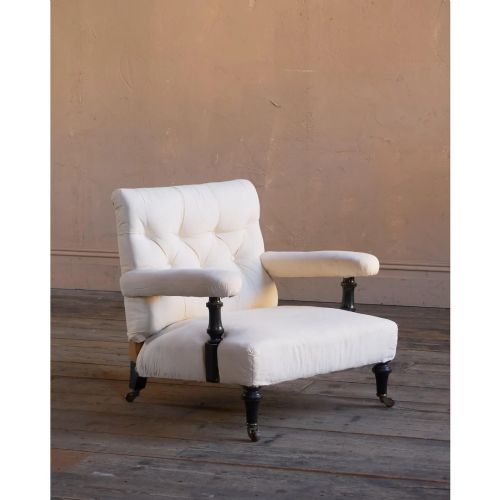
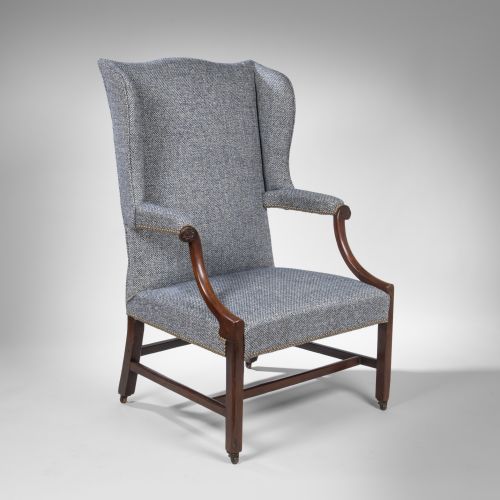
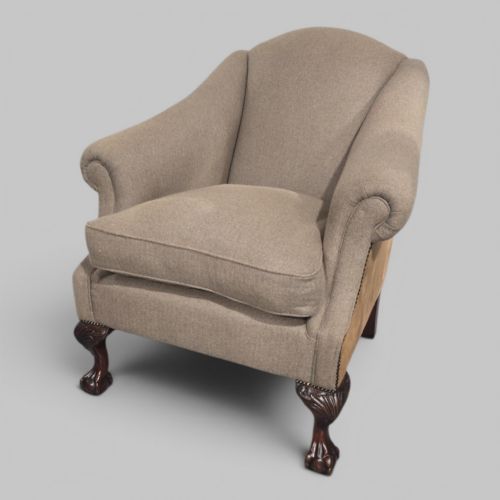


Dark Wood Reading Chair
A dark wood reading chair brings solid mahogany and rosewood frames together with supportive upholstered seats for long hours with a book.
Dark Wood Reading Chair
A dark wood reading chair typically manifests as a library armchair, desk chair, or low-backed seat designed for study and repose. These forms draw from Georgian, Regency, and Victorian periods, utilising rich timbers to anchor a room.
The most common examples on this page are mahogany and rosewood library armchairs from the eighteenth and nineteenth centuries. You will also encounter designated desk chairs, corner chairs, and occasional slipper chairs matching this search phrase.
Materials and construction
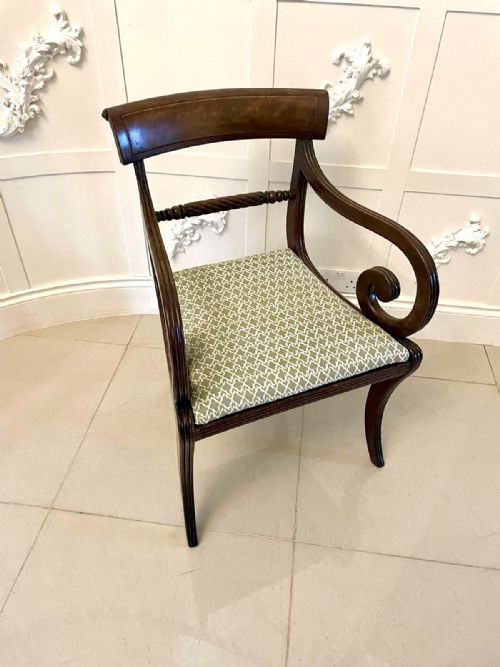
Cabinetmakers built these frames primarily from solid mahogany and rosewood, occasionally incorporating walnut or oak. Brass castors, metal hardware, and inlaid details frequently complement the dense timber structures.
Upholstery forms a vital component, with seats and backs padded and covered in leather, fabric, or specialised woven materials like cane for bergere panels. Joinery techniques such as mortise and tenon secure the heavy wooden arms and legs.
The listings span from the eighteenth-century Georgian period through the Regency, Victorian, and Edwardian eras, showcasing mahogany, rosewood, oak, and walnut.
Separating grades of quality
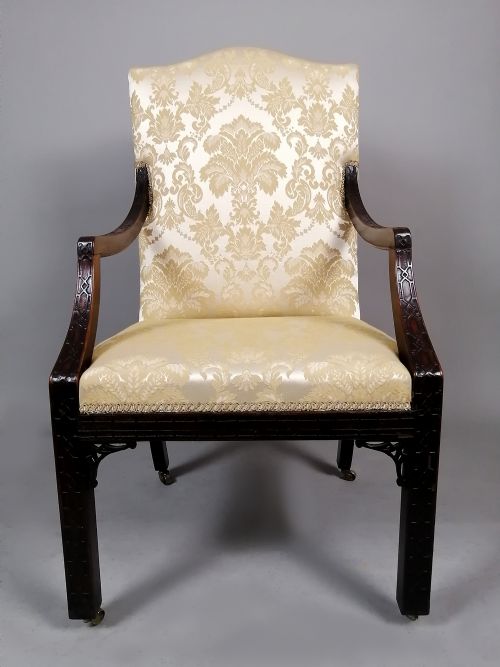
The sophistication of the carved detail and the selection of the timber grain determine the upper tier of these chairs. Pieces displaying crisp hand-carving, such as spider web backs or barley twists, stand apart from simpler vernacular versions.
Structural integrity and the retention of original elements dictate the overall standard. Chairs that maintain their dense timber frames without excessive replacement timber or altered proportions hold greater fidelity to their original period style.
HOWARD AND SONS·Mellier and Co·James Shoolbred
The Dark Wood Reading Chair Glossary
- Bergere
- An enclosed upholstered armchair with wooden frames, often featuring cane work on the sides and back. This style gained popularity during the Regency period.
- Gainsborough armchair
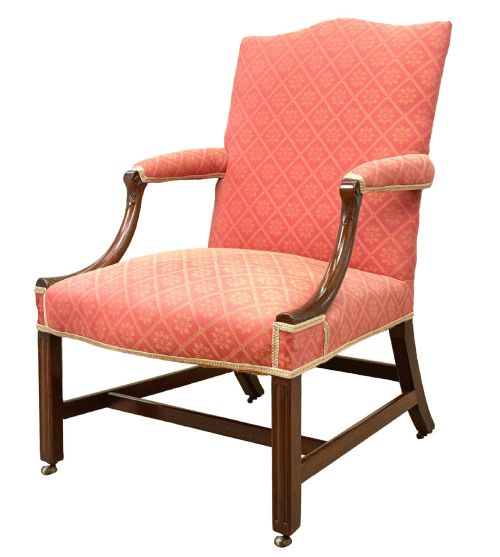
- A wide, high-backed open armchair with padded arms, designed for sitting comfortably at a desk or in a library. These typically date from the Georgian era.
- Cock-fighting chair
- A specialised low armchair featuring a horseshoe-shaped backrest designed to support the arms while leaning forward. Examples in the listings include walnut and mahogany frames.
- Barley twist
- A type of turning shaped to resemble a twisted rope, carved into the wooden legs or structural supports of Victorian and earlier seating. It adds decorative texture to the heavy timber.
Dark Wood Reading Chair: Frequently Asked Questions
How do I identify a Georgian reading chair?
Georgian reading chairs generally display rich mahogany timbers, straight or cabriole legs, and solid joinery typical of the eighteenth century. Look for classical proportions and restrained carving.
Many examples take the form of library armchairs or Gainsborough chairs designed for domestic study spaces.
What is the difference between a library chair and a desk chair?
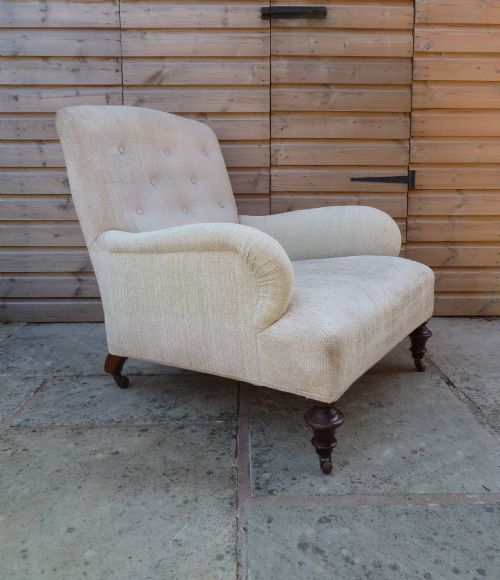
Library chairs usually feature lower, wider upholstered seats and padded arms intended for prolonged relaxation with volumes. Desk chairs are often engineered for upright seating and task work.
Some nineteenth-century variants combine these functions through revolving mechanisms or compact footprints.
Are these chairs suitable for daily use?
Solid timber frames and sturdy nineteenth-century construction make these seats robust enough for regular seating. Traditional upholstery methods provide dependable support.
Placing them in private studies or living rooms allows them to function just as their original owners intended.
How do I care for rosewood and mahogany frames?
Maintain the timber by keeping the chairs away from direct heat sources and strong sunlight that can dry the wood. Regular dusting with a soft cloth preserves the polished surface.
Avoid harsh chemical cleaners to protect the historic finish of the dark wood.