
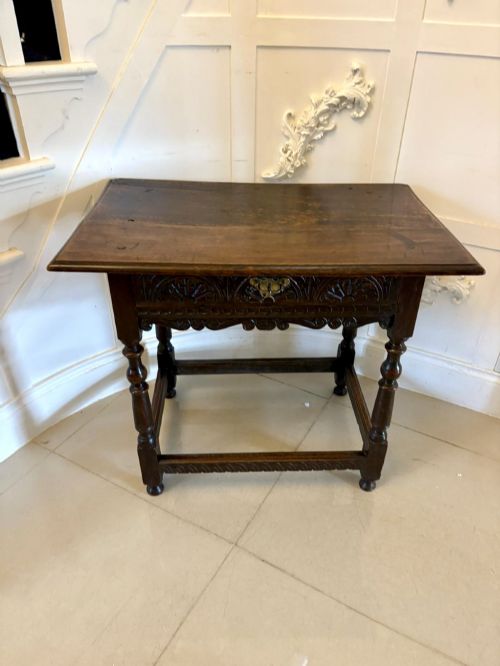
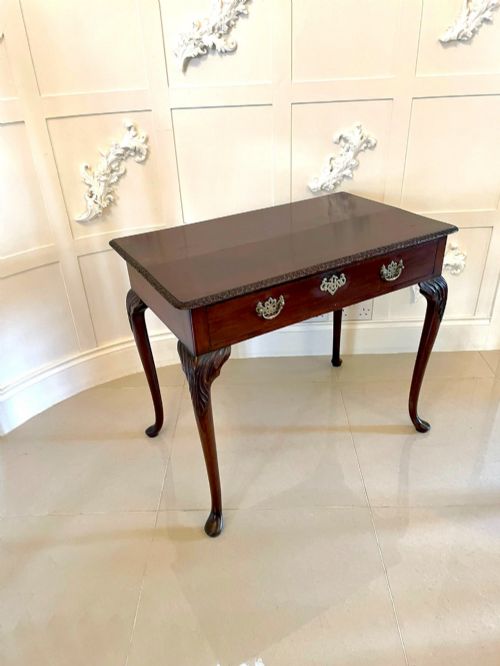
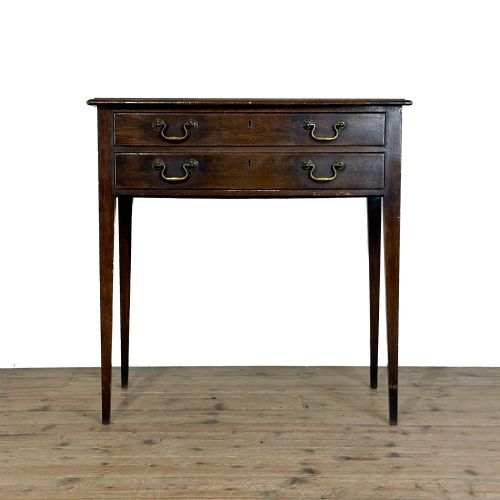
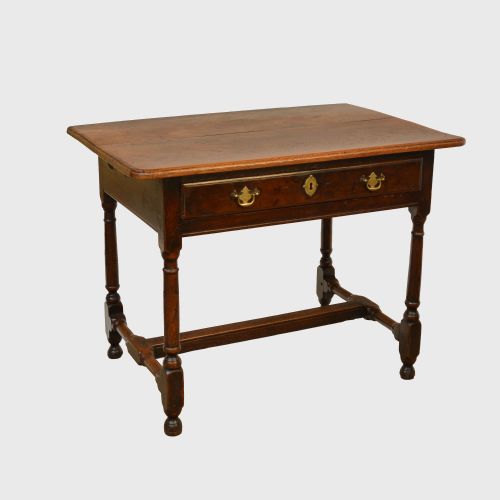
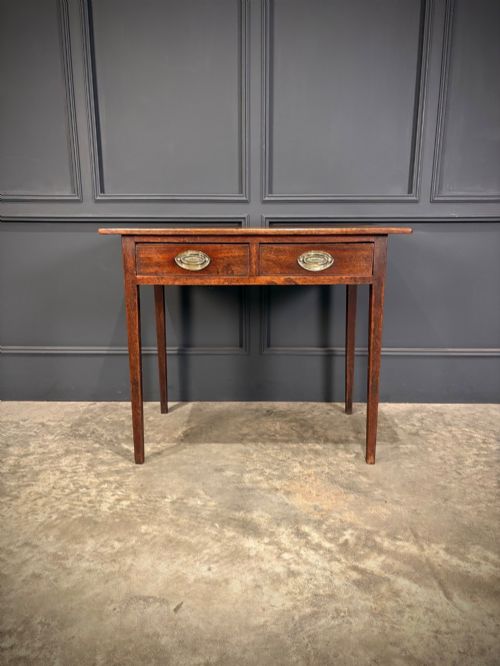
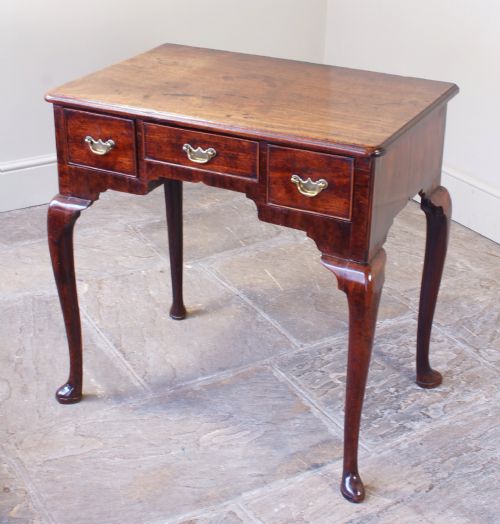
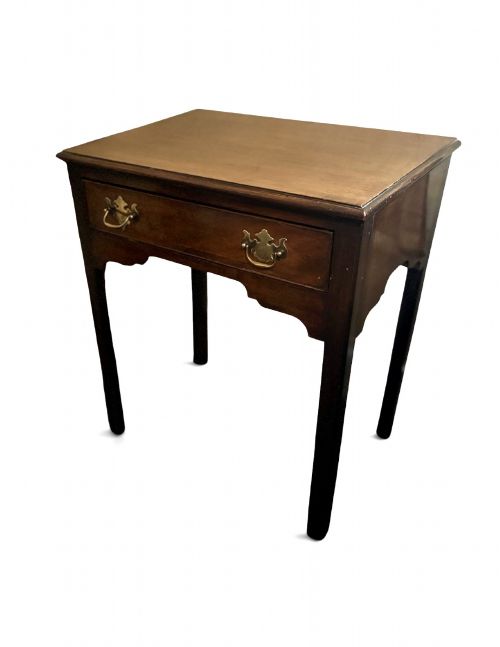
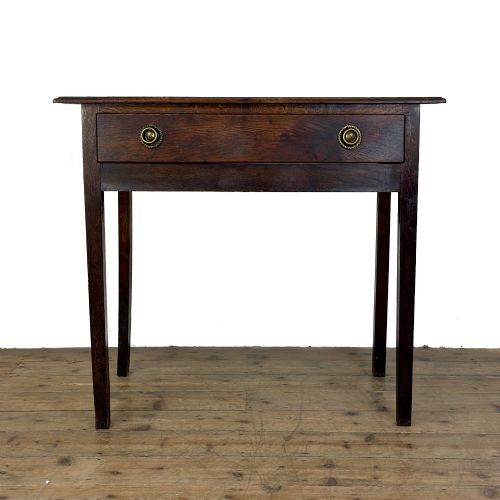
Dark Wood Lowboy Table
A dark wood lowboy table is a compact, drawer-fitted piece originating in seventeenth and eighteenth-century domestic spaces.
Dark Wood Lowboy Table
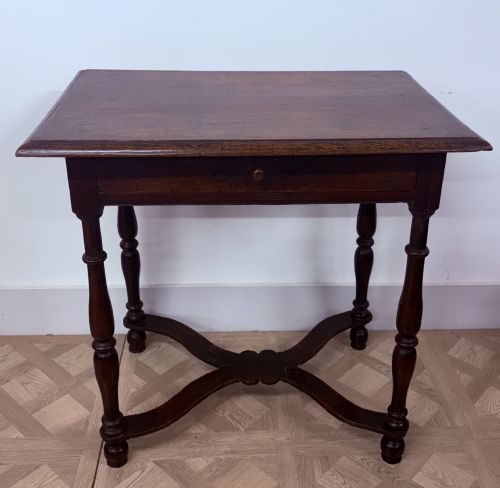
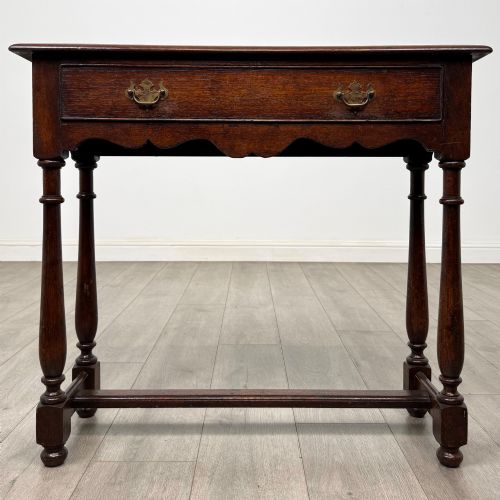
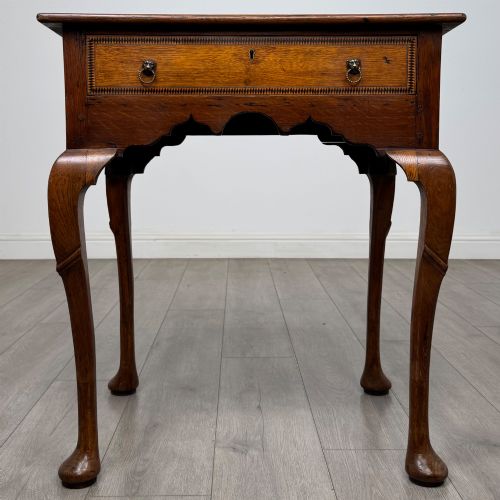
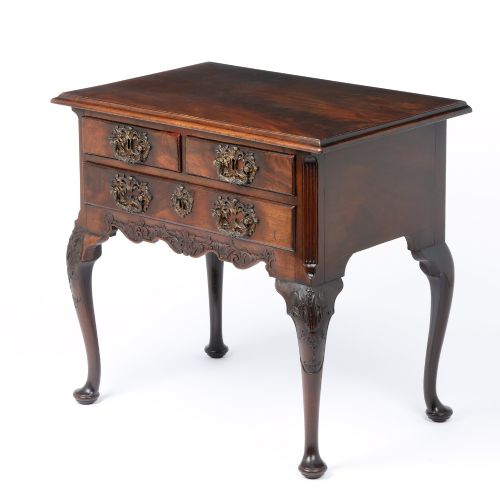
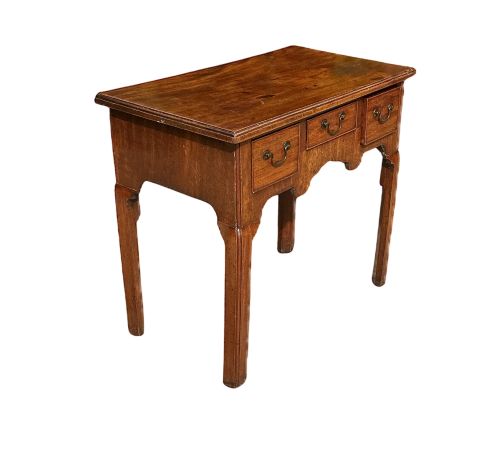
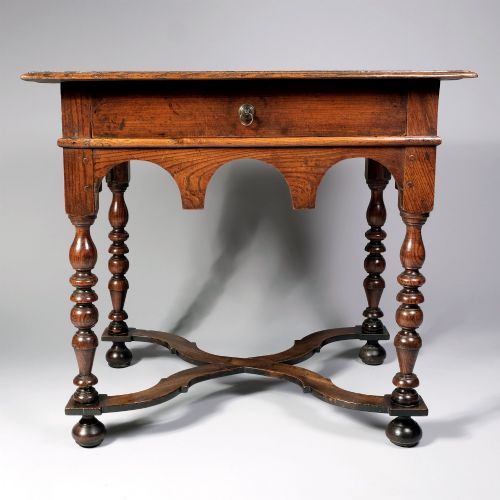
A dark wood lowboy table serves primarily as a compact side table, dressing table, or writing desk, typically standing on slender legs. The listings show forms ranging from seventeenth-century William and Mary designs to eighteenth-century Georgian examples in mahogany, oak, and walnut.
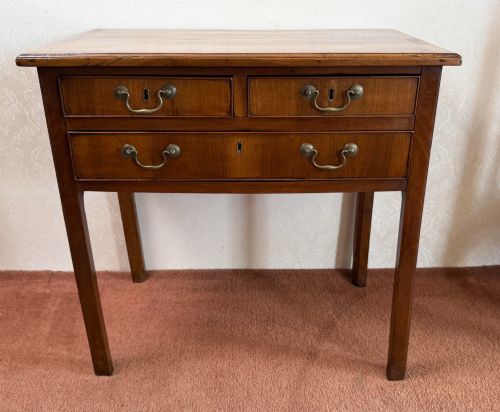
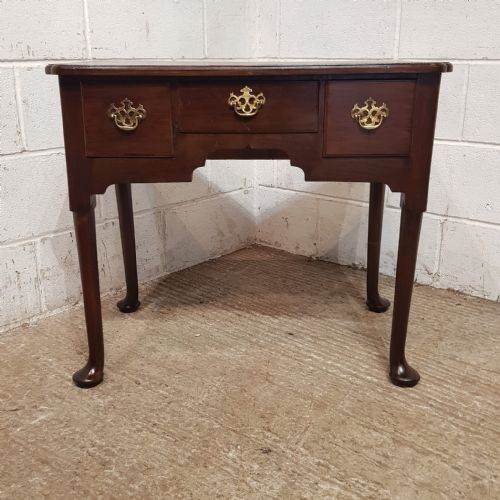
Most pieces met on this page date from the eighteenth century, constructed in oak or mahogany with regional variants in elm, yew, and walnut. These tables combine a low waist with one, two, or three drawers, intended historically for personal grooming or domestic storage.
Materials and construction
Makers utilised native and imported hardwoods, specifically oak, mahogany, walnut, elm, and yew, often pairing solid tops with dovetailed drawer construction. Brass handles and escutcheons punctuate the dark timber surfaces, secured with traditional joinery methods.
Surface treatments rely on natural timber grains enhanced by polishing, allowing the deep tones of Cuban mahogany, walnut, and dark oak to show through without heavy pigments.
Several pieces double as dressing tables and writing desks, proving our ancestors multitasked long before modern offices.
Assessing quality
Quality separates through the crispness of timber moulding, the selection of figured veneers or straight-grained boards, and the retention of original brass hardware. Superior examples display finer proportions in the legs and aprons, alongside intact period drawer linings.
Lesser pieces show replacement timbers, mismatched secondary woods, or heavy modern refinishing that obscures the natural grain and age of the primary material.
Elkington and Co·Muirhead Moffat and Co
The Dark Wood Lowboy Table Glossary
- Lowboy
- A small dressing or side table with drawers, raised on four tall legs. This form became popular during the late seventeenth and eighteenth centuries.
- Dovetail
- A joint formed by interlocking wedge-shaped fingers, commonly used in drawer construction to ensure durable corners. It is a key indicator of traditional cabinet making.
- Escutcheon
- A protective plate surrounding a keyhole, usually cast in brass. These details often help date a piece by their metal composition and fixing style.
Dark Wood Lowboy Table: Frequently Asked Questions
What is a dark wood lowboy table used for?
Historically, these tables functioned as dressing tables for personal grooming, writing desks, or small side tables in domestic rooms. Their modest scale permitted placement in bedrooms, hallways, or parlours where larger furniture would not fit.
Today, they serve equally well as lamp tables, small hallway consoles, or compact writing surfaces in contemporary interiors.
How do I date a lowboy table?
Dating relies on examining the timber species, joinery techniques, handle hardware, and overall stylistic proportions. Seventeenth-century examples often use oak and elm with simpler turnings, while eighteenth-century pieces frequently introduce mahogany and more refined cabriole or straight legs.
Drawer construction also provides clues, as hand-cut dovetails and timber linings change in character from the William and Mary period through the Georgian era.
Are lowboy tables made of solid mahogany?
Many eighteenth-century lowboys utilise solid timbers such as oak, elm, or walnut, while mahogany examples often combine solid boards with high-quality veneers. Cabinet makers selected woods based on regional availability and the desired finish.
Examining the drawer interiors and underside reveals the secondary woods and construction methods used by the original maker.
How do I fit a lowboy into a modern room?
The compact footprint and shallow depth of these tables make them versatile additions to hallways, living rooms, or bedrooms. Their drawers provide practical concealed storage for keys, stationery, or small personal items.
Pairing a period dark wood table with modern seating or minimalist decor creates a striking contrast that highlights the historic timber grain.