




Dark Wood Kitchen Dresser
These dark wood kitchen dressers are sturdy oak storage pieces built to anchor a room, bringing honest utility and age into the modern home.

Identifying your dark wood kitchen dresser
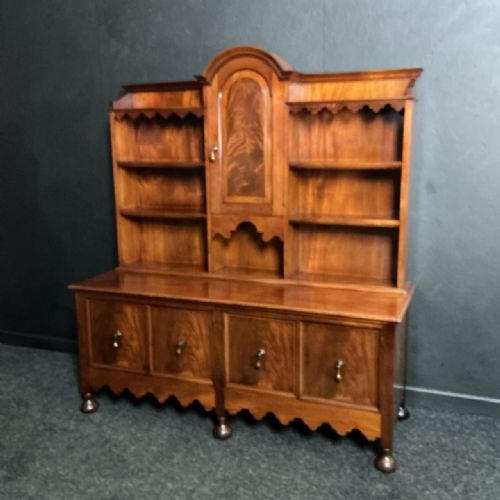
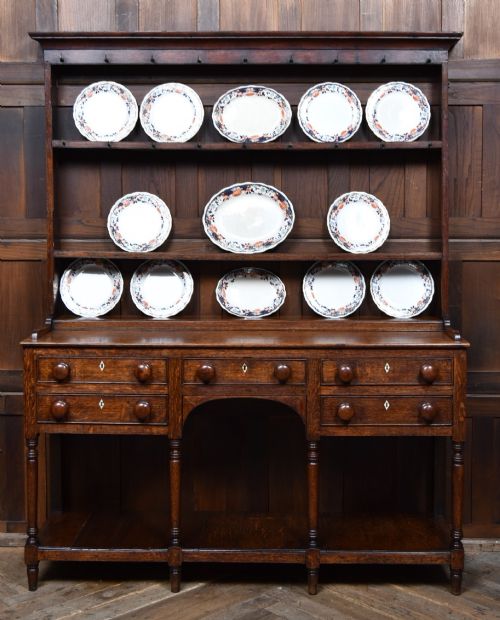
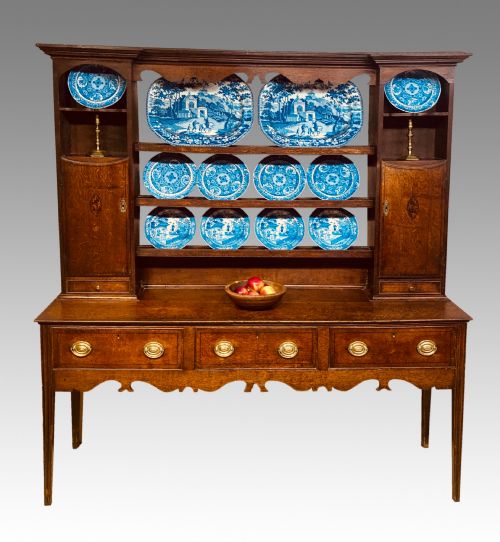
A dark wood kitchen dresser is a practical furniture form designed for storage and display, appearing across several distinct historic periods in these listings. You will encounter substantial pieces from the Victorian era alongside older examples rooted in the George III period.
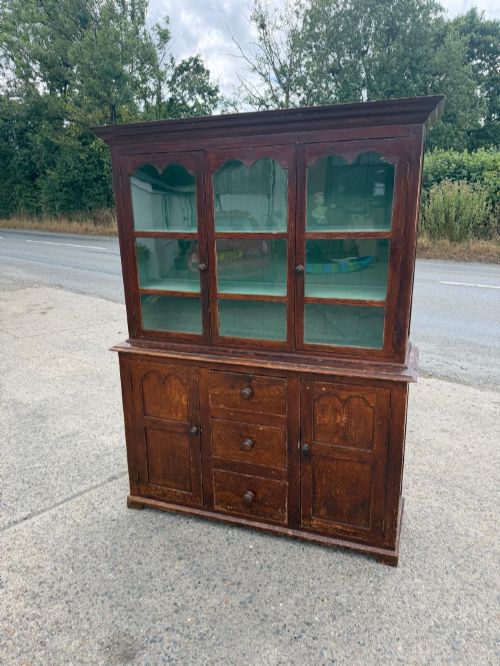
Regional and stylistic influences shape the surviving examples, stretching from English Country and Arts and Crafts interpretations to painted Scottish scumbled finishes. Each piece reflects the utilitarian needs of domestic spaces from the middle of the eighteenth century up to nineteen hundred.
Materials and construction
Makers relied principally on solid oak for the primary carcass and framing, supplemented by secondary timbers like pine. Metal fittings in iron and brass provided structural support and operating hardware for doors and drawers.
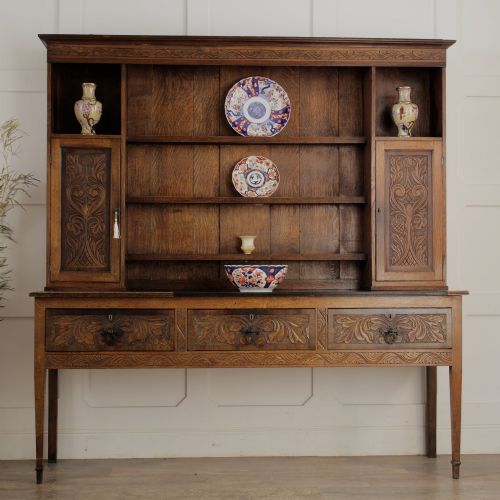
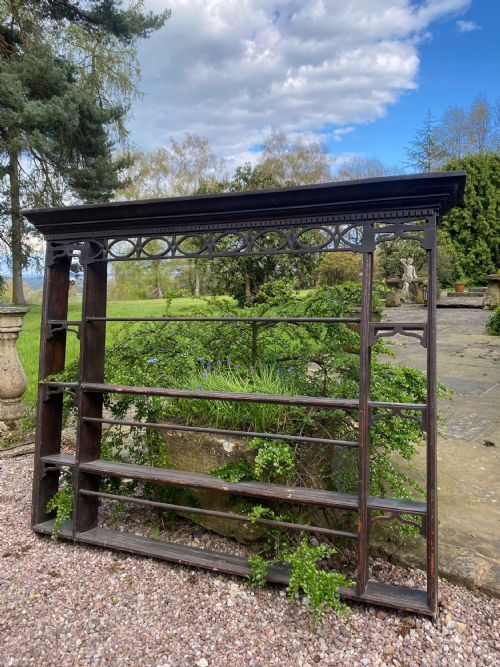
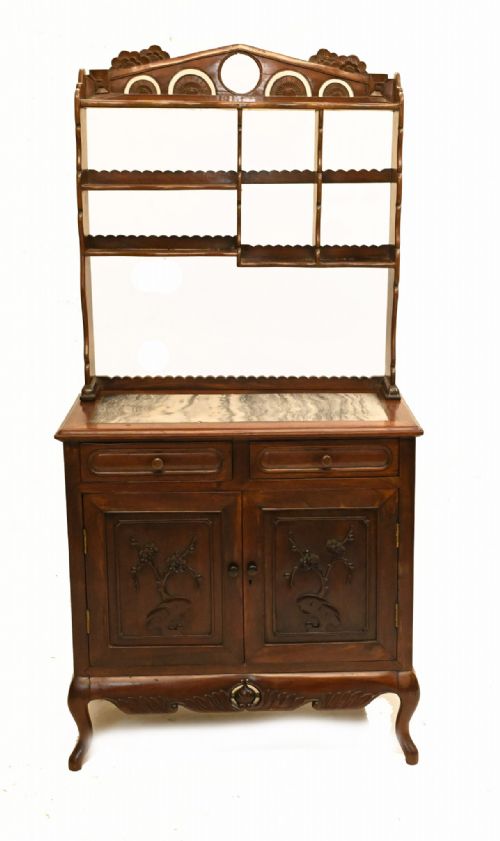
Surface treatments range from natural waxed grain and hand carving to applied paint finishes such as scumble. Plate racks were constructed either as integrated components or as removable upper sections paired with the base.
All currently listed dressers utilise oak as their primary material, spanning periods from seventeen-fifty to nineteen hundred.
Judging quality and character
The distinction between ordinary and superior pieces rests on the integrity of the timber and the preservation of original elements like plate racks. George III examples display finer joinery and proportions compared to heavier utilitarian country furniture.
Surface patination and the survival of original brass or iron hardware elevate an item's standing. Carved detailing and the presence of scumbled paint finishes add distinct regional character that alters visual weight.
The Dark Wood Kitchen Dresser Glossary
- Plate rack
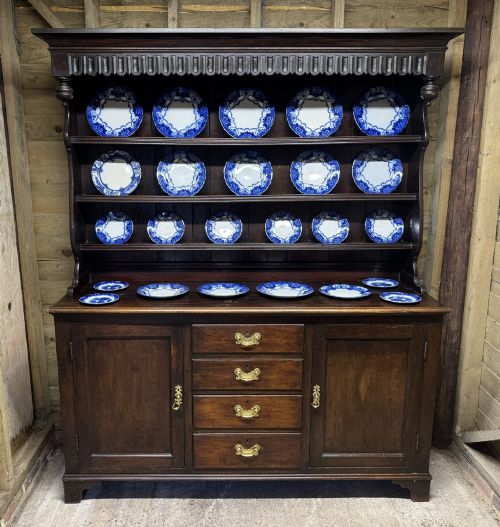
- An upper wooden framework featuring shelves and grooves designed to hold dining plates upright. This component sits atop the dresser base.
- Scumbled
- A decorative paint technique involving a translucent top layer dragged or combed over a lighter base to imitate grained timber. This finish appears on Victorian Scottish kitchen furniture.
- Welsh dresser
- A traditional furniture form combining lower storage cupboards with an open upper plate rack. The term is widely applied to open-backed storage dressers originating from Britain.
- George III
- The stylistic period spanning the mid to late eighteenth century, associated with balanced proportions and classical cabinet-making standards. Pieces from this era often exhibit refined joinery.
Frequently Asked Questions
How do I date a wooden dresser?
Dating relies on examining construction marks, timber selection, and hardware types used throughout the piece. Earlier examples from the seventeen-fifties show different joinery methods compared to later Victorian iterations.
Stylistic cues such as carving patterns and the presence of original plate racks also help narrow down the period of manufacture.
Are these dressers suitable for modern kitchens?
These robust oak pieces provide substantial storage capacity and display space that functions well in contemporary homes. Their durable construction handles everyday use while adding historic character to a room.
Care should be taken to measure ceiling heights and wall space before introducing a tall plate rack into a compact kitchen.
Can the top rack be separated from the base?
Many traditional dressers are built in two distinct sections consisting of a heavy base cabinet and a separate upper plate rack. This construction method made transportation through doorways easier for historical movers.
Buyers should inspect the connection points to confirm whether the rack lifts off independently from the lower sideboard.