



Dark Wood Hall Rack
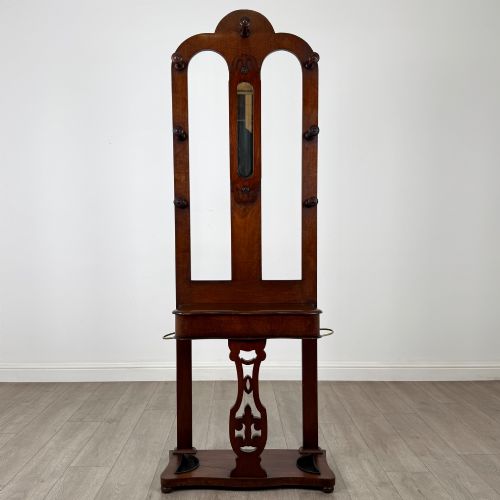
A dark wood hall rack organises coats, hats and sticks near an entrance while setting a formal tone for the home.
Dark Wood Hall Rack
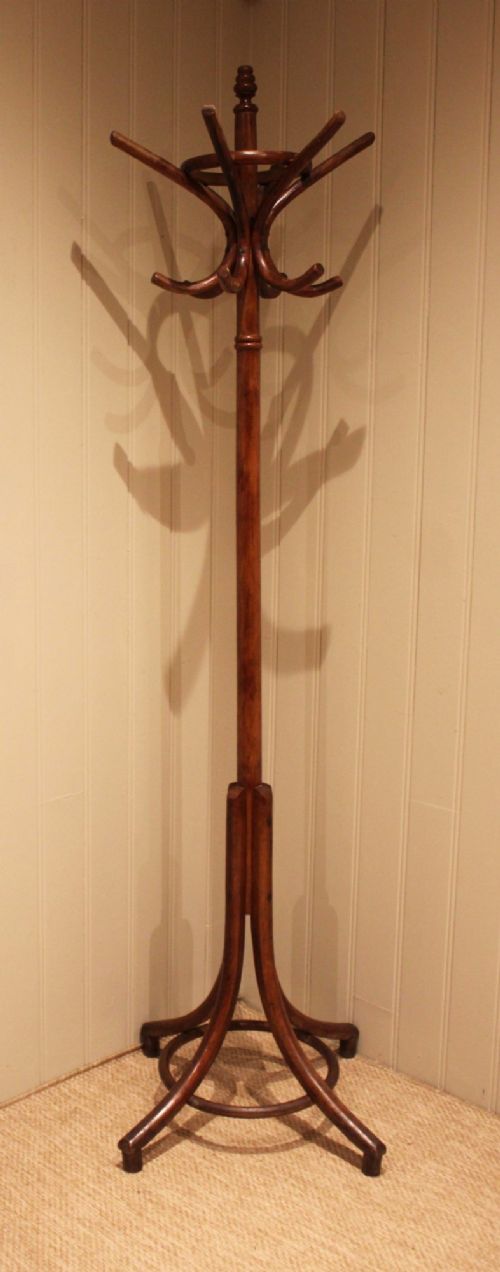
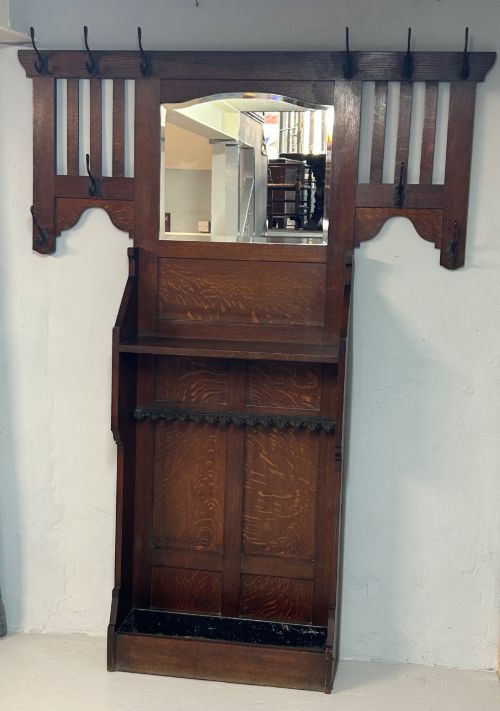
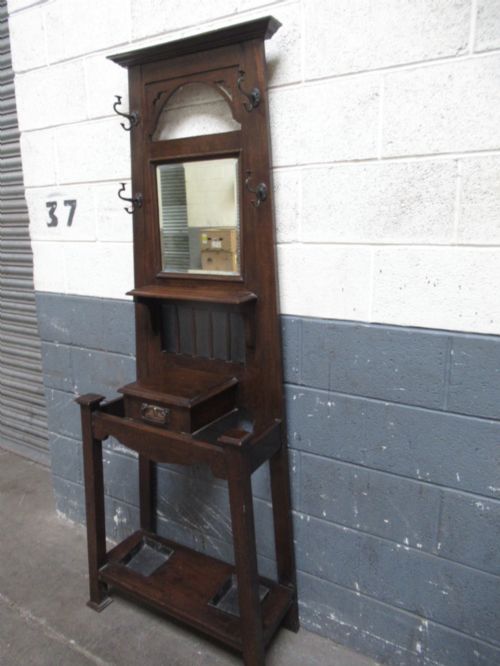
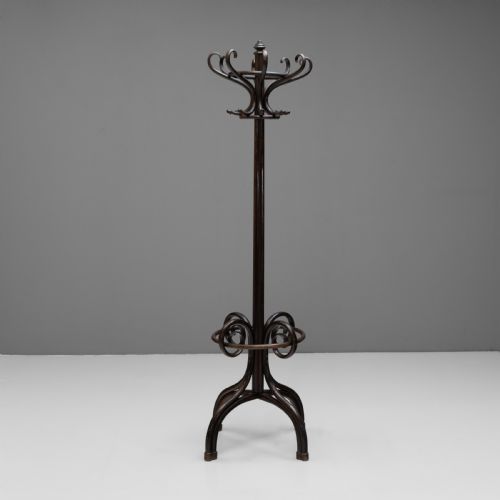
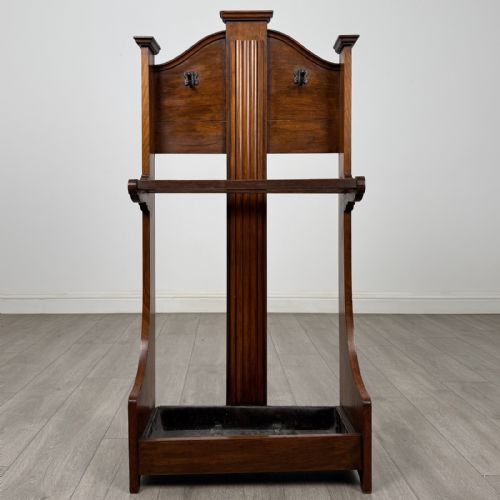
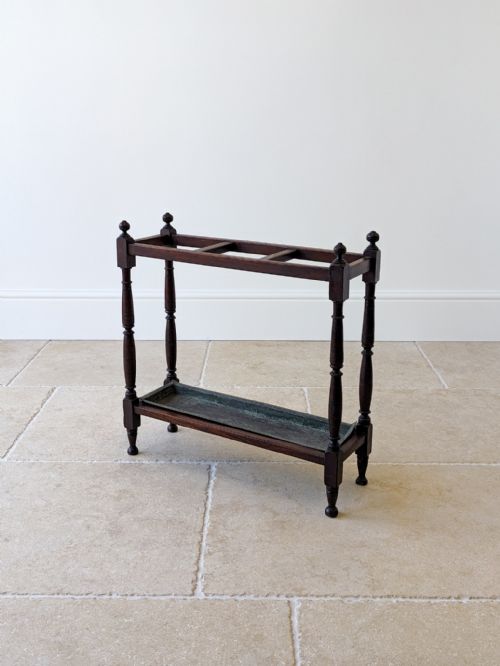
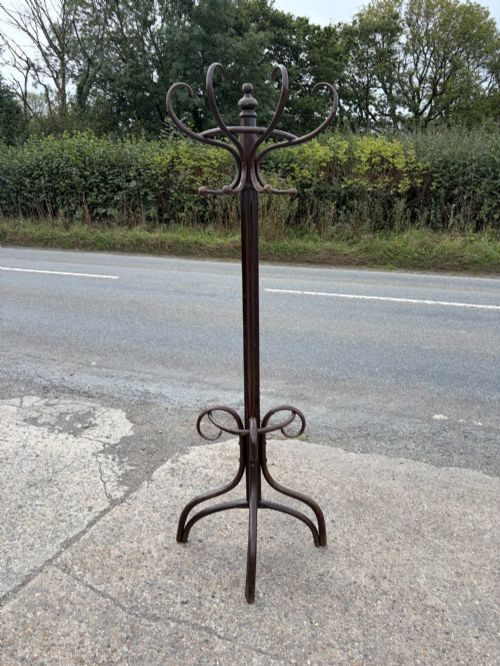
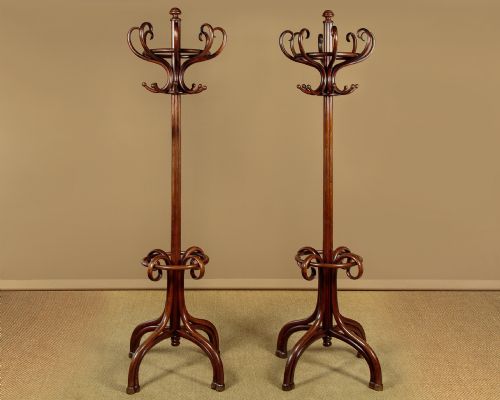
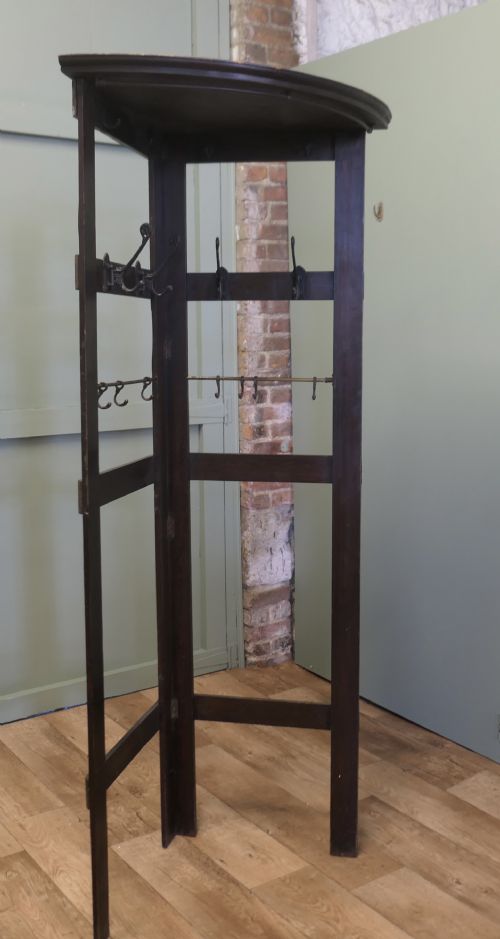
A dark wood hall rack encompasses freestanding coat trees, wall-mounted racks and combined umbrella stands designed for the entrance of a building. The selection here leans heavily towards Victorian and Edwardian examples executed in sturdy timbers alongside lighter bentwood forms.
Makers and manufacturers utilised durable materials to construct pieces that endured heavy daily use by residents and visitors alike. Form follows function closely, resulting in items that combine hanging hooks with compartments for sticks, whips and luggage.
How they were made
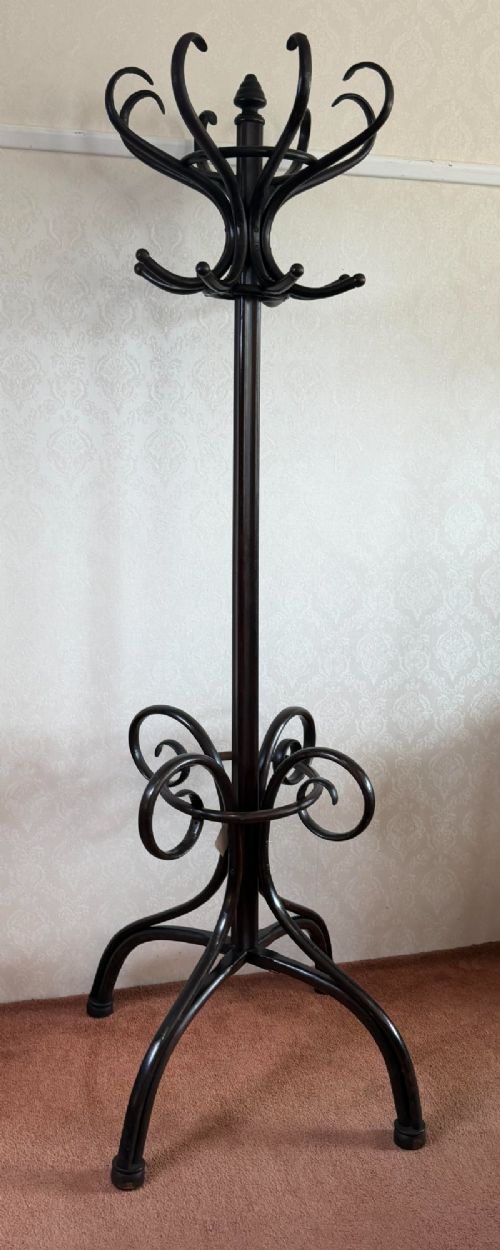
Cabinet makers relied on dense hardwoods such as mahogany and oak for structural stability, often incorporating brass hooks and glass mirrors into the design. Steam-bending techniques allowed craftsmen to shape beech and beechwood into the flowing, curved profiles seen in bentwood items.
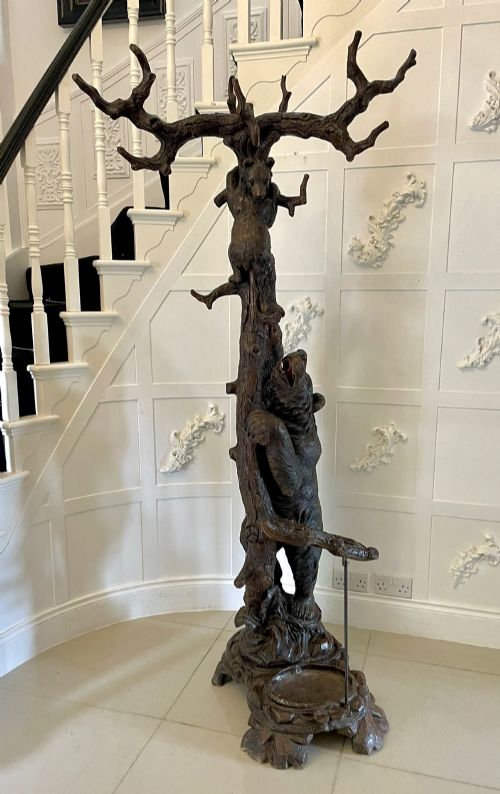
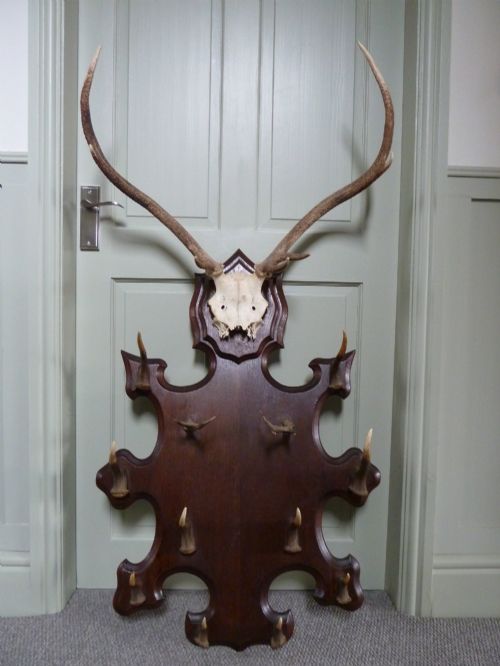
Carved details appear on specific regional pieces, including Black Forest animal motifs and antler formations secured to wooden backplates. Joinery methods varied from traditional mortise and tenon joints in solid timber frames to steam-set joints in commercial bentwood production.
Dark Wood Hall Rack Retail Price Guide 2026
Typical asking prices for dark wood hall rack among the pieces listed under this phrase on Sellingantiques today, from the lower quarter to the upper quarter. They describe what is for sale here now, not the wider market.
Materials represented across the inventory include oak, mahogany, beech, bentwood, brass, glass and carved antler.
What varies in quality
Construction methods and timber selection establish the tier of a piece, distinguishing mass-produced commercial items from bespoke cabinet work. Heavier gauge brass hardware and finely figured mahogany or solid walnut indicate a higher standard of manufacture.
The complexity of the form influences value, with revolving bases, integrated drip trays and elaborate carvings representing more ambitious workshop output. Original manufacturers' labels or stamps preserved on the timber provide definitive markers of workshop origin.
Thonet·Jas. Shoolbred·Fischel·J. Parker of Woodstock
The Dark Wood Hall Rack Glossary
- Bentwood
- Wood that has been heated with steam to make it pliable, allowing manufacturers to bend it into curved shapes. This technique defined the output of major European workshops.
- Hall Stand
- A large freestanding item placed in an entrance hall that typically combines coat hooks, a mirror, and umbrella wells. These pieces served multiple utilitarian functions.
- Demi Lune
- A half-moon or semicircular shape often found in the design of wall-mounted racks and half hall stands. This profile allowed furniture to sit flush against an entrance wall.
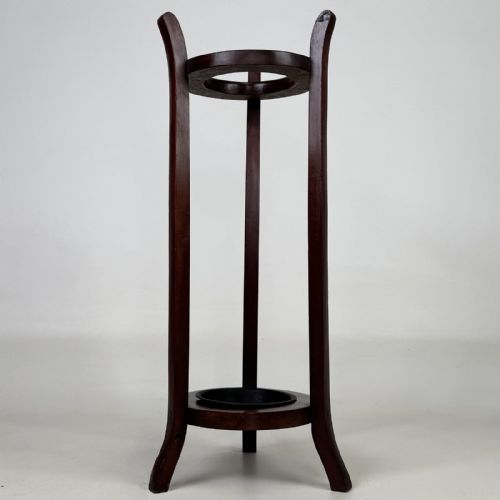
- Stick Stand
- A receptacle designed specifically for walking sticks, umbrellas and riding whips, frequently integrated into larger hall furniture. Metal drip pans are usually positioned at the base.
- Aesthetic Movement
- A late nineteenth-century design style emphasising visual qualities over narrative subject matter. Pieces from this movement often incorporate contrasting brass hardware.
Dark Wood Hall Rack: Frequently Asked Questions
Where should a hall rack be placed?
Position a freestanding hall rack near the primary entrance of a house to manage everyday outerwear and accessories. Ensure adequate clearance around the base if the piece includes umbrella wells or protruding coat hooks.
Wall-mounted versions require secure fixing into solid masonry or wall studs to support the weight of heavy winter coats and hats. Placement should balance practical accessibility with the proportions of the hallway.
How do I maintain dark wood surfaces?
Dust timber surfaces regularly with a soft, dry cloth to prevent the accumulation of dirt in carved details and joints. Apply a quality beeswax periodically to nourish the grain and maintain a natural sheen.
Avoid placing wooden furniture near direct heat sources or in damp environments, as fluctuations in temperature can cause the timber to warp or split.
What is the difference between a coat stand and a hall stand?
A coat stand is typically a vertical post with branching hooks at the top designed exclusively for hanging garments and hats. These freestanding items occupy a minimal footprint.
A hall stand is a more substantial piece of furniture that often incorporates a central mirror, glove boxes, umbrella compartments and a panelled back. They offered a complete organizational system for Victorian and Edwardian entryways.
How do I identify bentwood pieces?
Bentwood furniture is characterised by smooth, continuous curves formed from steam-heated timber, most commonly beech. The frames are remarkably light yet structurally rigid without relying on heavy internal joinery.
Many examples feature stamped manufacturer marks or paper labels underneath the base or along the curved frame members.