
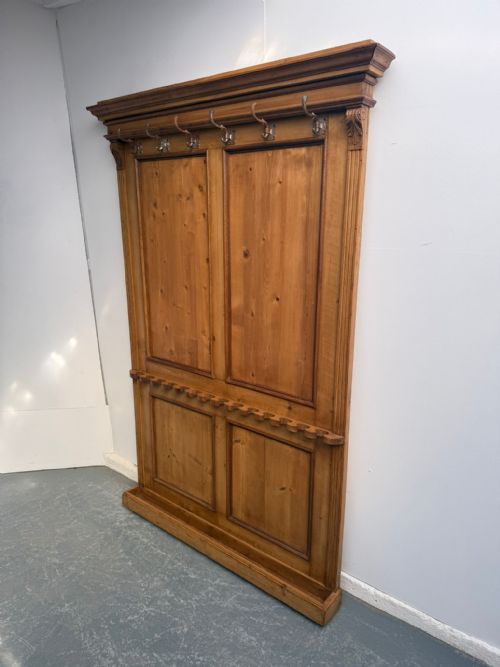


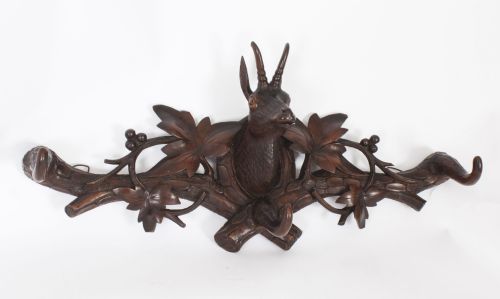

Wall Mounted Hall Stand
A wall mounted hall stand keeps entranceways orderly while offering a handsome display for hats, coats, and mirrors.
Wall Mounted Hall Stand
A wall mounted hall stand combines practical hanging space with architectural presence in entrance halls and cloakrooms. These space-saving pieces attach directly to walls, freeing up valuable floor space while organising daily outerwear.
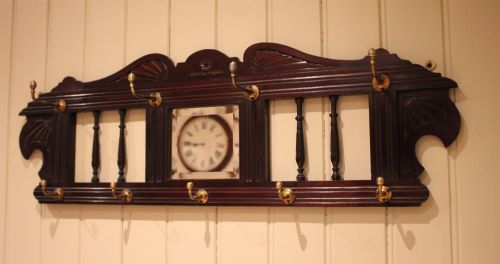
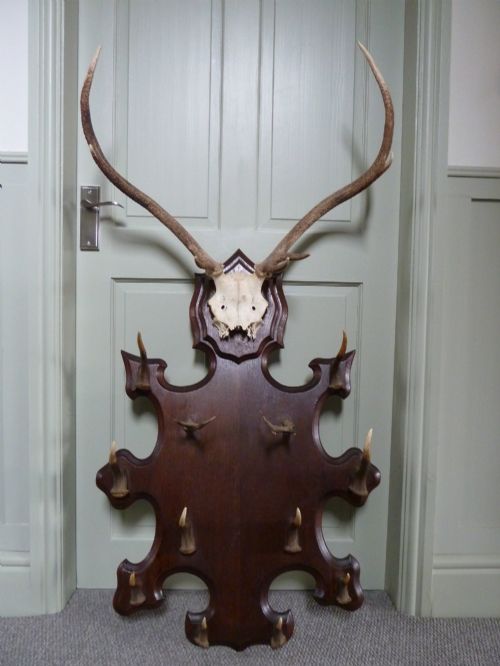
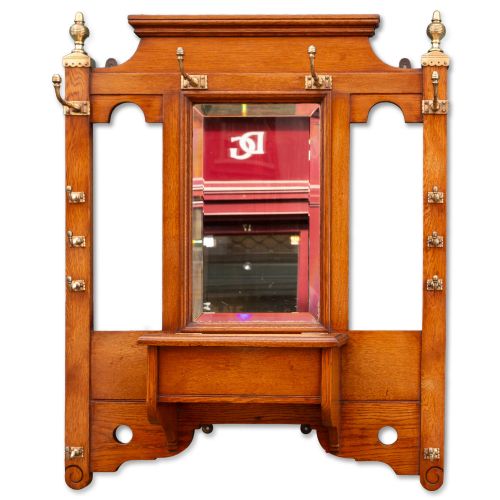
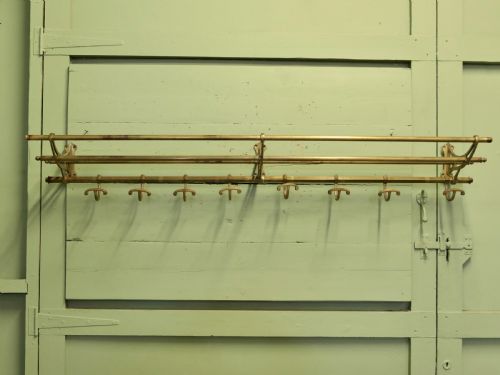
The selections available here span the late nineteenth century through to the early twentieth century, encompassing Victorian country houses and French art deco interiors. Common forms include mirrored portmanteaus, bracketed hat racks, and carved animal horn designs.
Makers utilised various timber frames alongside brass and iron fittings to create functional hallway furniture. Many incorporate integrated wall mirrors and original hooks for hats, coats, and umbrellas.
How they were made
Joiners constructed the main backboards and shelves from solid hardwoods such as oak, mahogany, walnut, and pine. Carpenters shaped these timbers using traditional woodworking joints to support heavy hanging loads.
Foundries cast the decorative hooks, brackets, and frames in brass and iron. Metal components frequently feature functional shelves and scalloped detailing designed to hold hats and garments securely.
Carvers ornamented select pieces with intricate hand-carved motifs, including stag horns and chamois goat heads. Glaziers fitted bevelled and plain glass mirror plates into secure wooden rebates.
Listings span from the 1870s through to the 1930s, featuring oak, mahogany, walnut, brass, iron, and glass.
What varies in quality
The distinction between standard and superior pieces rests on the weight of the cast metal and the choice of timber. Solid hardwoods and heavy brass brackets indicate better construction than lighter composite materials.
Carved detail and glass quality separate workshops. Hand-carved animal heads and original silvered mirror plates reflect higher craftsmanship than plain moulded boards.
Scale and proportion influence desirability, particularly with exceptionally long French portmanteaus and elaborate country house examples. The retention of original hooks and mirror glass enhances authenticity.
The Wall Mounted Hall Stand Glossary
- Portmanteau
- A combined wall rack featuring a mirror, hat shelf, and coat hooks. This French term describes a comprehensive hallway furnishing designed to hold travel garments and accessories.
- Stag horn
- Antler material utilised in nineteenth-century taxidermy and furniture design. Craftsmen mounted natural horns onto wooden backboards to serve as sturdy coat hooks.
- Bevelled plate
- Mirror glass with angled, polished edges. This technique creates a decorative border that catches the light within hallways and reception rooms.
- Black Forest
- A nineteenth-century carving style originating from a mountainous region in Germany. Pieces from this tradition typically feature naturalistic animal carvings and deep relief work in wood.
Wall Mounted Hall Stand: Frequently Asked Questions
How do I hang a heavy hall stand safely?
Heavy wall mounted pieces require secure fixing into wall studs or masonry using appropriate heavy-duty screws and wall plugs.
Professional installation ensures the substantial weight of timber, glass, and loaded coat hooks remains safely supported.
How do I care for antique brass hooks?
Unlacquered antique brass develops a natural patina over decades of use and exposure to air.
Dust the metal gently with a soft cloth and avoid harsh chemical cleaners that strip the historic finish.
Can I place a hall stand in a small hallway?
Wall mounted designs suit compact spaces because they leave the floor entirely clear for movement or shoe storage.
Selecting a narrower brass bracket rack or a slim mirror board prevents narrow entranceways from feeling overcrowded.