


Hall Mirror with Hooks
A hall mirror with hooks combines a glass plate with practical hanging space, offering a functional piece that organises an entryway with period character.
Hall Mirror with Hooks
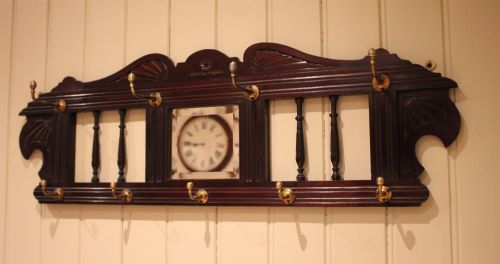
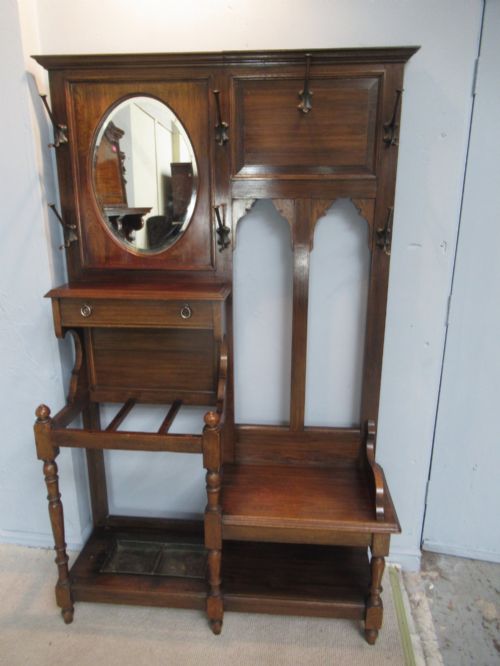
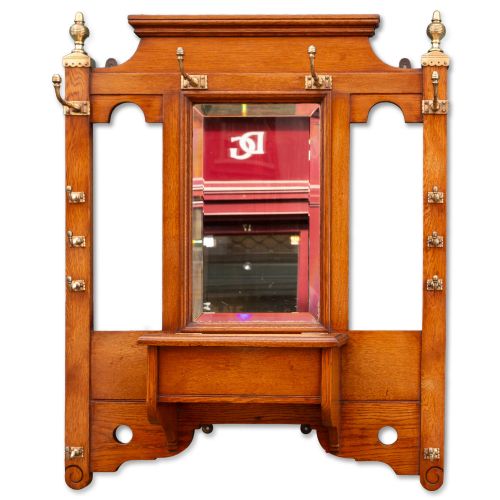
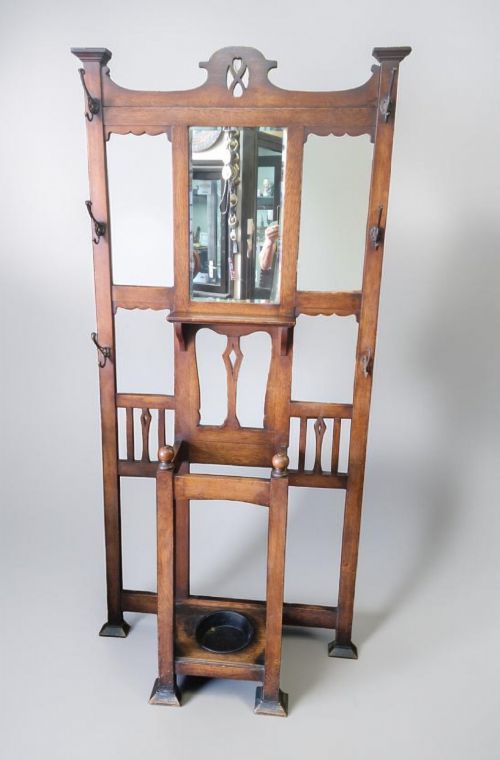
A hall mirror with hooks is a dual-purpose furnishing designed for entryways, combining a looking glass with sturdy pegs for garments and hats. These objects appear in various formats, ranging from compact wall-mounted boards to substantial freestanding hall stands.
The versions most commonly met on this page include oak and mahogany wall-mounted racks alongside larger architectural pieces. They span periods from the Victorian era through the Edwardian years into the early twentieth century.
Makers utilised these items in hallway spaces to provide both a final check before departure and a convenient drop point for everyday wear. Their forms adapt to domestic architecture of the nineteenth and twentieth centuries, accommodating changing spatial requirements.
How they were made
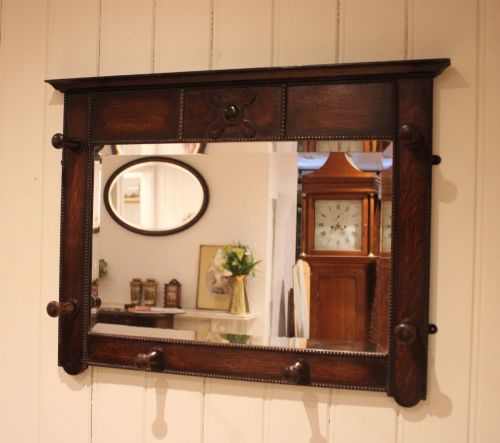
Carpenters constructed the structural frames primarily from hardwoods such as oak, mahogany, and walnut, often employing solid timber or golden oak veneers. These wooden backings support the weight of hanging garments and provide stability for the central glass plates.
Metal components, specifically brass and cast iron, form the hooks and sometimes incorporate shelves or decorative borders. Workshops integrated bevelled glass plates and occasionally integrated ceramic tiles into the wooden structures.
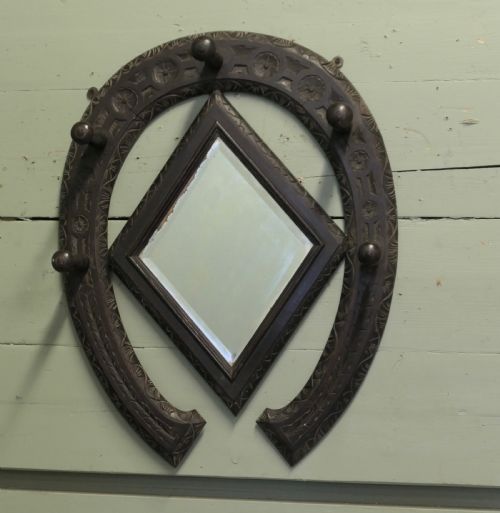
Horseshoes found a second life holding hats and coats in equestrian-themed hallways.
What varies in quality
Quality separates pieces through the selection of timber grain, the depth of bevel on the mirror plate, and the casting detail of the metal hooks. Superior examples display careful joinery and substantial hardware that securely anchors the hanging elements.
Ellen E. Houghton of Minton·Minton
The Hall Mirror with Hooks Glossary
- Bevelled plate
- A mirror glass with an angled, polished edge that catches the light. This technique adds depth and visual refinement to the reflective surface.
- Portmanteau
- A combined piece of hall furniture incorporating a mirror, coat hooks, umbrella stands, and sometimes a seat. These large items served as central storage units in grand entrance halls.
- Hall stand
- A freestanding or wall-fixed wooden piece designed for hallway use, featuring hat pegs and clothes hooks alongside a mirror. They organise outerwear near the entrance of a home.
- Art Nouveau
- A decorative style characterised by flowing, organic lines and natural motifs, popular around the turn of the twentieth century. Pieces from this movement often feature sinuous metalwork and stylised carvings.
- Gothic Revival
- An architectural and design movement that revives medieval forms, visible in pointed arches, heavy timbers, and ecclesiastical motifs. Items in this style project a sense of historical gravitas.
Hall Mirror with Hooks: Frequently Asked Questions
How are wall mounted racks secured?
Wall-mounted versions typically use strong screw fixings through the wooden backing board to bear the weight of heavy coats and bags.
Ensuring the fixings anchor into wall studs or use appropriate wall plugs is essential for safe suspension.
Where were these traditionally placed?
These pieces traditionally hung in the entrance hall or vestibule near the front door of a house.
This placement allowed residents to check their appearance and hang outerwear immediately upon entering.
How do I clean the mirror plate?
Clean the glass using a soft cloth and a gentle glass cleaner sprayed onto the cloth rather than directly on the frame.
This prevents moisture from seeping into the wooden backing or tarnishing the old silvering behind the glass.