
Vintage Coat Rail
A vintage coat rail brings everyday utility and solid timber or brass character into a hallway.
Vintage Coat Rail
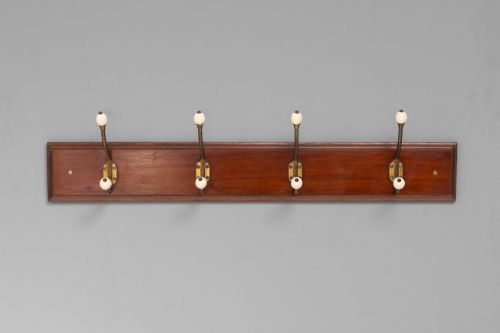
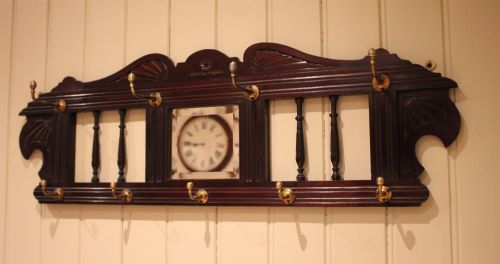
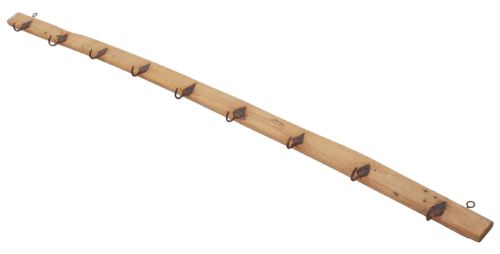
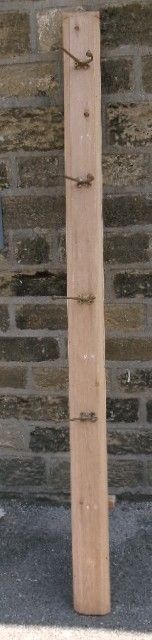
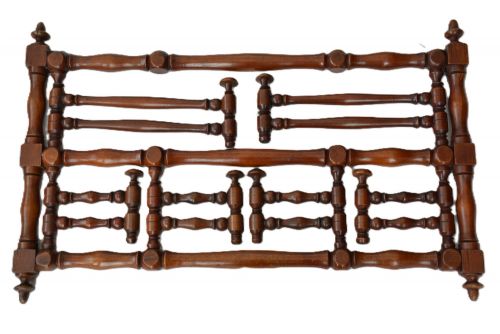
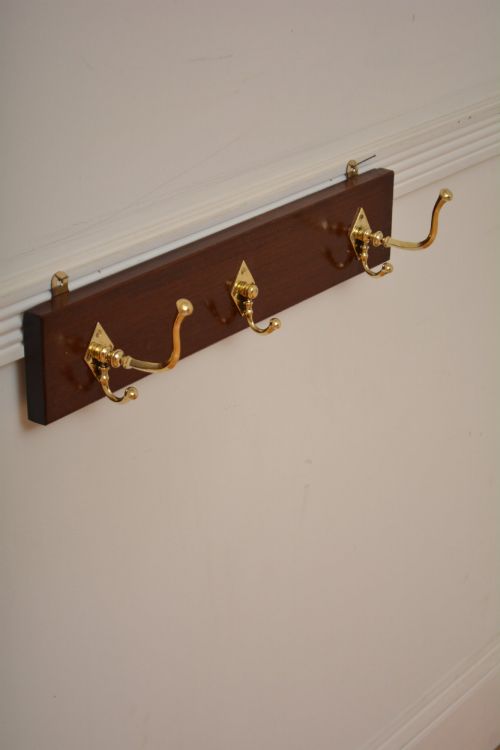
A vintage coat rail serves as a practical fixture for hanging garments in hallways, cloakrooms, and kitchens, appearing in forms such as wall-mounted backboards, hanging racks, and larger hall stands. These pieces range from simple pine boards fitted with iron or brass hooks to elaborate architectural designs in mahogany and oak spanning the eighteenth, nineteenth, and early twentieth centuries.
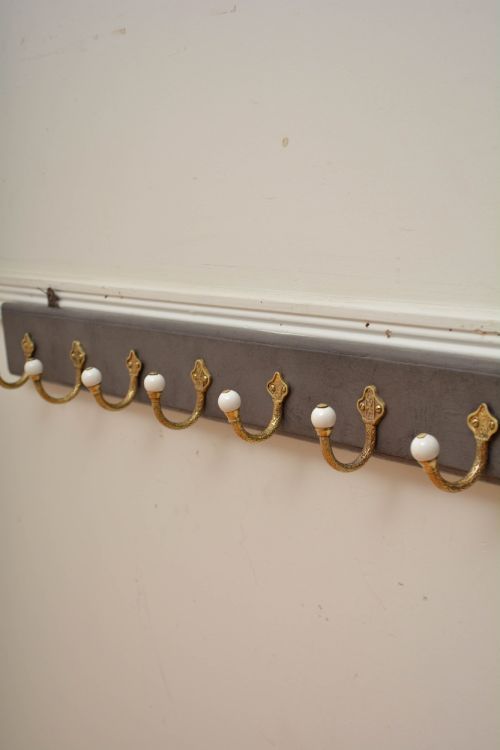
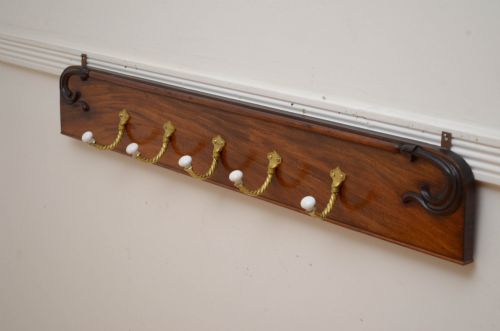
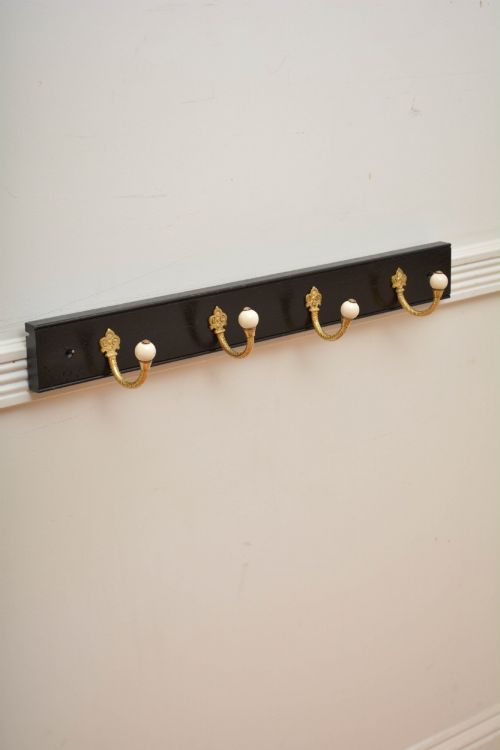
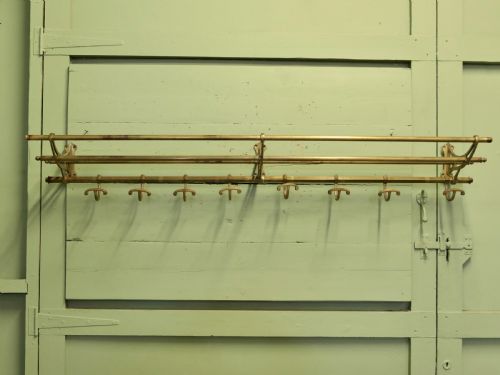
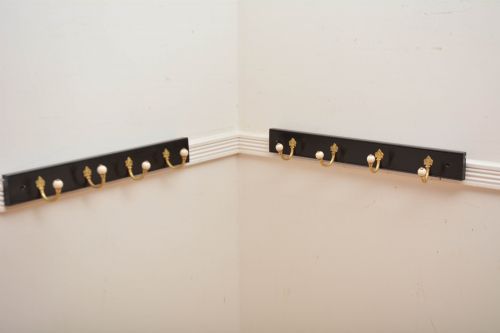
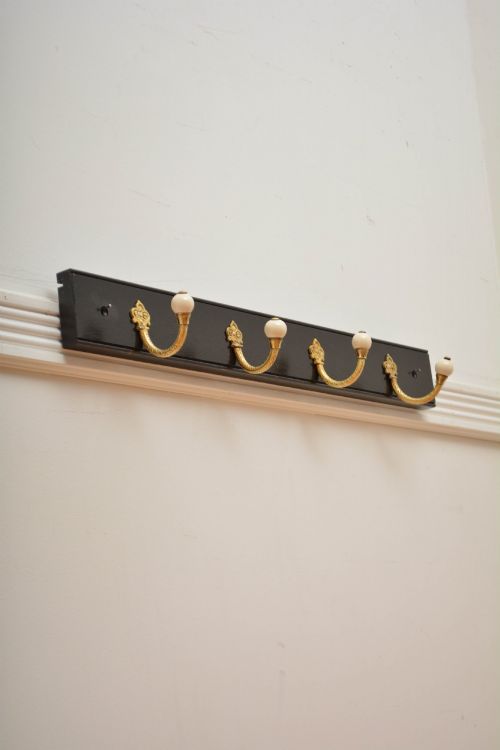
Buyers searching for a vintage coat rail frequently encounter Victorian and Edwardian examples featuring multiple cast brass or ceramic-tipped hooks mounted on sturdy timber backplates. Alongside these standard British hallway pieces, listings include French brass hat racks, Hungarian painted pine rails, and rustic kitchen game hook racks.
How they were made
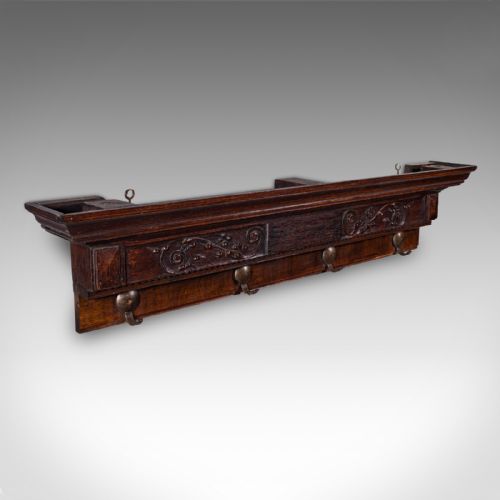
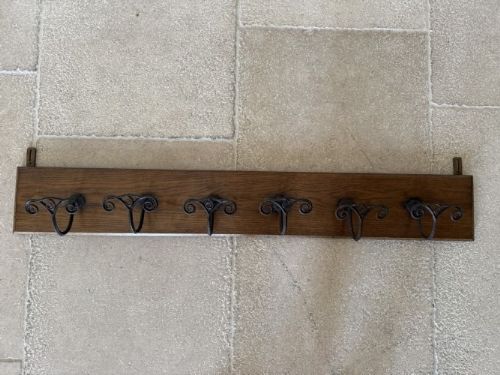
Construction relies heavily on durable timbers such as pine, oak, mahogany, and ebonised wood, which form the structural backboards and hanging rails. Workshops joined these elements with traditional fixings and mounted them with cast brass, wrought iron, and sometimes ceramic hooks.
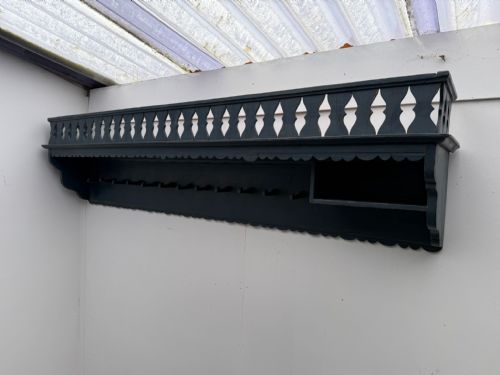
Surface treatments vary according to origin and period, ranging from natural waxed oak and polished mahogany to painted finishes in blue or gilt, alongside structural details like twisted rope turnings and carved wooden motifs.
Some rails arrive ready to hold hats as well as coats, offering a polite nod to the nineteenth-century top hat.
What varies in quality
Quality in a vintage coat rail rests upon the weight and casting of the hardware, the selection of timber, and the integrity of the joinery. Heavier brass mountings, finely moulded ceramic details, and dense hardwoods like mahogany distinguish finer domestic and institutional pieces from simpler utility boards.
The relationship between the backboard and its hooks determines overall durability, with superior examples showing robust fixing plates and proportional timber thickness designed to bear substantial daily weight.
The Vintage Coat Rail Glossary
- Backboard
- The horizontal timber plank or mounting plate that supports the individual coat hooks and anchors the rail to the wall. It provides structural stability and distributes the weight of garments.
- Cast brass
- Molten brass poured into a mould to form decorative and structural hooks or mounting plates. This technique allows for crisp relief details and robust hardware.
- Cloakroom rack
- A domestic hanging fixture specifically intended for entrance halls or reception areas to accommodate outerwear. These pieces often incorporate hat shelves or multiple paired hooks.
- Game hook rack
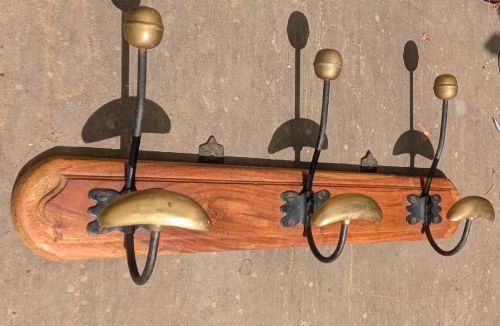
- An utilitarian hanging rail traditionally utilised in kitchens or pantries for suspending game and provisions. They typically feature heavy-duty iron or brass hooks attached to robust wooden battens.
- Ebonised
- Wood finished with a dark stain or lacquer to imitate ebony. This treatment appears frequently on nineteenth-century pieces to create a formal contrast against bright metal hooks.
Vintage Coat Rail: Frequently Asked Questions
How do I fix a heavy wooden coat rail to the wall?
Heavy vintage coat rails require secure anchoring into wall studs or solid masonry using appropriate screws and rawlplugs to support the weight of winter garments.
Matching the fixing points to the pre-drilled holes or solid timber sections of the backboard ensures the rail remains stable under daily use.
Can I use a kitchen game hook rack for coats?
Kitchen game hook racks adapt well to modern hallway use for hanging coats, bags, and scarves.
The sturdy iron or brass hooks designed for provisions handle heavy garments comfortably while adding rustic character to an entranceway.
What is the difference between a coat rail and a hall stand?
A coat rail mounts directly to the wall as a single horizontal board, whereas a hall stand is a larger, freestanding item that often incorporates mirrors, umbrella stands, and seating.
Hall stands suit larger reception spaces, while wall-mounted rails fit narrow hallways and smaller cloakrooms efficiently.
How do I date a Victorian brass and ceramic hook rail?
Victorian dating relies on the combination of heavy cast brass backplates and white or coloured ceramic hook terminals.
Examining the screw types, timber patina, and manufacturing marks helps confirm a nineteenth-century origin.